2026-07-07 東北大学
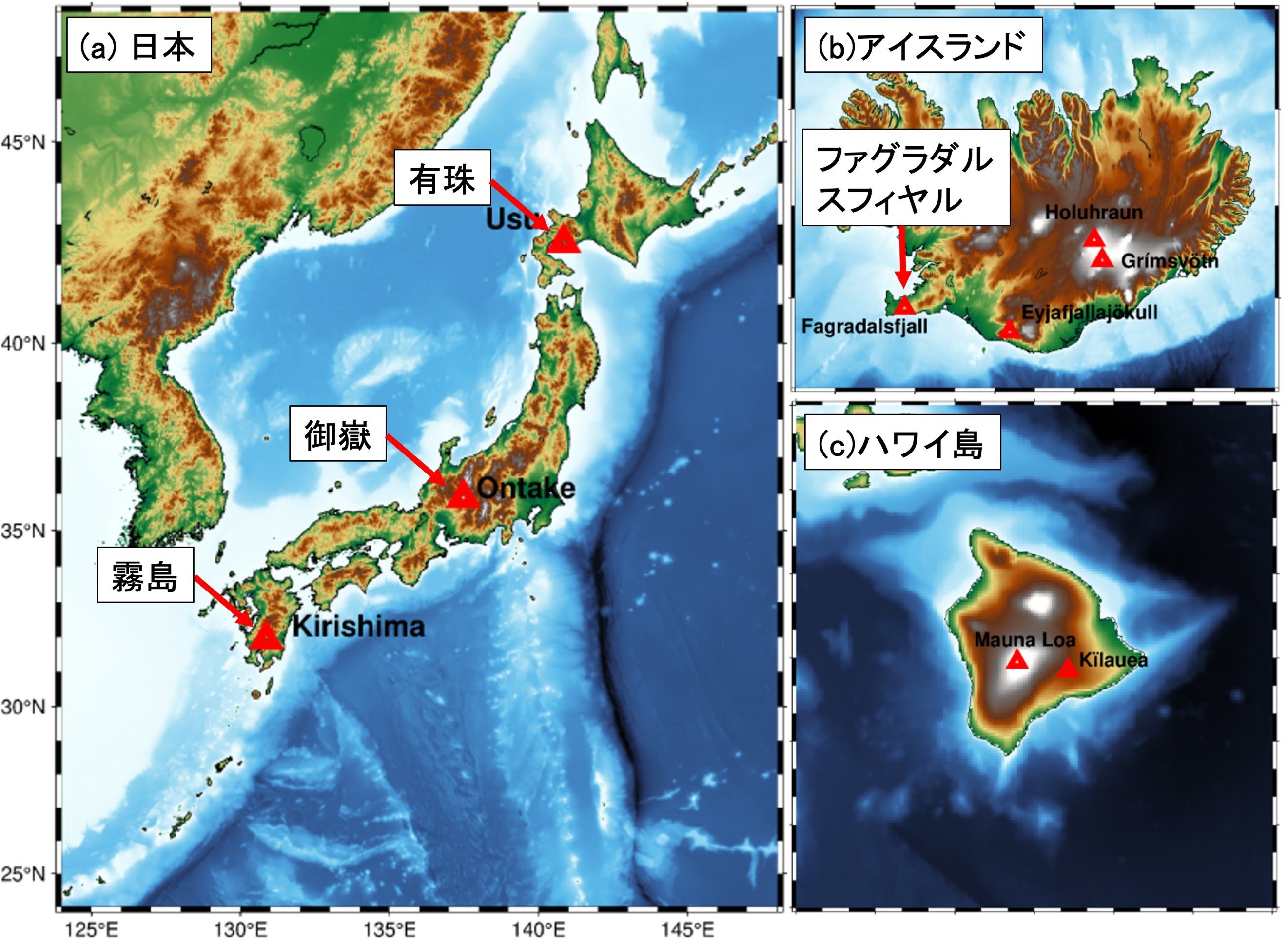
図1. 解析した火山の位置。(a)日本、(b)アイスランド、(c)ハワイ島。(c)のキラウエアは解析対象外で、参考として示す。
<関連情報>
- https://www.tohoku.ac.jp/japanese/2026/07/press20260707-02-trafficlight.html
- https://www.nature.com/articles/s41598-026-50913-4
火山交通信号警報システムおよび噴火予測のためのほぼリアルタイムのb値解析 Near real-time b -value analysis for volcano traffic light alert systems and eruption forecasting
Thystere Matondo Bantidi,Kazuyoshi Z. Nanjo,Takeo Ishibe,Takeshi Nishimura,Bogdan Enescu & Anscair Mukange Besa
Scientific Reports Published:02 June 2026
DOI:https://doi.org/10.1038/s41598-026-50913-4
Abstract
Volcanic eruptions often result from the failure of rocks surrounding magma pathways. A decrease in b-value typically precedes such failures, indicating increased stress and eruption likelihood. Here, we analyze b-value time series of seismic data from 8 well-monitored volcanoes across various tectonic regions: Eyjafjallajökull, Fagradalsfjall, Grímsvötn, and Holuhraun (Bárðarbunga) in Iceland; Mauna Loa in Hawaii (USA); and Kirishima, Ontake, and Usu in Japan. We introduce a ‘Volcano Traffic Light Alert System (VTLAS)’ to assess priming timescales and potential improvements to near‑real‑time forecasting. We define red light as instances when the b-value drops exceed 10% below normal background levels of activity and examine whether eruptions occur within 10 days. Of the 25 identified cases, 39% are followed by eruptions, whereas 61% are not. Among the latter, 71% involve red lights without subsequent eruptions but are mostly linked to large earthquakes, and 29% show no drop before an eruption. Despite the relatively low percentages, our forecasting success rate is comparable to that reported in studies employing InSAR, GNSS deformation, or thermal anomaly analyses. This suggests that the proposed VTLAS may help anticipate impending eruptions. However, to improve reliability, we recommend combining b-value analysis with other geophysical observables to effectively distinguish volcanic unrest from imminent eruptions.