2026-07-02 東京大学
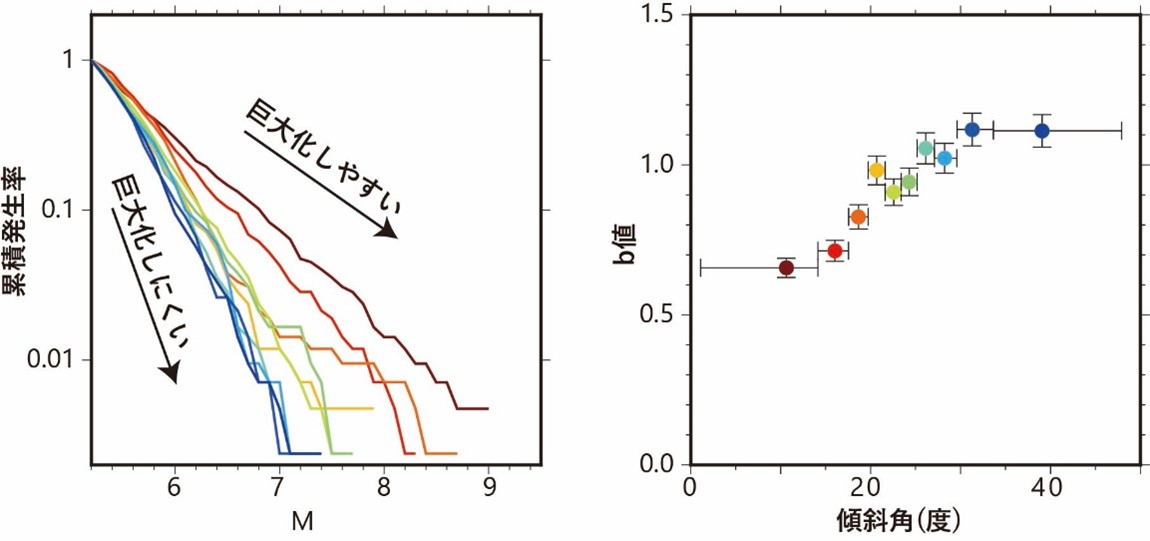
図2:(左)傾斜角(色は右図参照)で区分した地震の規模別累積発生率。この傾きが緩やか(b値小)だと地震は巨大化しやすい。(右)傾斜角ごとのb値の大きさ。水平バーは推定区間、鉛直バーは標準誤差を表す。
<関連情報>
超低角度断層は巨大地震を引き起こす Ultralow-angle faults produce giant earthquakes
Satoshi Ide, Mikito Furuichi, and Dye S. K. Sato
Science Advances Published:1 Jul 2026
DOI:https://doi.org/10.1126/sciadv.aee3921
Abstract
What controls the occurrence of giant earthquakes remains a central question in seismology. We reveal a notably simple—but previously overlooked—relationship between earthquake size and fault dip in subduction zones. Global earthquake statistics show a robust dependence of earthquake size on fault dip, with the probability of extreme events peaking on ultralow-angle faults. Through three case studies, we demonstrate that earthquakes tend to grow larger when the fault geometry is aligned with the regional stress field. We further discuss how such favorable stress configurations are generated along subduction interfaces and emphasize the critical importance of monitoring the temporal evolution of stress in subduction zones to better forecast future megaearthquakes.