2026-06-08 北海道大学
◆本研究では複数品種のインド産ミレットについて脂質プロファイルを網羅的に解析し、品種ごとに特徴的な脂質組成を持つことを示した。特に、抗炎症作用やインスリン感受性改善作用との関連が報告されているFAHFAsを検出し、一部品種では機能性脂質の有望な供給源となる可能性が示された。これらの成果は、ミレットの機能性食品としての科学的根拠を強化するとともに、栄養評価、品種改良、栽培戦略の設計、さらには持続可能な食料システム構築や代謝性疾患予防研究の発展に貢献することが期待される。
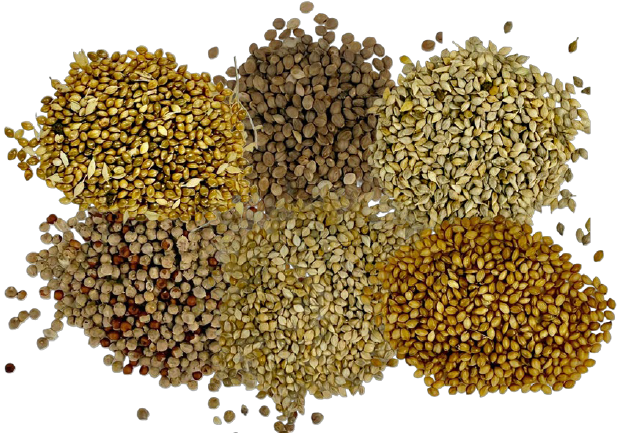
複数種類のインド産ミレット
<関連情報>
- https://www.hokudai.ac.jp/news/2026/06/post-2319.html
- https://www.sciencedirect.com/science/article/abs/pii/S0308814626009507
非標的型LC/MSによるインド産食用ミレットの包括的脂質オミクス解析及び脂肪酸エステル型ヒドロキシ脂肪酸(FAHFAs)の同定 Comprehensive lipidomic profiling of dietary Indian millets and identification of fatty acid esters of hydroxy fatty acids by untargeted LC/MS
Kumari Suraksha, Divyavani Gowda, Chandra Nayaka Siddaiah, Tara Satyavathi Chellapilla, Shu-Ping Hui, Siddabasave Gowda B. Gowda
Food Chemistry Available online: 7 March 2026
DOI:https://doi.org/10.1016/j.foodchem.2026.148792
Highlights
- First comprehensive lipidomic profiling of 59 Indian millet varieties was performed.
- Profiling of 219 lipid molecular species across diverse millet species revealed major compositional differences.
- FAHFAs were first identified in millets through MS/MS analysis coupled with DMED derivatization.
- Findings reveal nutritional lipid diversity and underscore millet’s potential as a functional food ingredient.
Abstract
Millets are small-seeded coarse cereals gaining attention for their nutraceutical potential in managing metabolic disorders. Although millets are widely consumed in South Asia and Africa, their bioactive lipid composition remains largely unexplored. In this study, nontargeted lipidomics analysis was performed on 59 varieties from six Indian millet species using liquid chromatography/mass spectrometry. A total of 219 lipid species were identified, with glycerolipids being most abundant, followed by glycerophospholipids. Foxtail millet showed the highest ratio of polyunsaturated to saturated fatty acids and the highest total lipid content. Little millet exhibited the highest health promotion index, whereas finger millet demonstrated elevated polyunsaturated fatty acid levels, reflecting improved favorable nutritional composition. This study provides the first identification of fatty acid esters of hydroxy fatty acids in Indian millets. This lipid profiling highlights the potential of millets as functional foods and underscores the need for further research on bioactive lipids for metabolic health applications.