
20206-06-01 ワシントン州立大学(WSU)
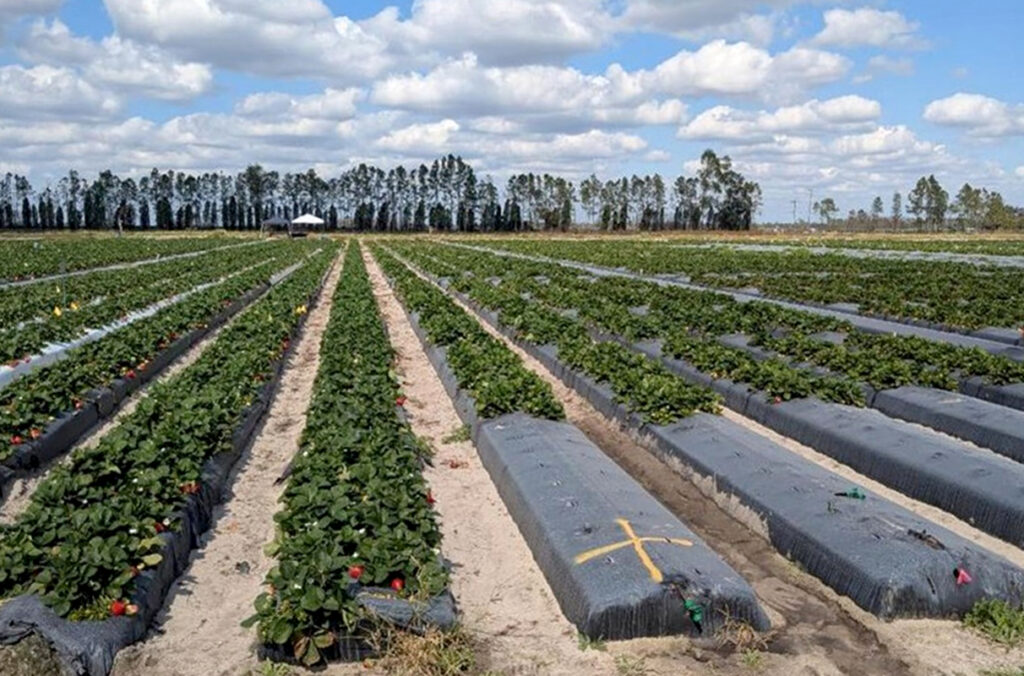
Plastic mulch film is used for many high-value crops, such as the strawberries in this California field, but almost all of it goes into landfills. A new WSU study suggests that with the proper cleaning and pretreatment, recycling the materials could be feasible (photo by Funmilayo Adesina).
<関連情報>
- https://news.wsu.edu/press-release/2026/06/01/can-plastic-farm-mulch-be-effectively-recycled-cleanliness-is-key/
- https://www.sciencedirect.com/science/article/pii/S2772912526000461
土壌汚染物質が再生農業用マルチフィルムの機械的特性に及ぼす影響 Impact of soil contaminants on mechanical properties of recycled agricultural mulch films
Funmilayo A. Adesina, Karl R. Englund, Hui Li
Cleaner Waste Systems Available online 2 April 2026
DOI:https://doi.org/10.1016/j.clwas.2026.100513
Highlights
- Soil type and moisture content affect contaminant load on recovered plastic films.
- Clay-rich soils increased residue; sandy soils led to cleaner film recovery.
- FTIR spectra of recycled products indicate presence of Si-O bonds, suggesting persistent inorganic matter contamination.
- Recycled films showed increased stiffness with higher soil contamination.
Abstract
This study evaluates the feasibility of recycling post-consumer agricultural plastic mulch films used in strawberry production from four distinct U.S. regions: Washington (WA), Nebraska (NE), Florida (FL), and California (CA). Made primarily of polyethylene, these films enhance crop yields but contribute to plastic waste due to their non-biodegradable nature. Besides, contamination of agricultural mulch films by soil and organic debris adhering to the film surface after field recovery can significantly impact recyclability. So, this research is focused on assessing the influence of distinct soil types and contamination levels on the mechanical properties of recycled mulch films (rMF). Samples collected after harvest underwent shredding, air-drying, and agglomeration using a ring pellet mill, followed by melt-blending and injection molding into test specimens. Mechanical properties such as tensile, flexural, and impact strength were evaluated. Regional differences were evident: WA samples had the highest moisture and soil contamination, while FL samples had the lowest. Particle size distribution and moisture content influenced contaminant adherence. Clay-rich soils adhered more strongly due to fine particles, whereas sandy soils detached more easily. FTIR analysis confirmed the presence of silicon-oxygen bonds in the rMF, indicating inorganic contamination. Mechanical testing showed increased stiffness in rMF, with WA samples showing the greatest improvements in Young’s modulus and ultimate tensile strength, despite lower effective plastic content due to higher soil load. These findings highlight how soil characteristics affect rMF quality and suggest strategies to improve recycling processes and material performance, ultimately supporting more sustainable agricultural practices.

