
2026-08-03 ノースカロライナ州立大学(NC State)
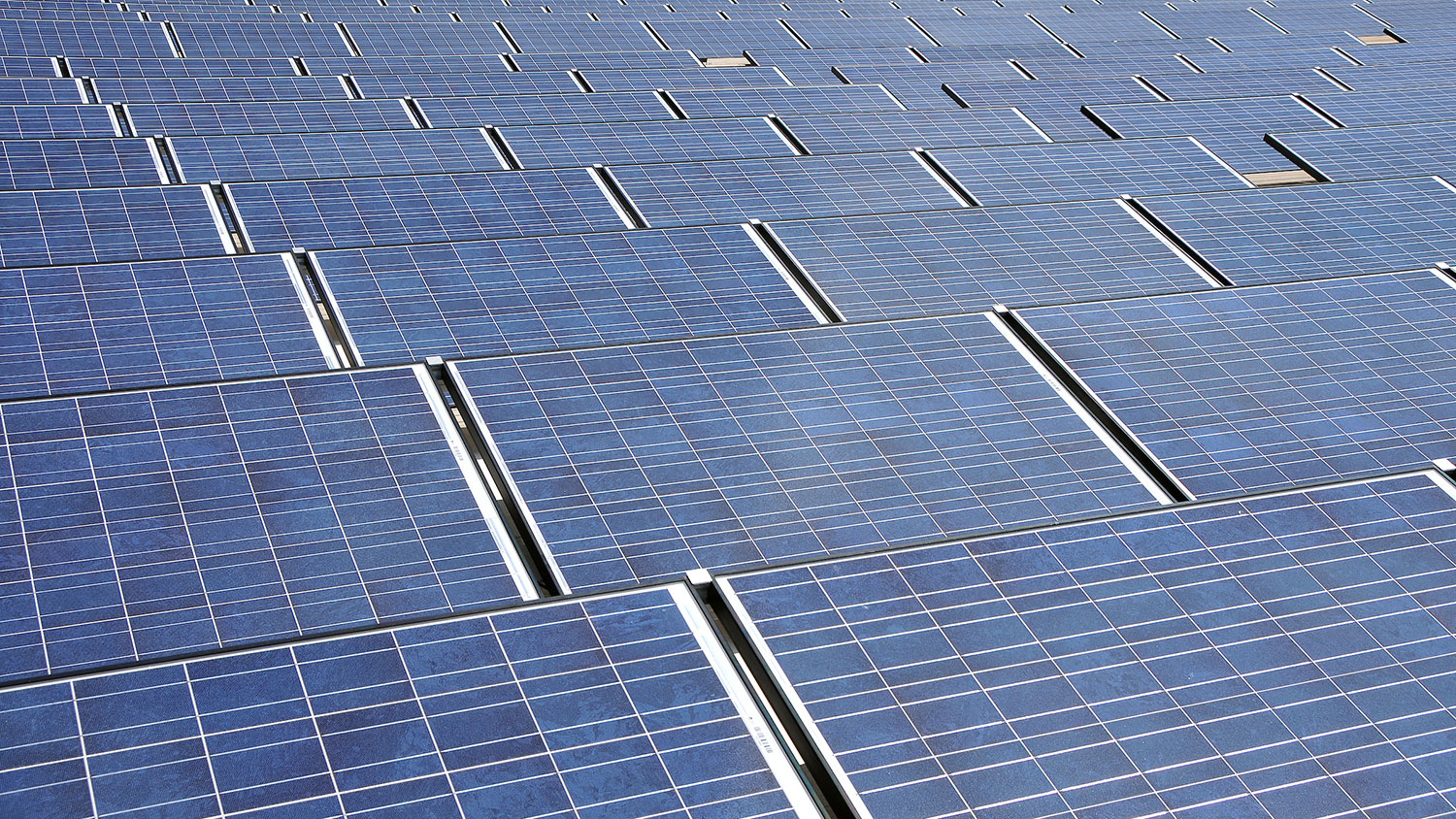
Solar panels on Centennial Campus. Image: NC State University
<関連情報>
- https://news.ncsu.edu/2026/08/researchers-improve-day-ahead-solar-forecasting-for-energy-sector-by-up-to-13/
- https://www.sciencedirect.com/science/article/pii/S0959652626015210
大規模システムにおける翌日太陽光発電予測を強化するためのハイブリッド機械学習フレームワーク A hybrid machine learning framework for enhanced day-ahead solar forecasting in large scale systems
Yen-Hsi Chou, Arundhuti Haldar, Shubh Nisar, Anderson Rodrigo de Queiroz
Journal of Cleaner Production Available online: 29 July 2026
DOI:https://doi.org/10.1016/j.jclepro.2026.148980
Highlights
- This study investigates day-ahead solar power forecasting using artificial neural networks.
- Day-ahead solar power generation forecasts are performed at hourly resolution.
- Four years of data are used to support comprehensive model training, testing, and evaluation.
- Weighted averaging and multi-input ensemble approaches are evaluated for forecasting improvement.
- Validation is conducted using real-world data from two major utilities in Southern California.
Abstract
Accurate solar power forecasting is becoming increasingly crucial for the efficient planning and operation of modern power systems as solar energy constitutes a growing share of the energy mix. This work evaluates the performance of various artificial neural network (ANN) models for day-ahead solar power forecasting. Through two case studies, it examines the impact of seasonal and weather-related variations on large-scale distributed solar generation. The analysis draws on solar power generation and weather data from the Imperial Irrigation District (IID) and the Los Angeles Department of Water and Power (LADWP) in the United States from January 2019 to December 2022, with over 20,000 h of operational data. The bidirectional long short-term memory (Bi-LSTM) model demonstrated the highest accuracy in day-ahead solar power forecasting and was selected as the baseline for comparison. To further improve prediction accuracy, two ensemble approaches, namely weighted averaging and multi-input, were explored. The results show that both approaches improve forecasting performance relative to the baseline, yielding positive MAE-based skill score improvements on the order of several percent across seasons. In particular, weighted averaging provides stronger and more consistent gains in the IID case study, with skill score improvements reaching approximately 11% in favorable seasons, whereas the multi-input ensemble demonstrates more consistently favorable performance in the LADWP case study, achieving skill score improvements of up to about 13%. These findings suggest that ensemble formulations provide a practical framework for improving day-ahead solar power forecasting in large-scale distributed PV systems. The results further indicate that performance depends on regional characteristics and the structure of available meteorological inputs.

