2026-11-16 森林総合研究所,北海道大学,北海道立総合研究機構林業試験場,宮崎大学
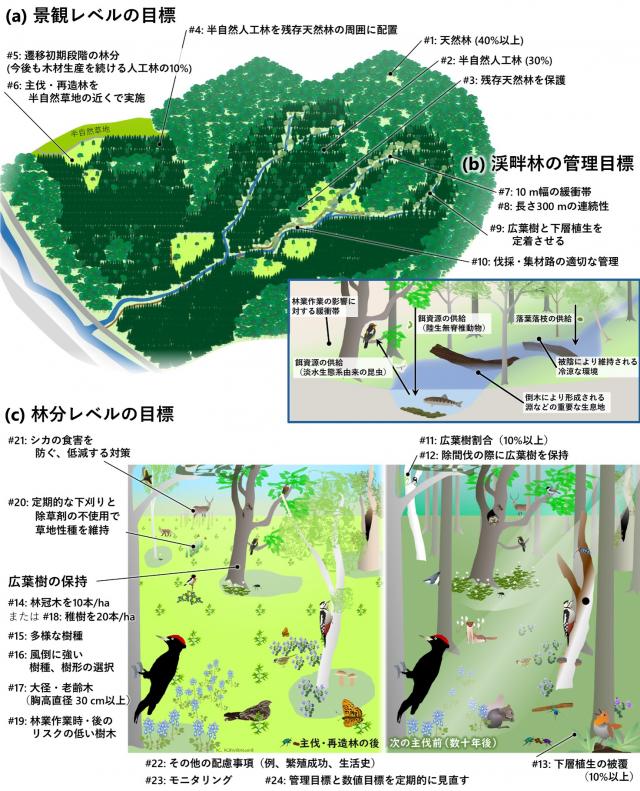
図1. 人工林景観における生物多様性保全チェックリストの概念図 ©河村和洋 CC BY 4.0
<関連情報>
- https://www.ffpri.go.jp/press/2026/20261116/index.html
- https://www.tandfonline.com/doi/full/10.1080/13416979.2026.2738466
日本の針葉樹人工林景観における生物多様性保全のための暫定チェックリスト(A preliminary checklist for biodiversity conservation in Japanese conifer plantation landscapes)
Yuichi Yamaura, Kazuhiro Kawamura, Satoshi Yamanaka, Wataru Higashikawa, Masato Hayamizu, Nobuo Ishiyama, Hiromi Yamakawa, Satoshi Ito, Taiki Nakamura
Journal of Forest Research(Special Feature: Retention Forestry in Practice), 2026:2026-09-30
DOI:10.1080/13416979.2026.2738466
日本の針葉樹人工林景観における生物多様性の保全に向け、国内外の既存研究を整理し、景観・渓畔林・林分の各レベルで実践可能な管理目標と数値目標を提示した。景観レベルでは、天然林率40%以上を理想目標とし、人工林の30%以上を在来広葉樹が生育する半自然林とすること、天然林の残存パッチを面積にかかわらず維持することなどを提案した。渓畔林では河川両岸に10 m以上の緩衝帯を確保し、広葉樹を保全する。林分レベルでは、林冠・亜林冠層に広葉樹を残し、下層植生を維持するとともに、主伐時には1 ha当たり10本、できれば20~30本の広葉樹を保持することなどを推奨した。これらは科学的根拠の確実性も併記した暫定的な目標であり、地域や現場の状況に応じた適用と、モニタリングに基づく定期的な見直しを求めている。本研究は、木材生産と生物多様性保全を両立させる人工林管理の具体的な指針を示すものである。
This study presents a preliminary checklist of practical management objectives and quantitative targets for conserving biodiversity in Japanese conifer plantation landscapes, based on a review of existing domestic and international research. At the landscape level, recommendations include maintaining at least 40% natural-forest cover as an ideal target, designating at least 30% of plantations as semi-natural stands with native broad-leaved trees, and retaining remnant natural-forest patches regardless of their size. For riparian forests, the checklist recommends buffers of at least 10 m on both sides of streams and the conservation of broad-leaved trees. At the stand level, it proposes retaining broad-leaved trees in canopy and subcanopy layers, maintaining understory vegetation, and retaining 10, preferably 20–30, broad-leaved canopy trees per hectare during final harvesting. These targets are preliminary and are accompanied by confidence levels reflecting the available scientific evidence. The authors emphasize site-specific implementation, monitoring, and periodic revision through adaptive management. The checklist provides practical guidance for reconciling timber production with biodiversity conservation in plantation forestry.