2026-04-01 イリノイ大学アーバナ・シャンペーン校
米国のUniversity of Illinois Urbana-Champaignの研究によると、定期的な計画的野焼き(prescribed burns)が、外来草本植物の影響下でも若いオークの成長を促進することが明らかになった。外来種は光や栄養を奪いオークの更新を阻害するが、頻繁な火入れによりこれらの草本が抑制され、オーク苗の生存率と成長が向上した。特に火入れ頻度が高いほど効果が顕著であり、森林再生管理における重要な手法であると示された。本研究は、生態系管理における火の役割と外来種対策の有効性を裏付ける知見を提供する。
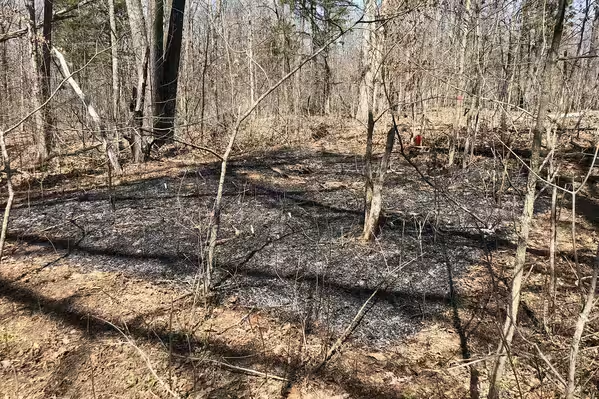
Prescribed burn
<関連情報>
- https://aces.illinois.edu/news/frequent-prescribed-burns-help-young-oaks-thrive-despite-invasive-grasses-illinois-study-finds
- https://besjournals.onlinelibrary.wiley.com/doi/10.1111/1365-2664.70279
火災の発生頻度の増加は、侵入性の草と火災のフィードバックを阻害することによって、温帯落葉樹林におけるオークの早期再生に部分的に有利に働く Increased fire occurrence benefits early oak regeneration in temperate deciduous forests in part by disrupting an invasive grass-fire feedback
Dan Marshalla, Jennifer M. Fraterrigo
Journal of Applied Ecology Published: 19 January 2026
DOI:https://doi.org/10.1111/1365-2664.70279
Abstract
- Feedbacks between fire and non-native grasses can lead to a grass-fire cycle that intensifies grass invasion and harms native trees. However, higher fire activity may reshape fire–grass–tree interactions by altering resource availability and reducing fire intensity. Understanding these dynamics and their effects on tree regeneration is critically important for maintaining and restoring declining oak populations in temperate deciduous forests.
- Here, we performed a landscape-scale field experiment in oak-hickory forests of the U.S. central hardwood region to determine how grass invasion and variation in fire activity alter post-fire regeneration of oak seedlings and juveniles. We applied fire to outplanted white oak (Quercus alba) and black oak (Q. velutina) seedlings and naturally colonized juveniles in plots arrayed along a historical fire occurrence gradient that were either uninvaded or invaded by a widespread non-native grass (Microstegium vimineum).
- We found that increased fire occurrence elevated light availability, with plots burnt five times receiving on average 2.5 times more light. Increased fire occurrence also reduced fire intensity, with each additional burn lowering the maximum temperature of experimental fires by 18°C. These changes contributed to post-fire oak survival rates being almost twice as high in plots burnt five times compared with those with a history of a single prior burn.
- In contrast, Microstegium invasion decreased fire intensity and had no effect on post-fire oak seedling survival in plots with a history of multiple burns. Microstegium cover also declined as fire occurrence increased.
- Synthesis and applications. These results suggest that recurring fire can mitigate the negative effects of grass invasion and create conditions more favourable for early oak regeneration in temperate deciduous forests.