2026-06-18 シカゴ大学(UChicago)

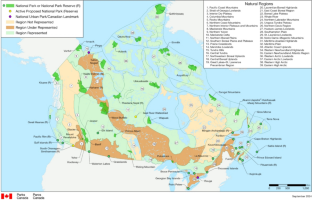
Japan rests at the intersection of four different tectonic plates.Illustration by K. Cantner/American Geosciences Institute
<関連情報>
- https://news.uchicago.edu/story/powerful-seismic-waves-japans-2011-earthquake-struck-earths-core-and-bounced-back-moving
- https://www.science.org/doi/10.1126/science.aec4190
2011年東北地方太平洋沖地震(Mw9.0)後の巨大断層境界面におけるScS誘発滑り ScS-triggered slip on megathrust interfaces after the 2011 MW 9.0 Tohoku-Oki earthquake
Sunyoung Park, Hiroo Kanamori, and Luis Rivera
Science Published:18 Jun 2026
DOI:https://doi.org/10.1126/science.aec4190
Editor’s summary
Large earthquakes are often followed by events that cause additional slip and ground motion, which can be related to the mainshock or its aftershocks. Using satellite data to study the 2011 moment magnitude 9.0 Tohoku-Oki earthquake, Park et al. instead detected an eastward, step-like shift across Japan about 13 minutes after the mainshock and unrelated to any aftershocks. The motion corresponded with arrival of an ScS waveform, a shear phase that had reflected off of Earth’s core. The earthquake’s power returned in this wave, having traveled thousands of hard kilometers to reactivate plate boundaries and move Japan. —Angela Hessler
Abstract
We report an extraordinary observation of ground motion in Japan after the moment magnitude (MW) 9.0 2011 Tohoku-Oki earthquake attributed to a multiplate-interface slip event triggered by shear wave that traveled to the Earth’s core and back. The megathrust earthquake generated a strong ScS phase with a peak-to-peak amplitude exceeding 1 centimeter in Japan. Superposed on this waveform, an eastward steplike displacement of up to 5 to 6 millimeters was recorded in Global Navigation Satellite System (GNSS) data throughout Japan. This likely originated from slip on the megathrust interfaces triggered by the nearly simultaneous arrival of the ScS wave across Japan. Such an ScS triggering is a previously unrecognized source of seismic hazard, which can potentially (re)activate the mainshock area and the broader surrounding megathrust interfaces.