2025-09-09 中国科学院(CAS)
中国科学院西双版纳熱帯植物園の研究チームは、世界各地の実験369件を対象にメタ解析を行い、殺菌剤が野生植物群集に及ぼす影響を明らかにした。解析の結果、殺菌剤は在来植物の生存率を高め、群集全体のバイオマスを増加させる一方、植物多様性を低下させることが判明した。これは脊椎動物による草食圧の除去と似た効果を示す。植物成長には一貫した効果は見られず、これは種ごとの病原菌や共生菌との関係が異なるためと考えられる。非在来種への影響も明確ではなく、局所的な真菌圧が低いことが要因と推測される。また、影響は緯度による違いを示さず、「緯度による生物相互作用強度仮説(LBIH)」を支持しなかった。研究は、病原菌が植物多様性の維持に重要な役割を担うことを示すとともに、今後は地理的データの偏り是正や実験手法の標準化、分子技術の導入による病原菌と非標的菌類の影響解明が課題であると指摘している。
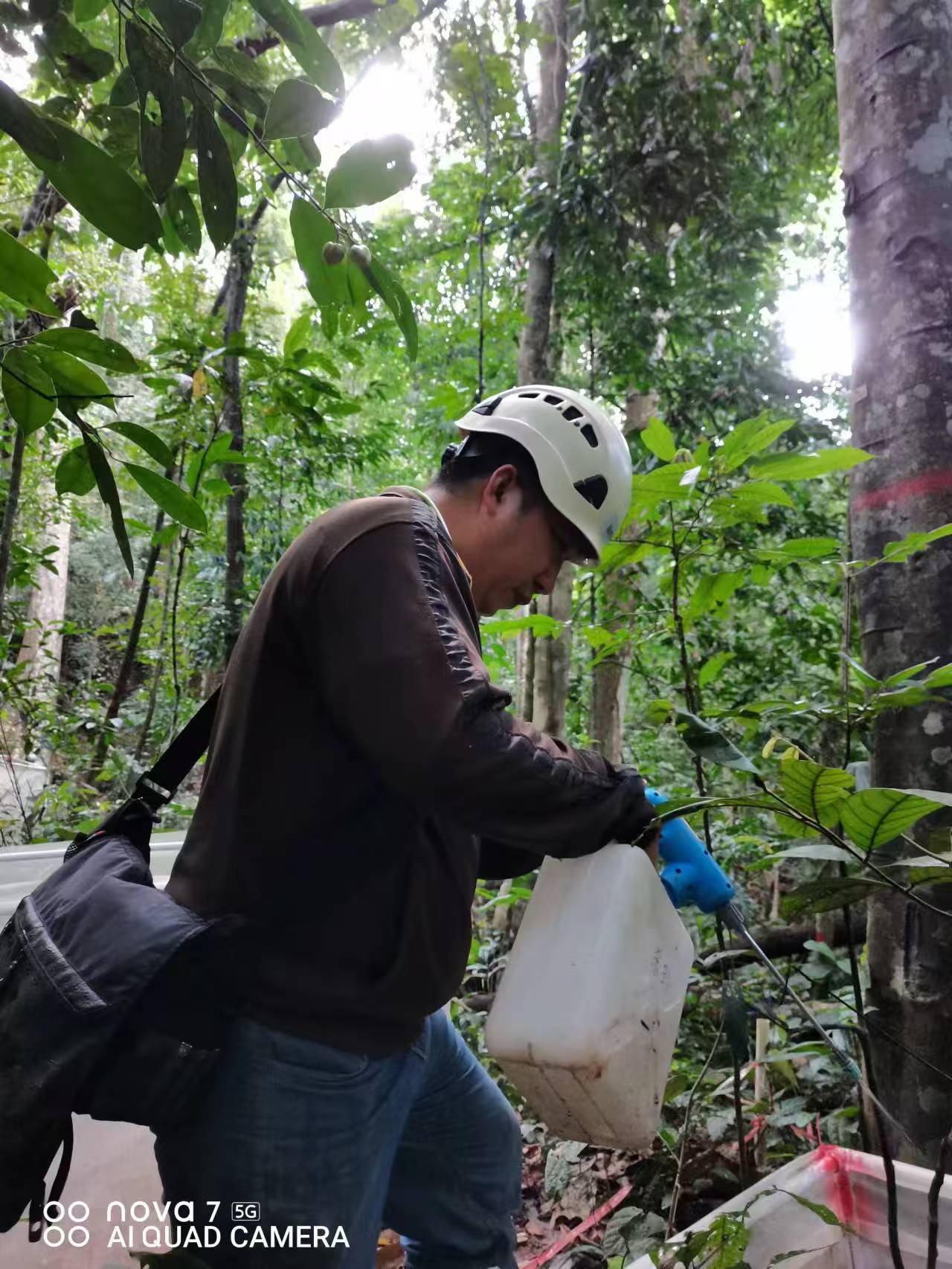
A researcher conducts fungicide treatment in Xishuangbanna. (Image by SONG Xiaoyang)
<関連情報>
- https://english.cas.cn/newsroom/research_news/life/202509/t20250909_1054256.shtml
- https://nph.onlinelibrary.wiley.com/doi/10.1111/nph.70530
野生植物に対する殺菌剤の効果:グローバルメタ分析からの知見 Fungicide effects on wild plants: insights from a global meta-analysis
Xiaoyang Song, Richard T. Corlett, Jie Yang, Matthew Scott Luskin
New Phytologist Published: 02 September 2025
DOI:https://doi.org/10.1111/nph.70530
Summary
- Many studies have investigated plant–pathogen interactions by testing whether fungicides affect plant survival, growth, biomass, and/or diversity.
- Here, we synthesize these studies using a global meta-analysis of 369 experiments from 62 papers that compared plants treated with fungicide to untreated controls.
- Overall, fungicide increased the survival of native plant species and community biomass but decreased diversity, mirroring the effects of fencing out vertebrate herbivores. There was no overall effect on plant growth. However, analyses of subsets of the data revealed a more varied and complex picture, with few consistent results. Strong geographical biases in sampling and small sample sizes for many combinations of variables make it difficult to distinguish between alternative explanations for this variation in fungicide effects.
- The results, overall, are largely consistent with a role for fungal pathogens in the maintenance of community diversity, but not with the latitudinal biotic interaction hypothesis. Future studies should aim to fill the gaps in the geographical spread of studies, standardize the methods as far as possible, and use molecular techniques to characterize the impacts of fungicide treatments on both target and nontarget organisms.