2026-07-20 中国科学院(CAS)

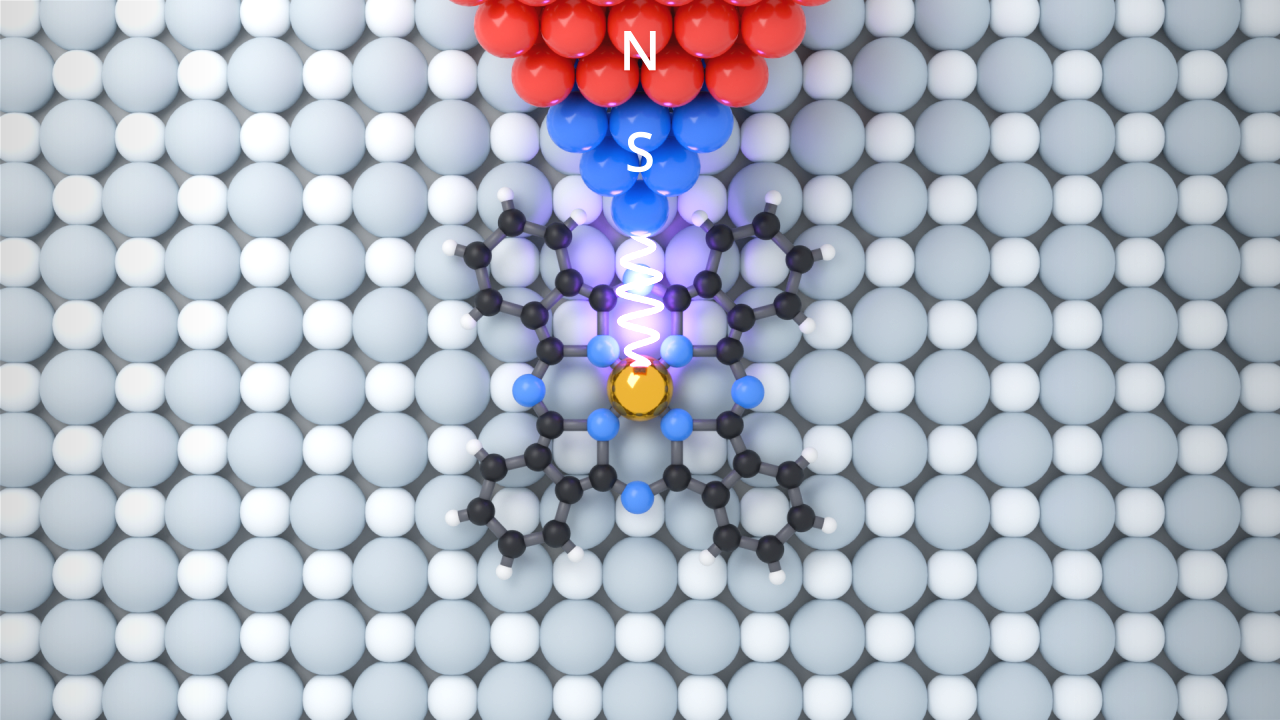
Schematic illustration of electric-field modulation in a bimetallic MXene SERS substrate and the cooperative enhancement of charge-transfer and plasmonic pathways. (Image by SIC)
<関連情報>
- https://english.cas.cn/newsroom/research-news/202607/t20260720_1178697.shtml
- https://www.cell.com/matter/abstract/S2590-2385(26)00284-5
超高感度SERSセンサーのための電界制御型バイメタルMXene Electric field-engineered bimetallic MXene for ultra-sensitive SERS sensors
Weida Zhang ∙ Yusi Peng ∙ Shuai Zhao ∙ Dan Li ∙ Yong Yang
Matter Published:July 14, 2026
DOI:https://doi.org/10.1016/j.matt.2026.102921
Highlights
- An electric-field modulation strategy to activate non-metallic SERS
- Electric field gating couples PEICT and PESP pathways via electronic tailoring
- Ti2TaC2 enables 10−13 M detection with a 103-fold sensitivity gain
- The electric-tunable SERS response can extend to diverse molecular probes
Summary
Advances in ultra-sensitive surface-enhanced Raman scattering (SERS) substrates and SERS enhancement strategies are the two fundamental pillars for the development of SERS technology. However, broadly applicable strategies that reproducibly achieve order-of-magnitude improvements in SERS sensitivity remain scarce. Herein, we propose an electric-field modulation strategy to simultaneously stimulate photo-electric-induced charge transfer (PEICT) and surface-plasmon enhancement (PESP). This strategy increases the density of states near the EF and induces an upward shift of EF, thereby lowering inter-band transition barriers and promoting surface electron localization. Guided by this strategy, a series of bimetallic MXene SERS-active substrates are theoretically predicted and experimentally reported for the first time. Under cooperative excitation with a 532-nm laser and a 300-V field, Ti2TaC2 achieves a limit of detection (LOD) of 10−13 M and a SERS performance factor (SPF) of 2.3 × 10⁵, a three-orders-of-magnitude gain over laser-only excitation. This strategy provides a broadly applicable route to substantially enhance SERS sensitivity in non-metallic substrates.