2026-04-09 海洋研究開発機構,名古屋大学,国立極地研究所,産業技術総合研究所,京都大学,大阪公立大学,神戸大学
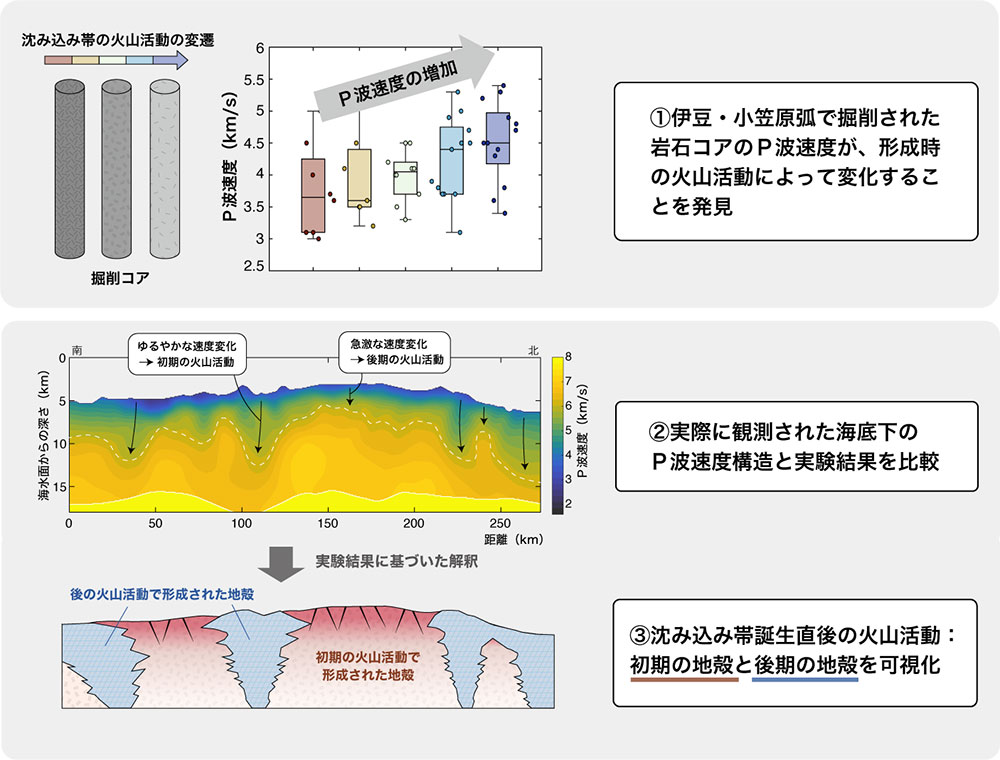
図1 本研究の概念図
<関連情報>
- https://www.jamstec.go.jp/j/about/press_release/20260409_2/
- https://www.nature.com/articles/s43247-026-03400-7
前弧の進化過程において、初期の沈み込み帯で、軸上の地殻は亀裂が入り、軸外の地殻は原形を保ったまま形成された Cracked on-axis and pristine off-axis crust formed during forearc evolution at a nascent subduction zone
Yuya Akamatsu,Masakazu Fujii,Yumiko Harigane,Tetsuya Sakuyama,Yuzuru Yamamoto,Nana Kamiya & Katsuyoshi Michibayashi
Communications Earth & Environment Published:09 April 2026
DOI:https://doi.org/10.1038/s43247-026-03400-7
Abstract
Forearc crust that formed at nascent subduction zones contains key evidence regarding Earth’s tectonic evolution, but its nature and underlying formation processes remain unclear. Key geological records are hidden within the deep oceanic lithosphere, highlighting the need to extract information from geophysical data by establishing clear links between rock physical properties and geological processes. Here we show that the petrophysical properties of drillcores from the Izu–Bonin arc, including forearc basalt and boninite, can be linked to the tectonic and magmatic processes experienced by these rocks. Our results indicate that the rocks which formed during forearc spreading have elevated crack densities due to intensive brittle deformation, whereas those produced by subsequent off-axis volcanism remain comparatively pristine. Petrophysics-based interpretation of the seismic velocity structure reveals that off-axis volcanic units intruded the cracked forearc crust. This provides geophysical evidence for distinct volcanic processes during nascent forearc evolution, thereby highlighting the importance of combining petrophysical and geophysical data when investigating crustal geological processes.