2026-01-22 ペンシルベニア州立大学(Penn State)
<関連情報>
- https://www.psu.edu/news/agricultural-sciences/story/domestication-has-changed-chemicals-squash-flowers-use-attract-bees
- https://link.springer.com/article/10.1007/s10886-025-01664-5
栽培化によりカボチャ(ウリ科:Cucurbita)の花の揮発性物質の豊富さは減少するが、花粉媒介者を引き寄せる上で重要な主要化合物は保存される Domestication Reduces Floral Volatile Richness in Squash (Cucurbitaceae: Cucurbita) But Conserves Key Compounds Critical for Pollinator Attraction
Avehi Singh,Swayamjit Ray,Kristen K. Brochu-DeLuca,Andrew J. Myrick,Nathaniel B. McCartney,Jared G. Ali & Margarita M. López-Uribe
Journal of Chemical Ecology Published:03 December 2025
DOI:https://doi.org/10.1007/s10886-025-01664-5
Abstract
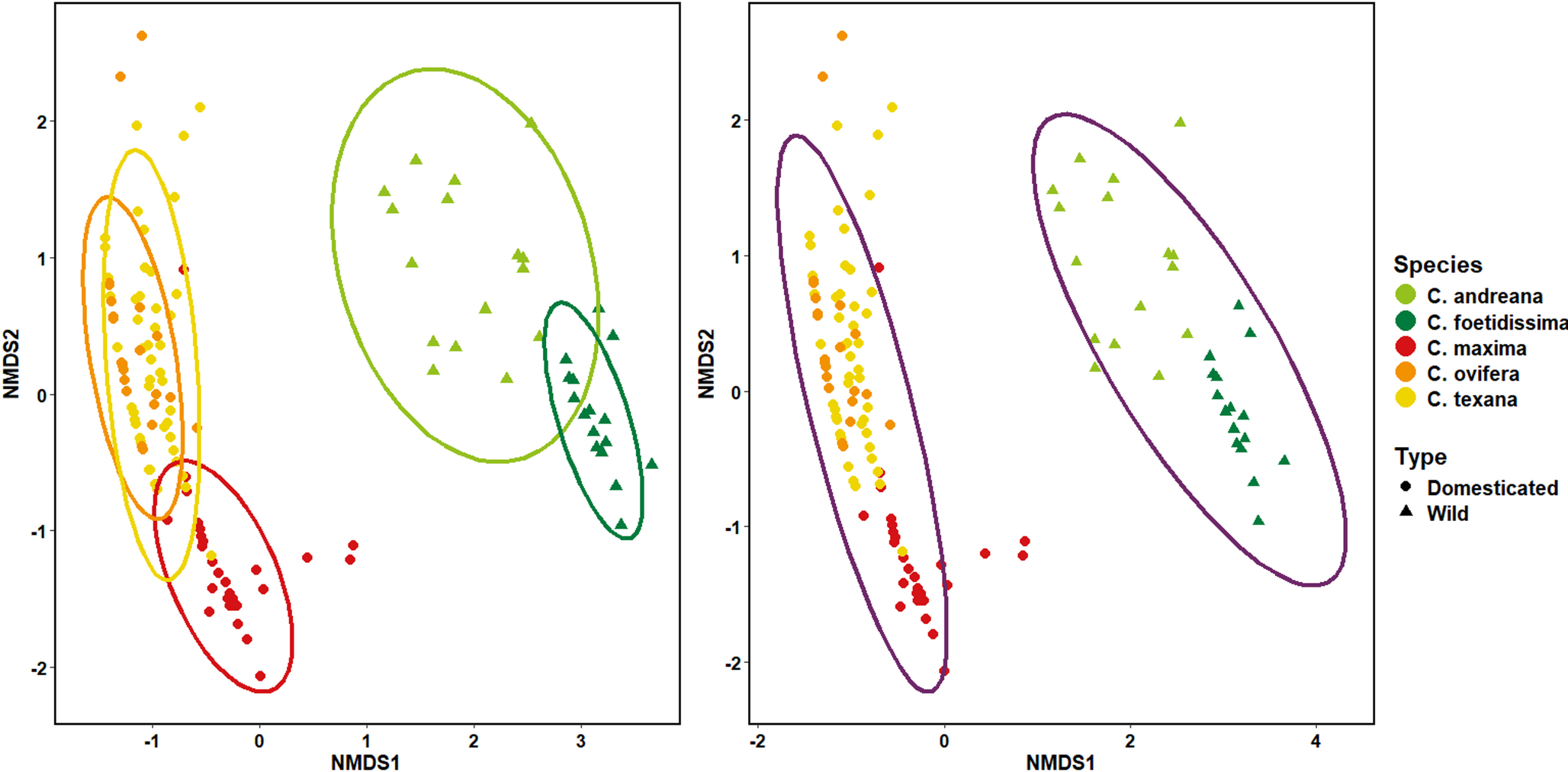
The domestication of crops leads to profound changes on plant phenotypes, yet its effects on floral traits mediating plant-pollinator interactions remain poorly understood. Floral volatile organic compounds (VOCs) play a crucial role in pollinator attraction by signaling the presence and quality of available floral resources. Here, we characterize VOC composition in Cucurbita, a genus containing multiple wild and domesticated species, to investigate how domestication affects floral volatiles. Then, we combined electrophysiology, blue vane trap field assays and pollinator visitation experiments to assess how the squash specialist pollinator, Xenoglossa pruinosa, responded to existing VOCs across different wild and domesticated plant species. Our results reveal significant compound losses within domesticated species blends. Combined gas chromatography-electroantennography (GC-EAG) identified ten electrophysiologically active compounds across wild and domesticated squash VOCs. Field assays assessing bee attraction to individual antennally active compounds using modified blue vane traps with compound lures identified 1,4-dimethoxybenzene (a dominant volatile in domesticated squash blends) as an attractant for bees in isolation. We also found significant associations between bee visitation (assessed as floral approaches and nectaring behaviors) and increased emissions of 1,4-dimethoxybenzene, dihydro-β-ionone, and (E)-nerolidol as well as reduced emissions of linalool and methyl salicylate. Our findings provide novel insights into the chemical ecology of crop-pollinator interactions, demonstrating that domestication can reshape plant-pollinator communication mechanisms.