20025-08-06 ノースウェスタン大学
<関連情報>
- https://news.northwestern.edu/stories/2025/08/clean-energy-is-here-getting-it-to-evs-isnt/
- https://www.nature.com/articles/s41467-025-61976-8
電力網の混雑が、米国の自動車電動化による気候効果を阻害している Grid congestion stymies climate benefit from U.S. vehicle electrification
Chao Duan & Adilson E. Motter
Nature Communications Published:06 August 2025
DOI:https://doi.org/10.1038/s41467-025-61976-8
Abstract
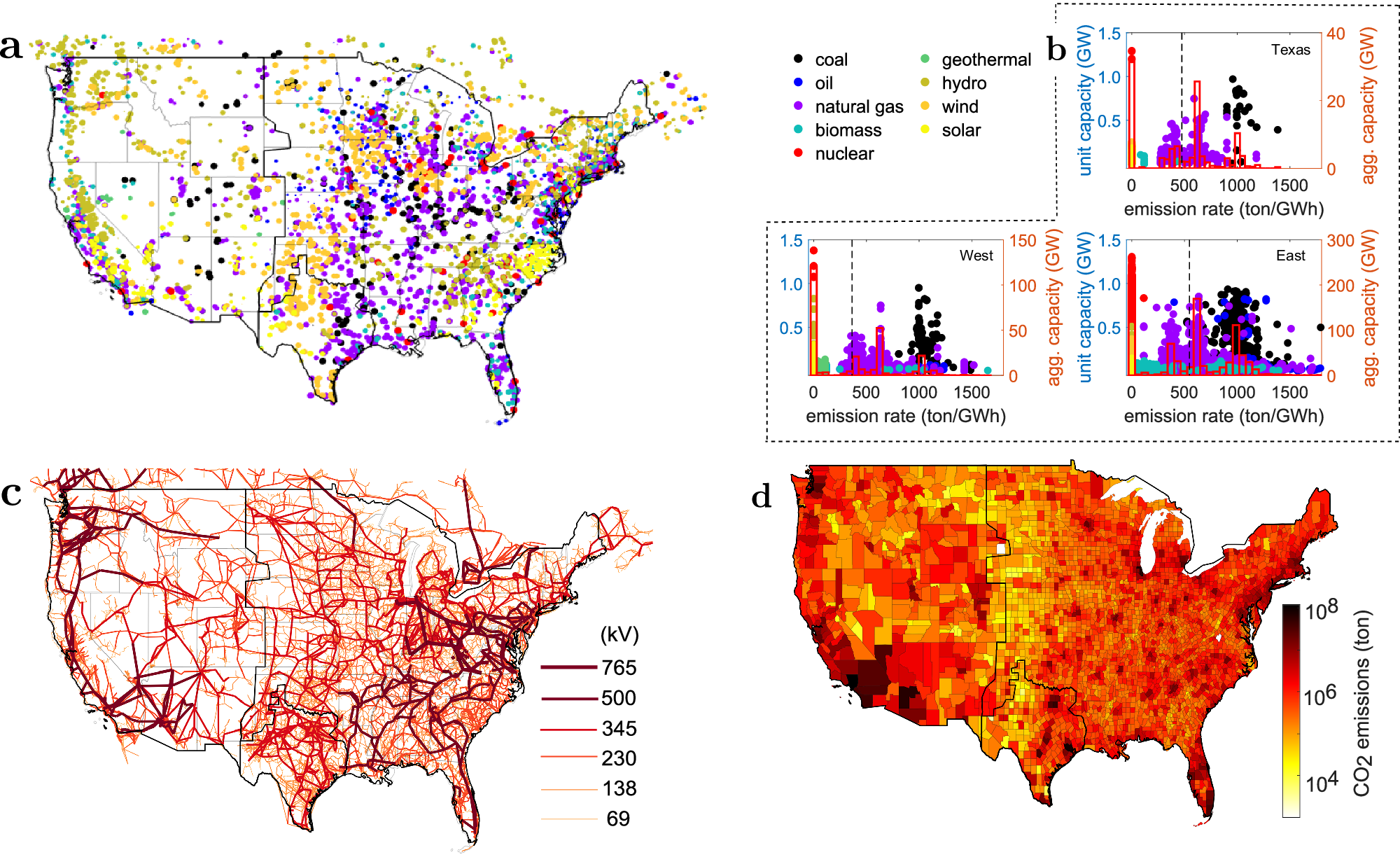
Averting catastrophic global warming requires decisive action to decarbonize key sectors. Vehicle electrification, alongside renewable energy integration, is a long-term strategy toward zero carbon emissions. However, transitioning to fully renewable electricity may take decades—during which electric vehicles may still rely on carbon-intensive electricity. We analyze the critical role of the transmission network in enabling or constraining emissions reduction from U.S. vehicle electrification. Our models reveal that the available transmission capacity severely limits potential CO2 emissions reduction. With adequate transmission, full electrification could nearly eliminate vehicle operational CO2 emissions once renewable generation reaches the existing nonrenewable capacity. In contrast, the current grid would support only a fraction of that benefit. Achieving the full emissions reduction potential of vehicle electrification during this transition will require a moderate but targeted increase in transmission capacity. Our findings underscore the pressing need to enhance transmission infrastructure to unlock the climate benefits of large-scale electrification and renewable integration.