20026-08-20 パシフィック・ノースウェスト国立研究所(PNNL)
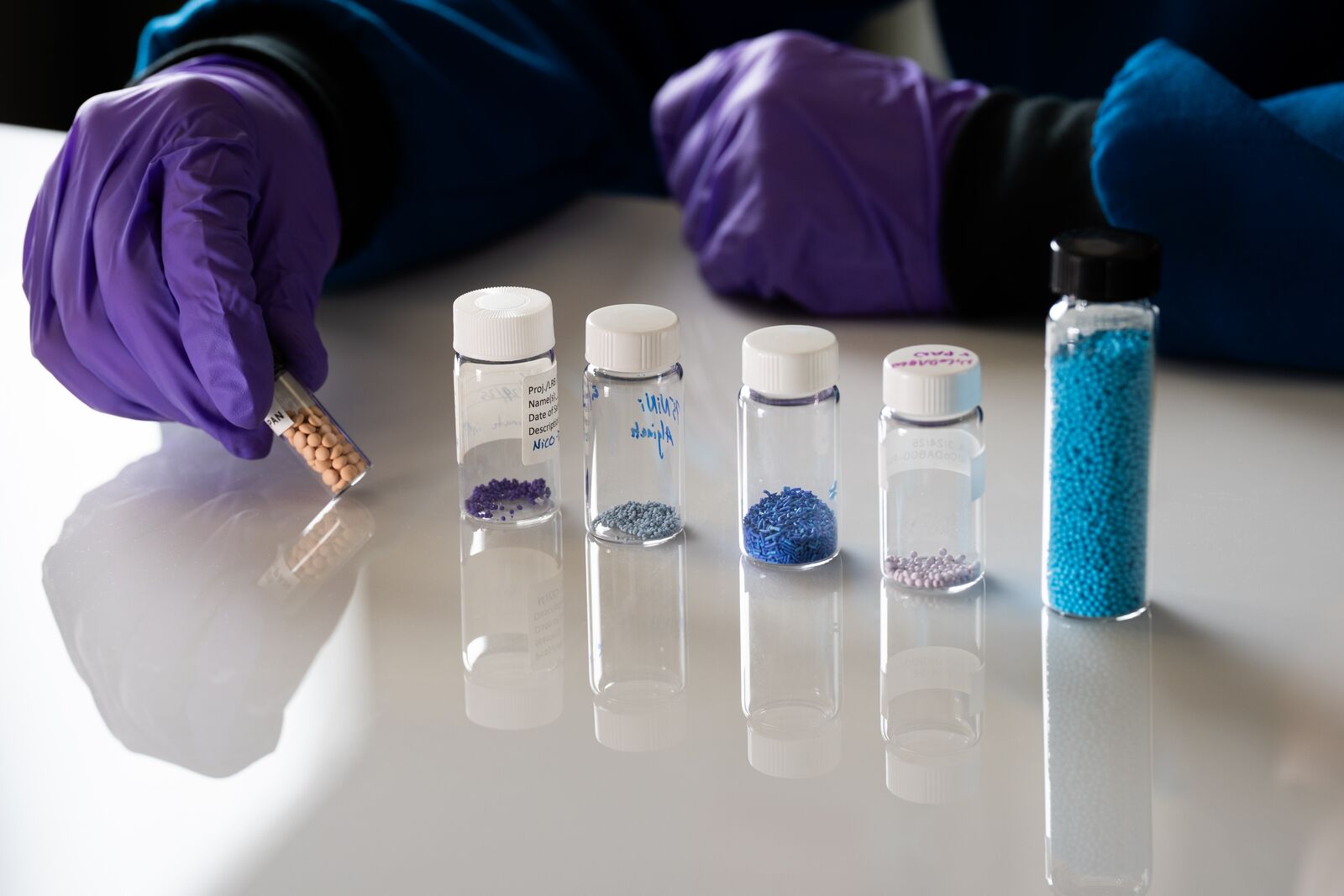
While energy production remains the focus of most used nuclear fuel recycling efforts, some recycled nuclear materials have potential applications in isotope production for medical, industrial or scientific uses. (Photo by Andrea Starr | Pacific Northwest National Laboratory)
<関連情報>
- https://www.pnnl.gov/news-media/new-life-used-nuclear-fuel
- https://pubs.acs.org/acsodf/article/10/43/50773/3657806/Phosphate-Based-Approaches-for-Dechlorination-and
- https://pubs.acs.org/ancham/article-abstract/97/35/19019/3616479/Automated-pH-Monitoring-and-Control-of-TALSPEAK
- https://pubs.rsc.org/ma/article/5/24/9515/853839/Iodine-solid-sorbent-design-a-literature-review-of
使用済み核燃料の電気化学処理から生じる塩廃棄物の脱塩素化および処理のためのリン酸塩ベースのアプローチ:最近の研究に関する展望 Phosphate-Based Approaches for Dechlorination and Treatment of Salt Waste from Electrochemical Processing of Used Nuclear Fuel: A Perspective on Recent Work
Jonathan S. Evarts;Harmony S. Werth;Brian J. Riley;Krista Carlson;Michael F. Simpson
ACS Omega Published:October 25, 2025
DOI:https://doi.org/10.1021/acsomega.5c08801
Abstract
Phosphate-based reagents are being considered by the U.S. Department of Energy (DOE) Office of Nuclear Energy to process halide salt-based nuclear wastes for stabilization prior to disposal. As evidenced by the Experimental Breeder Reactor-II (EBR-II) project, electrochemical processing (pyroprocessing) can be employed to recover uranium and other actinides for reintegration into the nuclear fuel cycle from metallic fuels. The resultant salt-based wastes generated from electrochemical processing of EBR-II fuel contains fission products within a LiCl–KCl eutectic salt that necessitate appropriate disposal. This paper provides an overview of recent efforts to support halide-based salt waste treatment for disposition, as well as a basis for comparison with other related efforts in salt waste treatment through salt partitioning initiatives. The U.S. DOE has selected a phosphate waste form reference material for further investigation and longer-term studies.
TALSPEAKおよび高度TALSPEAKプロセスの自動pHモニタリングおよび制御 Automated pH Monitoring and Control of TALSPEAK and Advanced TALSPEAK Processes
Nathan P. Bessen;Poki Tse;Thomas Serrano;Hope E. Lackey;Heather M. Felmy;Gilbert L. Nelson;Alyssa F. Espley;Savannah M. Potter;Roberta R. Rodrigues;Aditya H. Parekh;Gregg J. Lumetta;Brienne N. Seiner;Samuel A. Bryan;Amanda M. Lines
Analytical Chemistry Published:August 18, 2025
DOI:https://doi.org/10.1021/acs.analchem.5c01989
Abstract
Maintaining pH in an operable range is key in many industrial processes, where automating pH correction and control can enable significant advances in process efficiency. One such process is solvent extraction. In solvent extraction, the pH can directly influence separation by altering the extraction of different species. Solvent extraction procedures for separating components of used nuclear fuel, such as TALSPEAK and Advanced TALSPEAK, are examples of this. In these processes, the extraction of trivalent lanthanides and actinides is pH-dependent, with more acidic conditions causing greater metal extraction. However, the pH can be challenging to control. Here, automated pH control has been demonstrated using robust, Raman-based pH measurement that informed the control software connected to programmable logic controllers (PLCs). The use of Raman spectroscopy paired with a chemometric model has been applied to the feed solutions for TALSPEAK and Advanced TALSPEAK processes and is used to demonstrate effective, robust, and near instantaneous pH measurement. The result of this measurement was then fed into a PLC instrument that had been programmed to maintain a constant pH. When the pH was purposely perturbed by adding an acid or base, the PLC was able to automatically correct the pH and, consequently, control the desired extraction of metal ions. The analytical approach and performance to automated, real-time process control are described here.
ヨウ素固体吸着剤の設計:検討すべき重要な基準に関する文献レビュー Iodine solid sorbent design: a literature review of the critical criteria for consideration
Brian J. Riley;Joshua R. Turner ;Joanna McFarlane;Saehwa Chong;Krista Carlson;Josef Matyáš
Materials Advances Published:23 October 2024
DOI:https://doi.org/10.1039/d4ma00266k
Designing sorbents for iodine capture in different conditions requires selection and optimization of a large and diverse range of variables. These variables fall into general categories (or features) of sorbent activity, sorbent stability, and the fate of the loaded material in terms of the disposal (waste form) options available. To illustrate, silver-loaded, high-porosity sorbents make for maximized iodine capture and less pressure drop in a column-based sorption system approach, however, this high porosity can lead to less mechanically stable sorbents. Additionally, waste forms containing silver must also be compliant with additional criteria for hazardous waste disposal. Thus, all these aspects must be considered simultaneously when selecting a sorbent for utilization under specific conditions. Information is given for different types of sorbent design considerations for different operating conditions and some emphasis is also given on promising alternatives for silver as the active (chemisorption-based) getter metal. Discussion is given around demonstrated options for waste forms for different metal-iodide compounds.