2026-07-16 イリノイ大学アーバナ・シャンペーン校
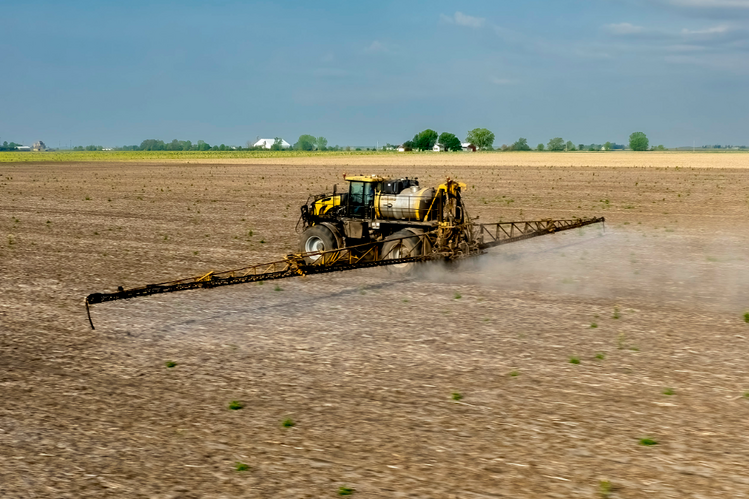
Credit: Jim Baltz, University of Illinois Urbana-Champaign
<関連情報>
- https://aces.illinois.edu/news/what-would-it-cost-farmers-if-illinois-banned-glyphosate
- https://www.cambridge.org/core/journals/weed-technology/article/understanding-the-systemic-impacts-of-a-glyphosate-ban-on-illinois-agriculture-economic-agronomic-and-community-perspectives/6861BCABA4AE00E0B43C07EF1F5BBD06
グリホサート禁止がイリノイ州農業に及ぼす体系的な影響の理解:経済的、農学的、地域社会の視点 Understanding the Systemic Impacts of a Glyphosate Ban on Illinois Agriculture: Economic, Agronomic, and Community Perspectives
Sandy Dall’erba,Corey Lacey and Aaron Hager
Weed Technology Published:13 July 2026
DOI:https://doi.org/10.1017/wet.2026.10133
Abstract
Glyphosate has been a cornerstone of weed management in Illinois corn and soybean production, supporting conservation tillage, lowering production costs, and stabilizing yields. Growing regulatory scrutiny, litigation, herbicide resistance, and public concern have raised the possibility of restrictions or a complete ban on glyphosate use. This paper evaluates the farm-level revenue consequences of a hypothetical glyphosate prohibition in Illinois agriculture. Using a staged analytical framework, we first quantify baseline glyphosate use and expenditures, then draw on the agronomic and economic literature to estimate yield elasticities for corn and soybean under a complete ban assuming no substitution (where a yield elasticity measures the percentage change in crop yield associated with a one-percent change in glyphosate use, capturing the sensitivity of production to its removal). We subsequently examine producer substitution toward alternative weed-management programs and quantify the resulting changes in production costs and farm revenues under maintained yields. Finally, we extend the analysis to scenarios in which increased demand raises substitute input prices and yields decline modestly due to imperfect weed-control performance. The results indicate that, for corn and soybean producers combined, the statewide loss will be in the order of $300-609 million per year, i.e. about a 1.8-3.6% revenue loss. Our manuscript is the first one to offer a transparent, evidence-based assessment of how glyphosate removal would affect farm revenues through yield and cost channels.