2026-07-16 ミンガム大学

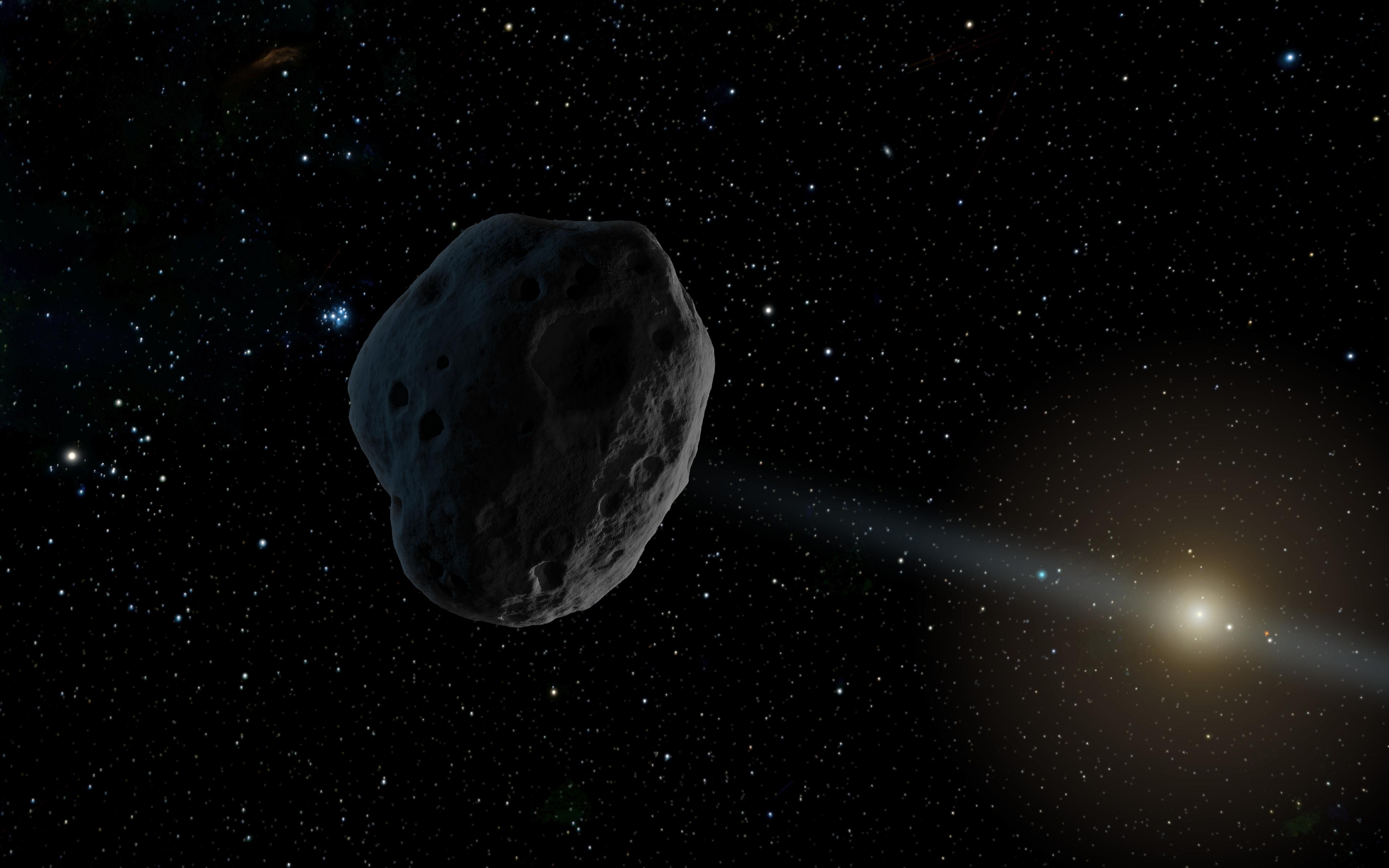
GW250114: Rotating Black Holes Collide (Credit: Aurore Simonnet (SSU/EdEon), LVK, URI; LIGO Collaboration)
<関連情報>
- https://www.birmingham.ac.uk/news/2026/listening-to-ringing-black-holes-unlocks-future-gravitational-wave-astronomy
- https://iopscience.iop.org/article/10.1088/1361-6382/ae59e2
ブラックホール分光法:理論から実験へ Black hole spectroscopy: from theory to experiment
Emanuele Berti, Vitor Cardoso, Gregorio Carullo, Jahed Abedi, Niayesh Afshordi, Simone Albanesi, Vishal Baibhav, Swetha Bhagwat, José Luis Blázquez-Salcedo, Béatrice Bonga,…
Classical and Quantum Gravity Published: 22 June 2026
DOI:10.1088/1361-6382/ae59e2
Abstract
The ‘ringdown’ radiation emitted by oscillating black holes has great scientific potential. By carefully predicting the frequencies and amplitudes of black hole quasinormal modes and comparing them with gravitational-wave (GW) data from compact binary mergers we can advance our understanding of the two-body problem in general relativity, verify the predictions of the theory in the regime of strong and dynamical gravitational fields, and search for physics beyond the Standard Model or new gravitational degrees of freedom. We summarize the state of the art in our understanding of black hole quasinormal modes in general relativity and modified gravity, their excitation, and the modeling of ringdown waveforms. We also review the status of LIGO-Virgo-KAGRA ringdown observations, data analysis techniques, and the bright prospects of the field in the era of LISA and next-generation ground-based GW detectors.