2026-06-22 マサチューセッツ大学アマースト校

<関連情報>
- https://www.umass.edu/news/article/umass-amherst-led-team-discovers-new-way-make-thermally-insulative-plastics
- https://pubs.rsc.org/en/content/articlelanding/2026/mh/d6mh00633g
非多孔質ポリマーハイブリッドにおける熱輸送を抑制するために、熱的にアクセス可能な振動モードを制限する Suppressing thermal transport in nonporous polymer hybrids by limiting thermally accessible vibrational modes
Henry Worden, Mihir Chandra, Yijie Zhou, Zarif Ahmad Razin Bhuiyan, Mouyang Cheng, Krishnamurthy Munusamy, Duc Nghiem, Weiguo Hu, Weibo Yan,a Siyu Wu, Ruipeng Li, Zhang Jiang, Anna Chatterji, Shengjia Zhang, Ilia N. Ivanov, Jihua Chen, Jack C. Lasseter, Mengru Jin, Derin Abitagaoglu, Qing Tu, Todd Emrick, Jun Liu and Yanfei Xu
Materials Horizons Published:18 May 2026
DOI:https://doi.org/10.1039/D6MH00633G
Abstract
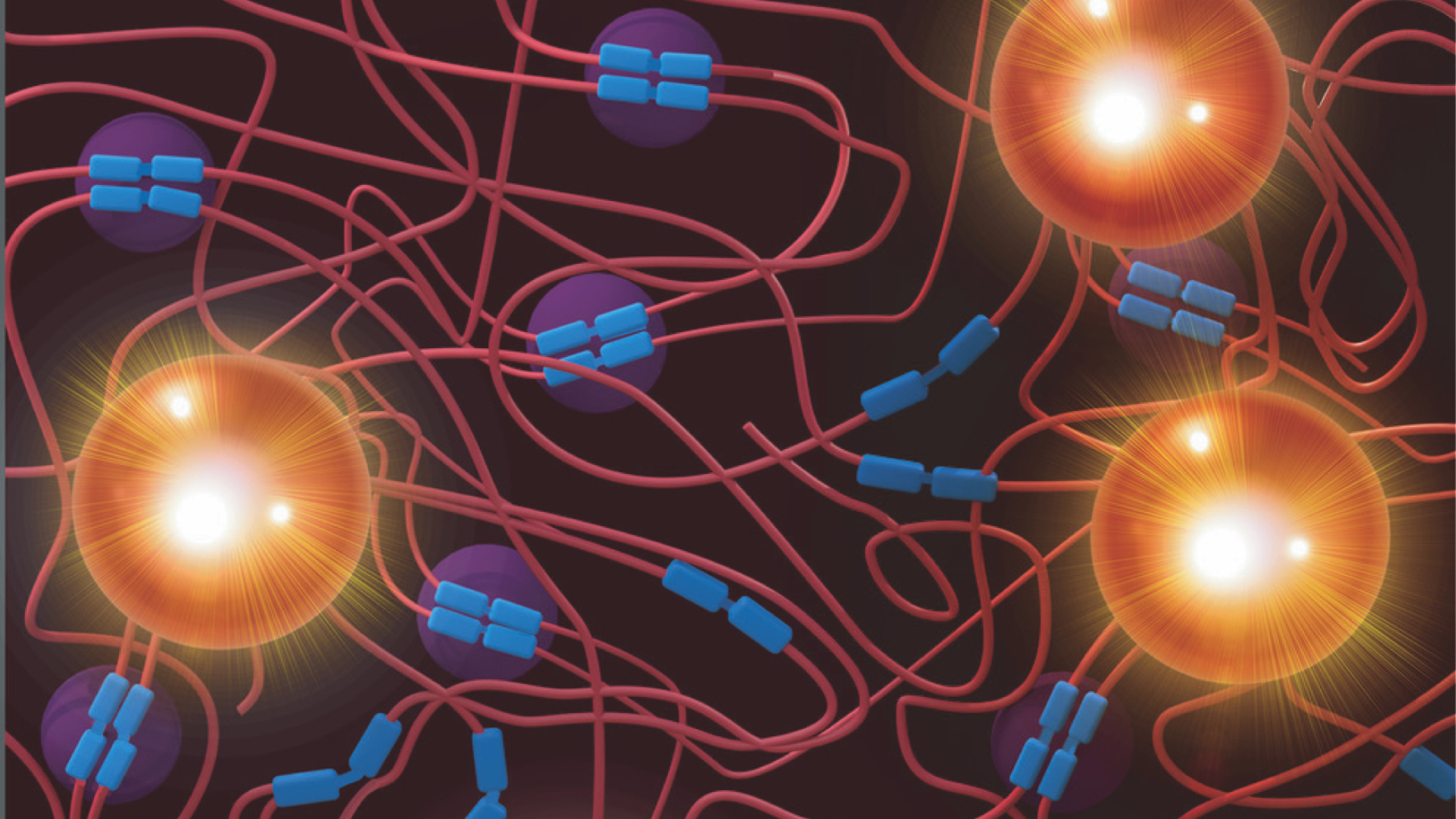
Achieving low thermal conductivity in nonporous polymer materials without compromising mechanical integrity remains a longstanding challenge. Conventional strategies, such as introducing porosity, are inherently limited in dense systems. Here, we demonstrate that thermal transport in polymer–organic filler hybrids is closely associated with the engineered availability of thermally accessible vibrational modes, rather than individual interfacial resistance or porosity. Using PU/organic filler hybrids as a model system, we show that incorporating rigid organic motifs shifts the vibrational density of states toward higher frequencies, where vibrational modes are weakly thermally populated at ambient conditions. This limits the number of heat-carrying channels, leading to suppressed thermal conductivity despite negligible individual interfacial resistance (∼10−9 m2 K W−1). These findings provide initial evidence that vibrational mode engineering may offer a promising molecular-level route for reducing thermal conductivity in dense polymer–organic hybrid systems.