
2026-05-29 バージニア工科大学(Virginia Tech)
<関連情報>
- https://news.vt.edu/articles/2026/06/science-suffocated-seas.html
- https://www.nature.com/articles/s43247-026-03362-w
赤道パンサラッサ海の脱酸素化は、三畳紀末の大量絶滅よりも前に起こった Deoxygenation in the equatorial Panthalassan Ocean predated the end-Triassic mass extinction
Kayla E. McCabe,Selva M. Marroquín,Andrew H. Caruthers,Jeremy D. Owens,Martyn L. Golding,Rachel E. B. Reid,Theodore R. Them II,João P. Trabucho-Alexandre,Yorick P. Veenma & Benjamin C. Gill
Communications Earth & Environment Published:01 April 2026
DOI:https://doi.org/10.1038/s43247-026-03362-w
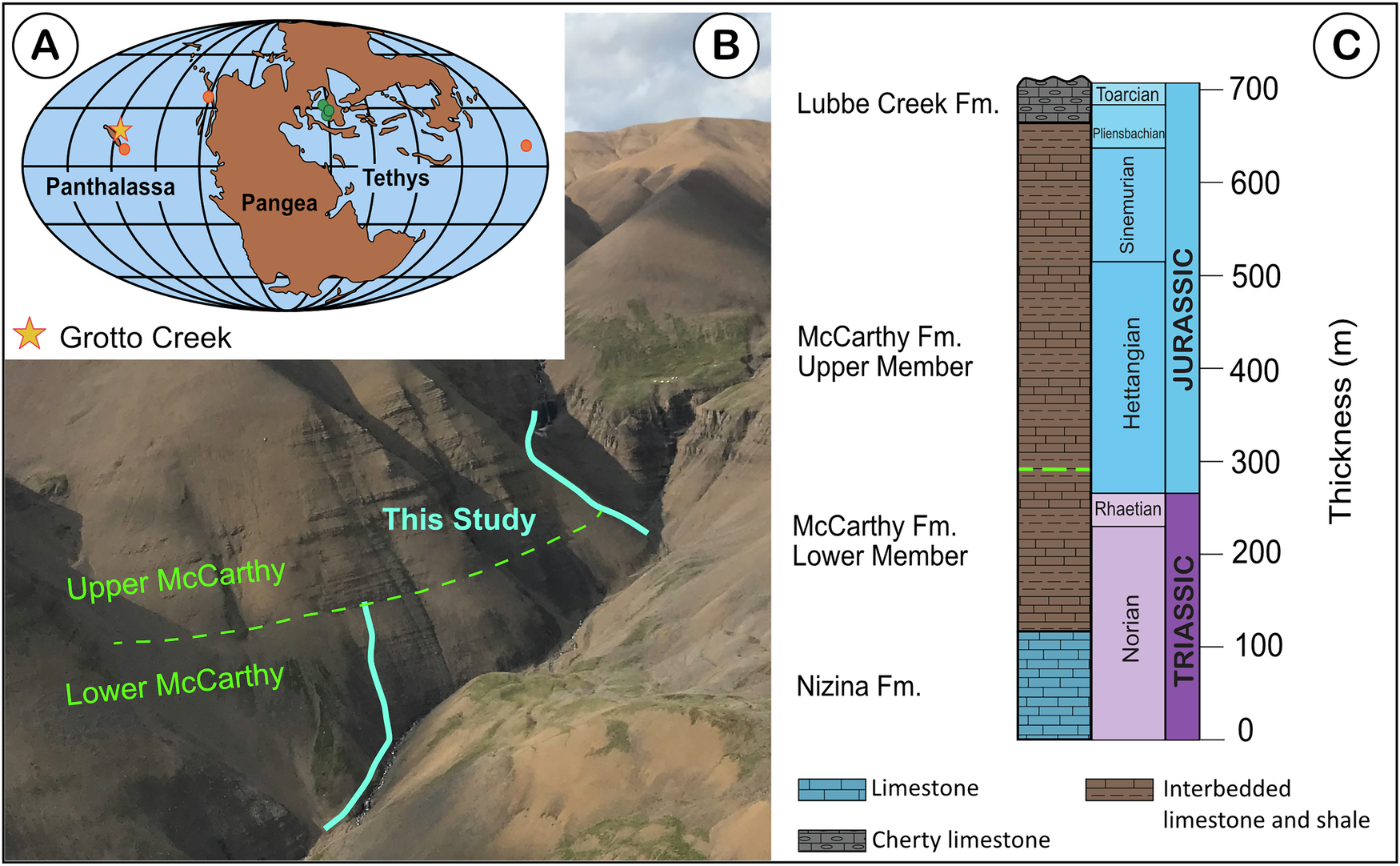
Abstract
The end-Triassic mass extinction was one of Earth’s largest biotic crises, and marine deoxygenation has been proposed as a primary driver. However, the timing, geographic extent, and severity of oxygen loss in the oceans remain uncertain. Here we present a multi-geochemical proxy record study from the equatorial Panthalassan Ocean that uses sedimentary iron speciation and nitrogen isotopes to reconstruct water column redox changes before, during, and after the mass extinction. Iron speciation data indicate anoxic bottom waters dominated this region through the Late Triassic-Early Jurassic, consistent with deposition beneath an oxygen minimum zone. Elevated nitrogen isotope values ~ 8 million years before the mass extinction record, enhanced denitrification linked to shoaling and expansion of this oxygen minimum zone. These results suggest that deoxygenation in the equatorial Panthalassa began well before the main extinction and coincided with biodiversity declines and carbon-cycle perturbations, likely stressing marine ecosystems before the end-Triassic mass extinction.

