
2024-12-11 NASA
NASAのエンジニアは、1960年代に開発された無翼の無動力航空機「リフティングボディ」の設計を基に、他の惑星の大気データを収集する新たな探査機の試作機を製作しました。この試作機は、NASAのアームストロング飛行研究センターでの試験飛行において、安定した飛行性能を示し、惑星探査への応用可能性が確認されました。この探査機は、衛星から分離して惑星の大気中を滑空し、従来の小型衛星よりも効率的かつ経済的にデータを収集することを目指しています。今後、さらなる試験と改良を経て、木星や土星などの巨大ガス惑星の大気探査への実用化が期待されています。
<関連情報>
The most effective way to prove a new idea is to start small, test, learn, and test again. A team of researchers developing an atmospheric probe at NASA’s Armstrong Flight Research Center in Edwards, California, are taking that approach. The concept could offer future scientists a potentially better and more economical way to collect data on other planets.
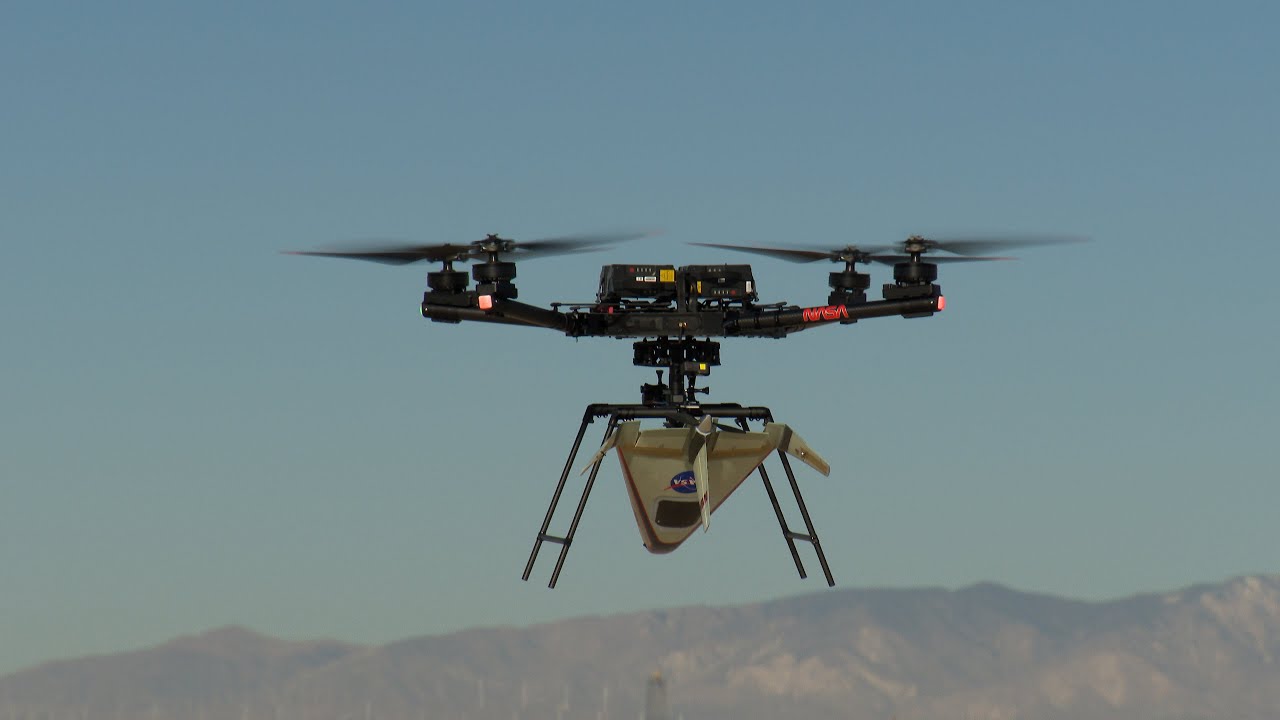
The latest iteration of the atmospheric probe flew after release from a quad-rotor remotely piloted aircraft on Oct. 22 above Rogers Dry Lake, a flight area adjacent to NASA Armstrong. The probe benefits from NASA 1960s research on lifting body aircraft, which use the aircraft’s shape for lift instead of wings. Testing demonstrated the shape of the probe works.
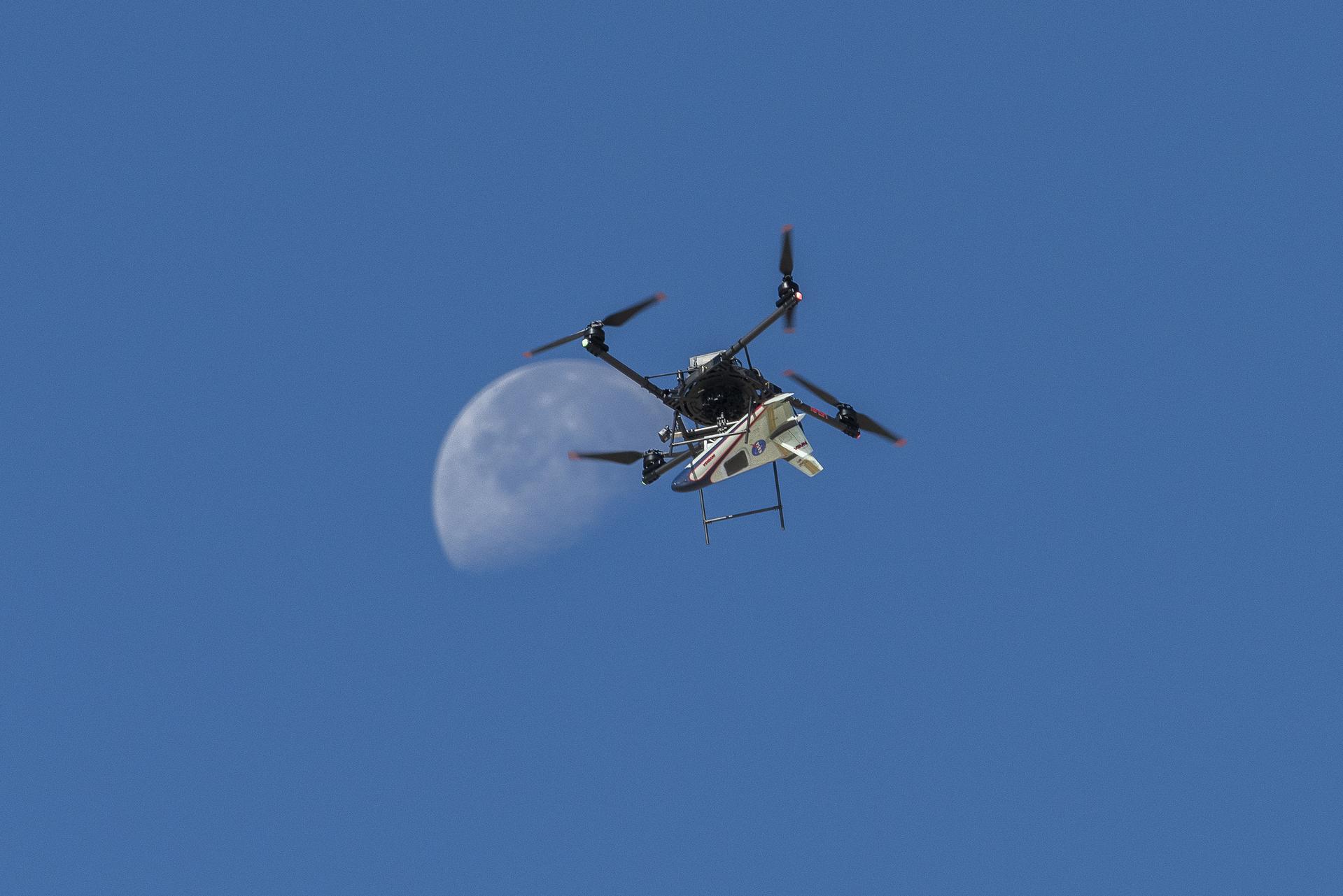
An atmospheric probe model attached upside down to a quad rotor remotely piloted aircraft ascends with the Moon visible on Oct. 22, 2024. The quad rotor aircraft released the probe above Rogers Dry Lake, a flight area adjacent NASA’s Armstrong Flight Research Center in Edwards, California. The probe was designed and built at the center.
NASA/Steve Freeman

