2026-09-24 中国科学院(CAS)
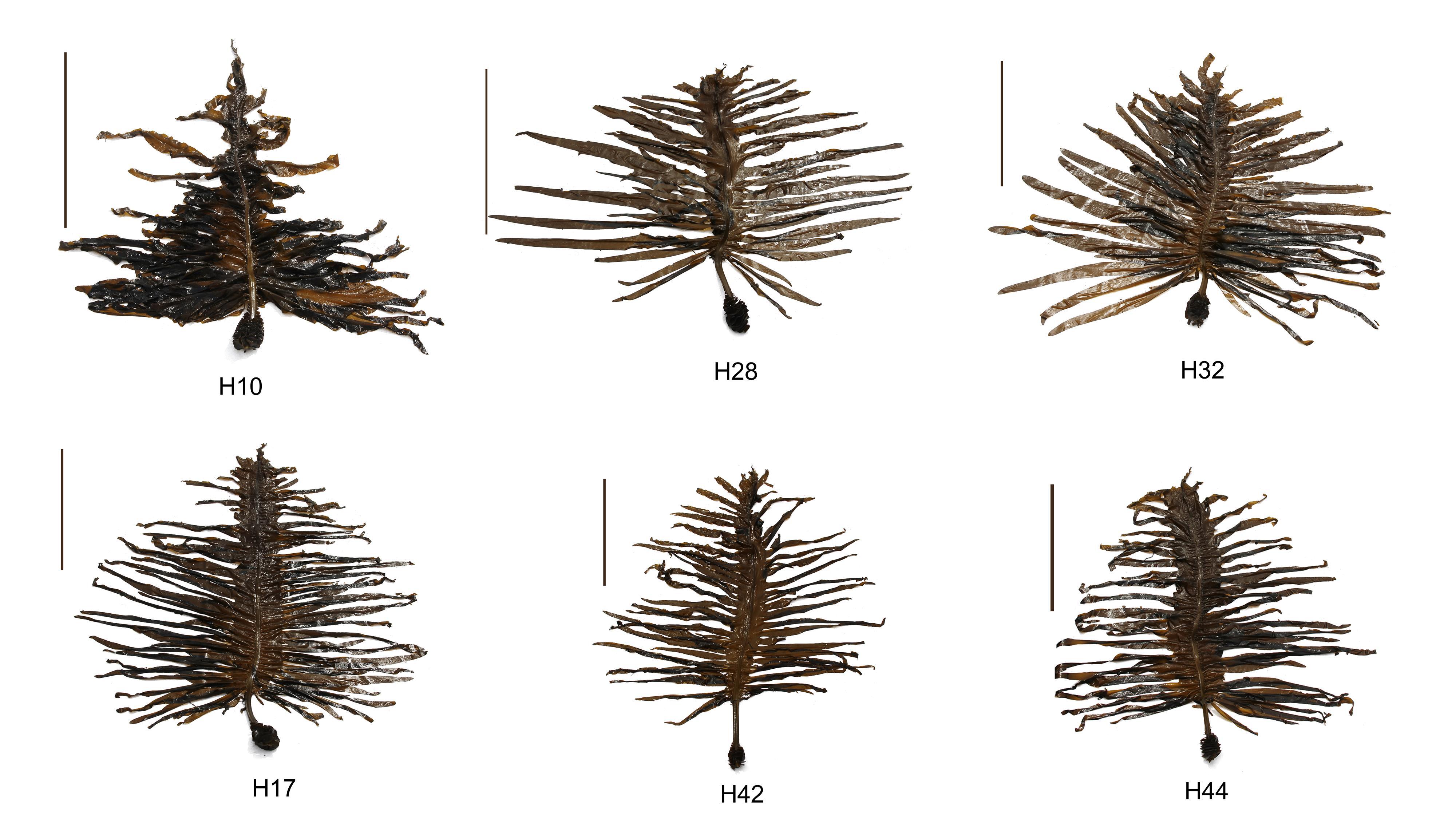
Morphology of triploid sporophytes. (Image by IOCAS)
<関連情報>
- https://english.cas.cn/newsroom/research-news/202609/t20260924_1201493.shtml
- https://onlinelibrary.wiley.com/doi/10.1111/jpy.70242
二倍体無胞子性配偶体の広範な誘導とワカメの倍数体育種への応用 Extensive induction of diploid aposporous gametophytes and their application in polyploid breeding of Undaria pinnatifida
Yuqian Li, Tifeng Shan
Journal of Phycology Published: 18 September 2026
DOI:https://doi.org/10.1111/jpy.70242
Abstract
Triploid breeding is a promising strategy for developing Undaria pinnatifida cultivars with higher yield, better quality, and stronger resistance to environmental stresses. We previously developed a triploid breeding method through crossing aposporous gametophytes derived from doubled haploid sporophytes with haploid gametophytes. However, only one male diploid aposporous gametophyte line was obtained. In the present study, we extensively induced three kinds of aposporous gametophytes, namely MoAG, PaAG, and CAG, from sporophytes derived, respectively, from selfing of monoicous gametophytes, parthenogenesis of female gametophytes, and cross-fertilization. We found that all the MoAGs were diploid and monoicous, the PaAGs all female and either diploid or haploid, and the CAGs all monoicous and either diploid or haploid. Parentage analysis revealed that cross-fertilization predominated when crossing the monoicous aposporous gametophytes with female haploid gametophytes. Triploid sporophyte lines were extensively generated by crossing the diploid gametophytes with haploid gametophytes. Six out of 17 triploid lines exhibited significantly superior comprehensive economic traits after cultivation in the sea and are therefore promising candidate cultivars for larger scale cultivation. Tetraploid sporophytes were obtained through selfing of diploid monoicous gametophytes. This study lays a solid foundation for polyploid breeding and development of superior cultivars in U. pinnatifida.