2026-08-17 カリフォルニア大学リバーサイド校(UCR)
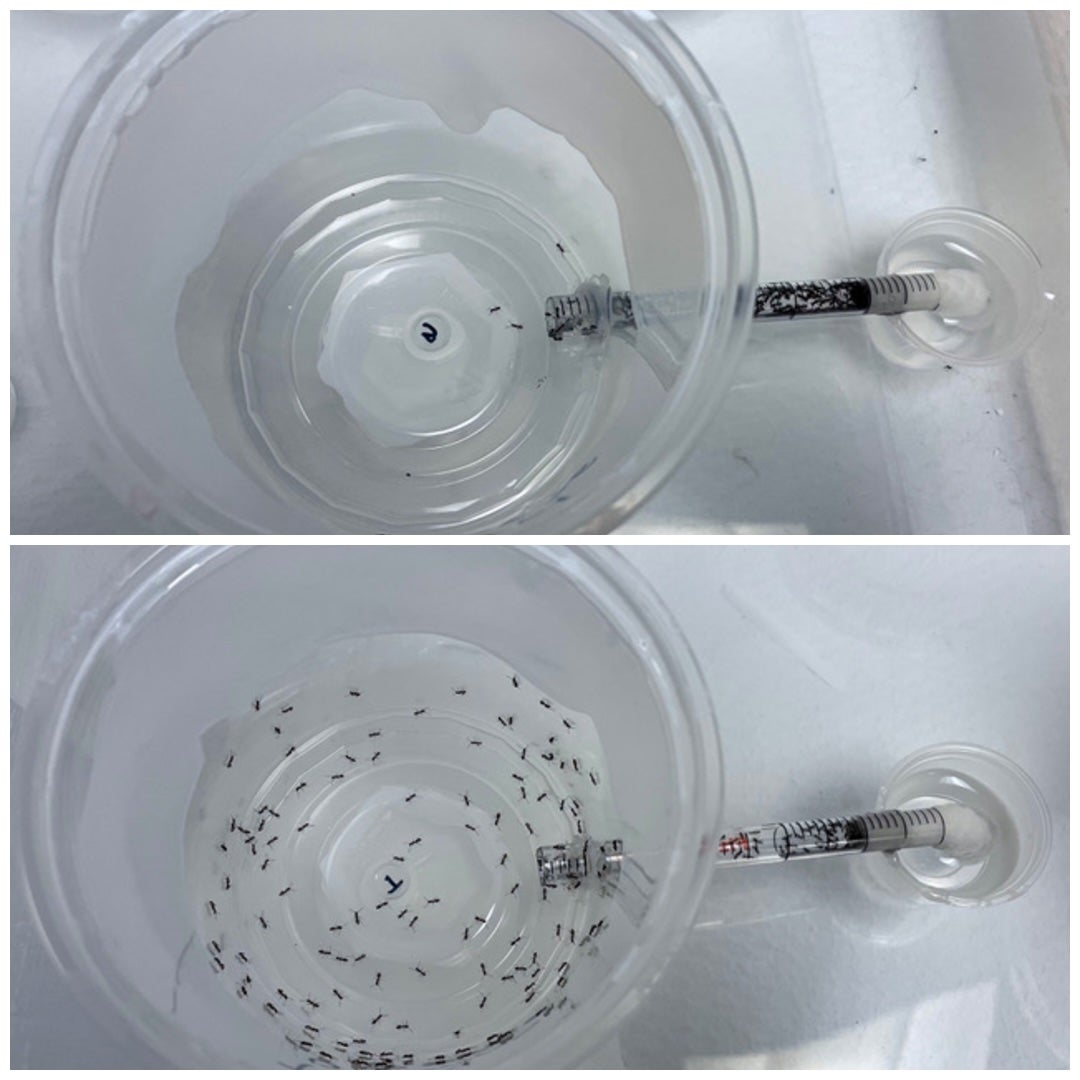
Comparison of normal ant activity outside the nest, above, with activity after exposure to thiamethoxam, below.
(Dong Hwan Choe/UCR)
<関連情報>
- https://news.ucr.edu/articles/2026/08/17/pesticides-make-ants-go-crazy
- https://www.mdpi.com/2075-4450/17/8/785
低濃度のホウ酸およびチアメトキサムベイトがアルゼンチンアリの実験室コロニーに及ぼす行動への影響 Behavioral Effects of Low Concentrations of Boric Acid and Thiamethoxam Baits on the Laboratory Colonies of the Argentine Ant
DongChan Im,Daniel Dar,Vincent Le,Wenbo Li and Dong-Hwan Choe
Insects Published: 29 July 2026
DOI:https://doi.org/10.3390/insects17080785
Abstract
The Argentine ant, Linepithema humile (Mayr), is an important invasive pest in natural, agricultural, and urban ecosystems worldwide. Boric acid and thiamethoxam have been used as bait toxicants for Argentine ant management. Most of the toxicological investigations on these toxicants have focused on the mortality of the ants. However, their behavioral effects on target ants remain poorly understood. By focusing on the in-nest aggregation and out-nest activity level, the current study investigated the behavioral effects of low concentrations of boric acid and thiamethoxam on Argentine ants. Boric acid increased in-nest aggregation and reduced activity in the foraging area. In contrast, thiamethoxam treatment caused the ants to leave the nest and continue roaming in the foraging area. Individual behavior assay showed that overall mobility of ants was not impacted by any of the treatments, while thiamethoxam treatment caused ants to spend more time in the lighted area. Distinct behavioral impacts of these toxicants might be due to differences in their unique modes of actions. Understanding these behavioral effects of bait toxicants would help to optimize management protocols for the Argentine ant.