2026-07-31 北海道大学
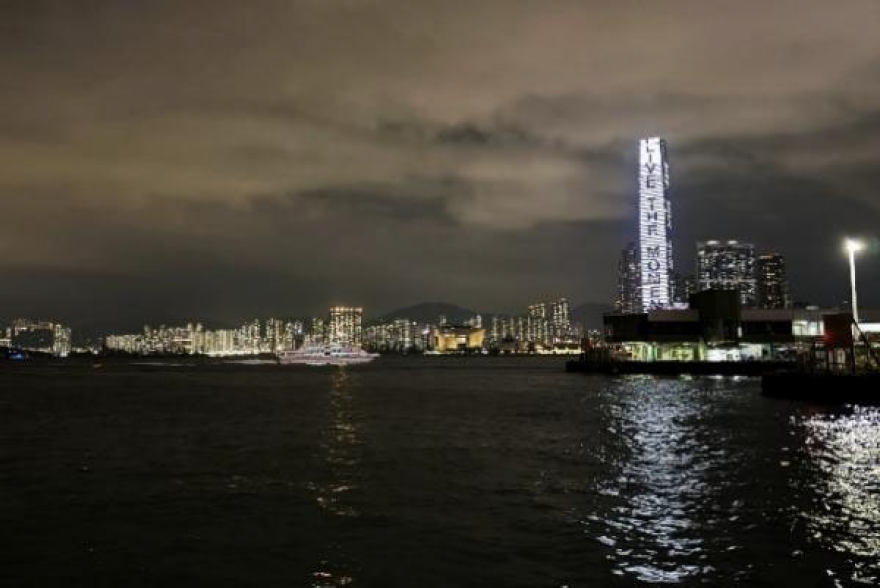
開発が進む沿岸部は特に夜間人工光に強くさらされている。写真は、「世界三大夜景」、「百万ドルの夜景」として有名な香港中心部の港(撮影:津金)
<関連情報>
- https://www.hokudai.ac.jp/news/2026/07/post-2395.html
- https://www.sciencedirect.com/science/article/abs/pii/S0025326X26008726
海洋付着生物群集の初期遷移に対する夜間人工光の影響 Effects of artificial light at night on marine sessile communities during early succession
Kyoko Tsugane, Masahiro Nakaoka
Maline Pollution Bulletin Available online: 7 July 2026
DOI:https://doi.org/10.1016/j.marpolbul.2026.120085
Highlights
- Artificial light at night altered the structure of a marine sessile community.
- The effects of artificial light on the community varied with the successional stage.
- Suppression of a dominant species by artificial light increased community evenness.
Abstract
Marine environments are increasingly vulnerable to impacts resulting from anthropogenic activities. Artificial light at night (ALAN), a pervasive global pollutant, has been shown to disrupt fundamental biological phenomena across diverse taxonomic groups. However, the effects of ALAN on marine ecosystems remain poorly understood, particularly at the community level. In this study, we focused on marine sessile communities, which play crucial roles in coastal ecosystems, in eastern Hokkaido, Japan to examine the effects of ALAN during early succession. Settlement panels were deployed for 24 weeks in the subtidal zone and exposed to two different light regimes: an ALAN treatment (illuminated at night by white light), and a control (not illuminated at night). To the best of our knowledge, this study demonstrates for the first time that the effects of ALAN on composition, diversity, and abundance of sessile communities vary depending on the timing relative to the stage of community succession. During the initial phase, ALAN resulted in a significant increase in biomass and a decrease in diversity index, potentially driven by the dominance of brown algae. In the middle phase of the experiment, ALAN significantly altered community composition, reduced abundance, and increased diversity index by suppressing the dominant hydroid species, possibly by attracting predators. These impacts of ALAN on biomass and community structure persisted until 24 weeks. The response of the dominant species to ALAN at each time-point influenced community structure and succession. Our results highlight the need for long-term research to properly assess the effects of ALAN on community dynamics.