2026-07-28 奈良先端科学技術大学院大学
<関連情報>
連続ファジングの大規模実証分析:100万回のファジングセッションから得られた知見 Large-Scale Empirical Analysis of Continuous Fuzzing: Insights From 1 Million Fuzzing Sessions
Tatsuya Shirai; Olivier Nourry; Yutaro Kashiwa; Kenji Fujiwara; Yasutaka Kamei; Hajimu Iida
IEEE Transactions on Software Engineering Published: 13 April 2026
DOI:https://doi.org/10.1109/TSE.2026.3683879
Abstract
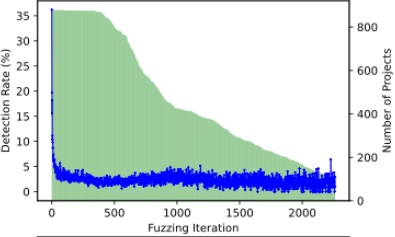
Software vulnerabilities are constantly being reported and exploited in software products, causing significant impacts on society. In recent years, the main approach to vulnerability detection, fuzzing, has been integrated into the continuous integration process to run in short and frequent cycles. This continuous fuzzing allows for fast identification and remediation of vulnerabilities during the development process. Despite adoption by thousands of projects, however, it is unclear how continuous fuzzing contributes to vulnerability detection. This study aims to elucidate the role of continuous fuzzing in vulnerability detection. Specifically, we investigate the coverage and the total number of fuzzing sessions when fuzzing bugs are discovered. We collect issue reports, coverage reports, and fuzzing logs from OSS-Fuzz, an online service provided by Google that performs fuzzing during continuous integration. Through an empirical study of a total of approximately 1.12 million fuzzing sessions from 878 projects participating in OSS-Fuzz, we reveal that (i) a substantial number of fuzzing bugs exist prior to the integration of continuous fuzzing, leading to a high detection rate in the early stages; (ii) code coverage continues to increase as continuous fuzzing progresses; (iii) changes in coverage contribute to the detection of fuzzing bugs; and (iv) developer-provided seed corpus exhibit long-term effectiveness. This study provides empirical insights into how continuous fuzzing contributes to fuzzing bug detection, offering practical implications for future strategies and tool development in continuous fuzzing.