2026-06-23 マサチューセッツ工科大学(MIT)
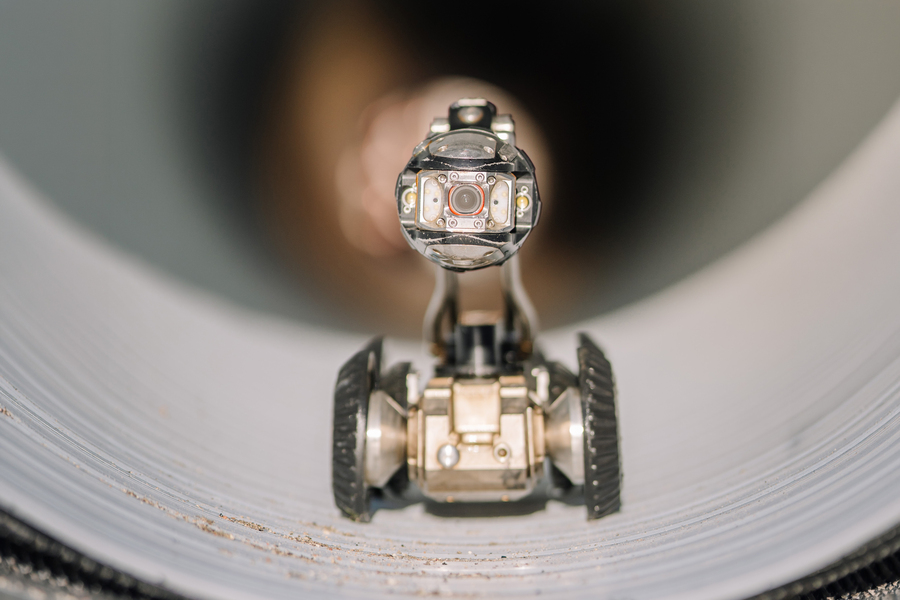
A new chip developed by MIT researchers could help tiny, low-power robots avoid obstacles as they navigate around tight corners inside an industrial HVAC system to check for gas leaks. Credit: iStock
<関連情報>
- https://news.mit.edu/2026/new-chip-could-help-tiny-robots-traverse-complex-environments-0623
- https://arxiv.org/abs/2603.29005
Gleanmer:リアルタイム3Dガウス占有マッピング向け6mW SoC Gleanmer: A 6 mW SoC for Real-Time 3D Gaussian Occupancy Mapping
Zih-Sing Fu, Peter Zhi Xuan Li, Sertac Karaman, Vivienne Sze
arXiv Submitted on 30 Mar 2026
DOI:https://doi.org/10.48550/arXiv.2603.29005
Abstract
High-fidelity 3D occupancy mapping is essential for many edge-based applications (such as AR/VR and autonomous navigation) but is limited by power constraints. We present Gleanmer, a system on chip (SoC) with an accelerator for GMMap, a 3D occupancy map using Gaussians. Through algorithm-hardware co-optimizations for direct computation and efficient reuse of these compact Gaussians, Gleanmer reduces construction and query energy by up to 63% and 81%, respectively. Approximate computation on Gaussians reduces accelerator area by 38%. Using 16nm CMOS, Gleanmer processes 640×480 images in real time beyond 88 fps during map construction and processes over 540K coordinates per second during map query. To our knowledge, Gleanmer is the first fabricated SoC to achieve real-time 3D occupancy mapping under 6 mW for edge-based applications.