2026-05-28 清華大学

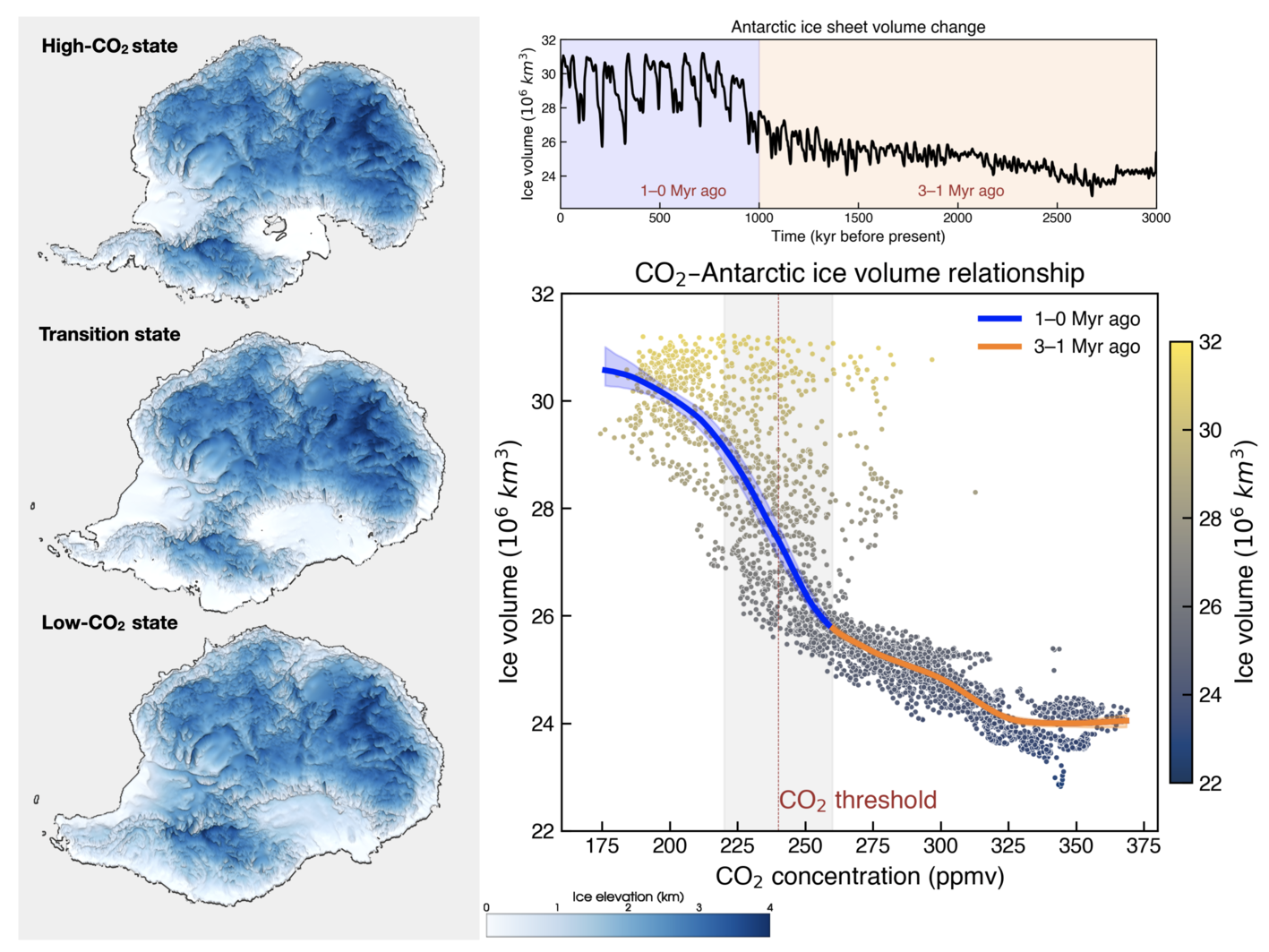
Figure 1. Schematic illustration of dynamical freezing in a diamond spin ensemble.
<関連情報>
- https://www.tsinghua.edu.cn/en/info/1245/14920.htm
- https://www.nature.com/articles/s41586-026-10585-6
相互作用するスピンアンサンブルにおける磁気計測のための動的凍結 Dynamical freezing for magnetometry in an interacting spin ensemble
Ya-Nan Lu,Dong Yuan,Yixuan Ma,Yan-Qing Liu,Si Jiang,Xiang-Qian Meng,Yi-Jie Xu,Xiu-Ying Chang,Chong Zu,Hong-Zheng Zhao,Dong-Ling Deng,Lu-Ming Duan & Pan-Yu Hou
Nature Published:27 May 2026
DOI:https://doi.org/10.1038/s41586-026-10585-6
Abstract
Understanding and controlling non-equilibrium dynamics in quantum many-body systems is a fundamental challenge in modern physics1,2,3,4,5, with profound implications for advancing quantum technologies. Typically, periodically driven systems in the absence of conservation laws thermalize to a featureless ‘infinite-temperature’ state, erasing all memory of their initial conditions6,7,8. However, this pattern can break down through mechanisms such as integrability9, many-body localization2,3,10,11, quantum many-body scars4 and Hilbert space fragmentation12,13. Here we report the experimental observation of dynamical freezing, a distinct mechanism of thermalization breakdown in driven systems14,15,16,17,18,19, and demonstrate its application in quantum sensing using an ensemble of approximately 104 interacting nitrogen-vacancy (NV) spins in diamond. By precisely controlling the driving frequency and detuning, we observe emergent long-lived spin magnetization and coherent oscillatory micromotions, persisting over timescales exceeding the interaction-limited coherence time (T2) by more than an order of magnitude. By using these unconventional dynamics, we develop a dynamical-freezing-enhanced a.c. magnetometry that extends optimal sensing times far beyond T2, outperforming conventional dynamical decoupling magnetometry with a 2.7-fold sensitivity enhancement. Our results not only provide clear experimental observation of dynamical freezing—a peculiar mechanism defying thermalization through emergent conservation laws—but also establish a robust control method generally applicable to diverse physical platforms, with broad implications in quantum metrology and beyond.