2026-05-22 中国科学院(CAS)

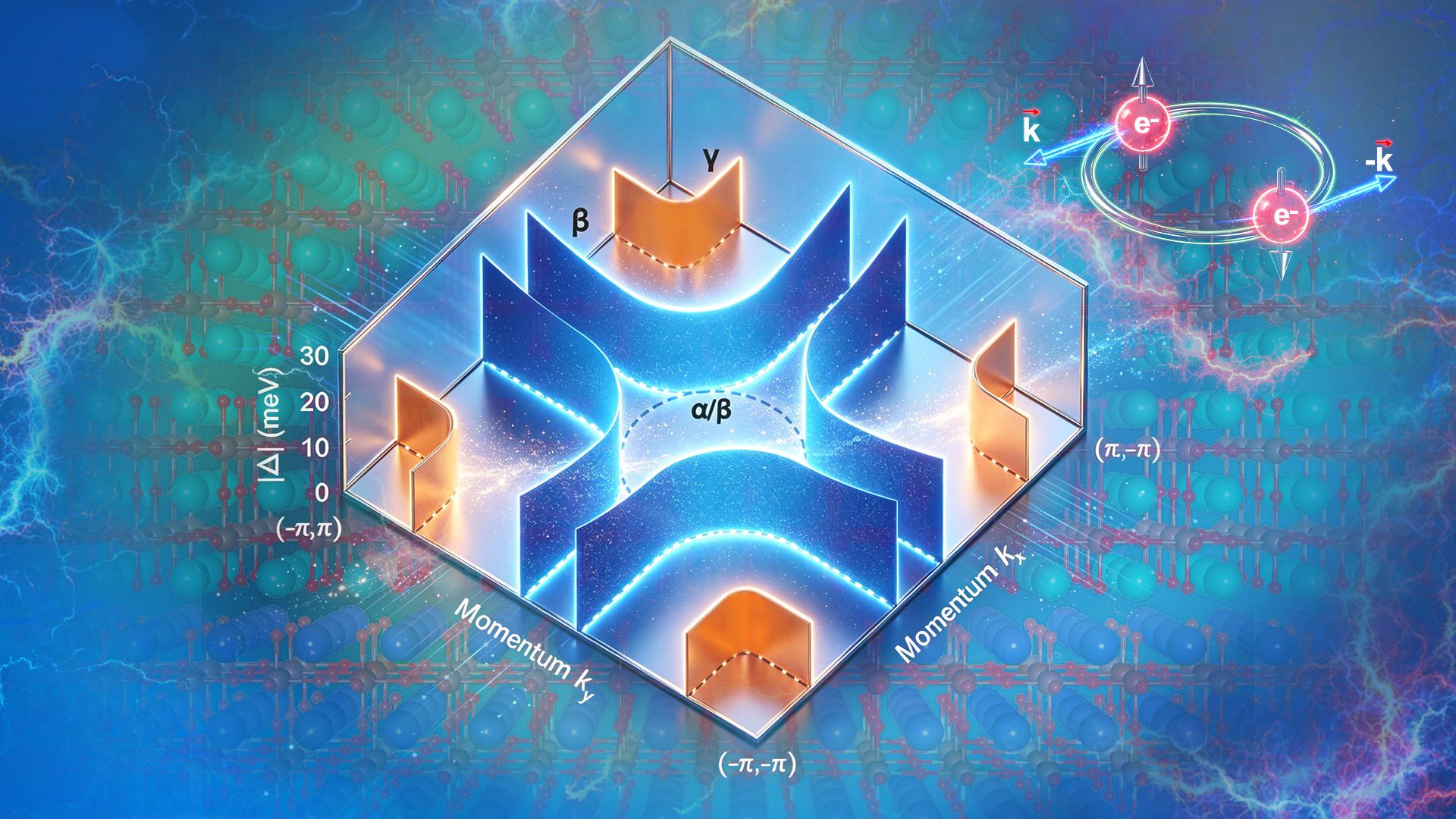
The peak-selective passivation strategy for perovskite/silicon tandem solar cells (Image by NIMTE)
<関連情報>
- https://english.cas.cn/newsroom/research-news/202605/t20260520_1159630.shtml
- https://www.cell.com/matter/abstract/S2590-2385(26)00187-6
32.9%の効率を持つペロブスカイト/シリコンタンデム太陽電池におけるピラミッドピークの選択的パッシベーション Selective passivation of pyramid peaks for 32.9%-efficient perovskite/silicon tandem solar cells
Weichuang Yang ∙ Zhenhai Yang ∙ Zedong Lin ∙ … ∙ Yuheng Zeng ∙ Xi Yang ∙ Jichun Ye
Matter Published:May 21, 2026
DOI:https://doi.org/10.1016/j.matt.2026.102824
Progress and potential
Perovskite/silicon tandem solar cells hold great promise for next-generation photovoltaics but are limited by poor film coverage and electrical losses on industrial pyramid-textured silicon. Here, we show that selectively passivating only the pyramid peaks with localized Al2O3 effectively suppresses leakage while simultaneously promoting pinhole-free perovskite formation. This spatially targeted approach resolves the long-standing trade-off between passivation and charge transport without altering existing device architectures. The localized passivation can serve as a general design for managing interfacial defects in tandem devices. Such strategies could be implemented in scalable manufacturing and extended to other optoelectronic technologies, advancing the development of high-efficiency, stable devices for sustainable energy applications.
Highlights
- Peak-selective passivation enables localized Al2O3 to suppress shunting
- PSP enables pinhole-free perovskite coverage on textured silicon
- Local Al2O3 enables passivation and efficient carrier transport
- Achieving 33.33% efficiency with 90% retention after 1,000 h
Summary
Perovskite/silicon tandem solar cells (PSTSCs), widely recognized as among the most promising next-generation photovoltaic technologies, often suffer from poor perovskite coverage and electrical shunting, particularly at the pyramid peaks of textured silicon bottom cells. Here, we propose a peak-selective passivation (PSP) strategy that employs polystyrene nanospheres as a template to deposit localized aluminum oxide (Al2O3) onto the peaks of submicron pyramids, effectively insulating and passivating these regions and mitigating electrical shunting. Notably, Al2O3 exhibits weak interaction with the self-assembled monolayers, enabling direct contact with the perovskite and offering more nucleation sites for perovskite deposition. Consequently, we achieve a pinhole-free and fully covered perovskite layer on the pyramid-textured silicon substrate, facilitating carrier transport and suppresses non-radiative recombination. Notably, PSP-Al2O3-based PSTSCs (1 cm2) achieve an efficiency of 33.33% (certified at 32.89%) and excellent operational stability, retaining 90% of their initial performance after 1,000 h of maximum power point tracking.