

2026-03-03 カリフォルニア大学サンディエゴ校(UCSD)
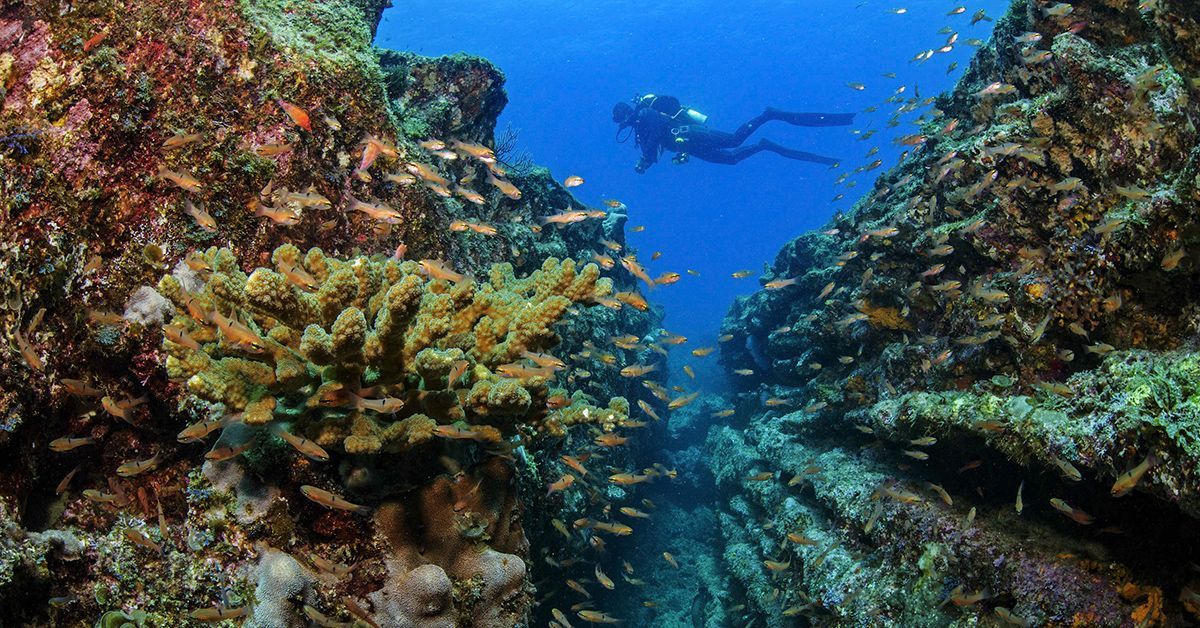
Photo credit: Octavio Aburto-Oropeza
<関連情報>
- https://today.ucsd.edu/story/effective-marine-protection-can-more-than-triple-dive-tourism-revenue
- https://www.sciencedirect.com/science/article/pii/S0921800926000194
自然回復を市場成果に結びつける Operationalizing nature recovery to market outcomes
Fabio Favoretto, Matthew J. Forrest, Octavio Aburto Oropeza
Ecological Economics Available online: 21 January 2026
DOI:https://doi.org/10.1016/j.ecolecon.2026.108934
Abstract
A prosperous blue economy in coastal areas requires operational models that clearly link ecological outcomes to economic returns. These models can support investment, planning, and the growth of non-extractive economies that benefit both coastal communities and the environment. Here, we focus on an Essential Ocean Variable—fish biomass—because it is a globally standardized and monitored variable with proven links to recovery and management. We connect this variable to a key economic output: scuba diving ecotourism, which is a critical component of many coastal economies. To link the two, we built a dual-model heuristic: (i) a spatial hedonic model across diving sites distributed globally relating standardized per-tank prices to reef fish biomass, and (ii) a temporal model linking fish biomass dynamics in Cabo Pulmo National Park to visitation rates. The model shows that a 10% increase in fish biomass is associated with a ∼ 3.46% increase in diving price (R2 = 0.335, p = 0.0016). Scenario analysis assumes a degraded baseline (300 kg/ha) and recovery trajectories toward near-pristine levels (∼8000 kg/ha) and applies the global log-log price-biomass elasticity to project revenue gains of ∼30–252%, increasing pooled annual revenue by about $6.26 million (approx $1.25 million per operator versus $0.35 million in degraded conditions). This heuristic converts ecological change into finance-ready outputs—price changes, revenue projections, return on investment (ROI), and payback timelines—offering a tool to design and fund effective marine protection while aligning tourism markets with ecosystem recovery.

