
2026-11-13 ミュンヘン大学(LMU)
<関連情報>
- https://www.lmu.de/en/about-lmu/structure/central-university-administration/media-relations-and-communications/press-room/press-release/even-remote-wildlife-carries-microplastics-but-human-proximity-matters-31c8ff38.html
- https://www.nature.com/articles/s41586-026-11285-x
人間による土地利用が陸上野生動物のマイクロプラスチック蓄積量を左右する(Human land use drives microplastic abundance in terrestrial wildlife)
Marcia de Almeida Monteiro Melo Ferraz, Arnaud L. J. Desbiez, Mario Henrique Alves, Justin M. Calabrese, Alexandra Tiso Cumerlato, Fernanda Cristina Jacoby, Nicole Grechi, Danilo Kluyber, Erika Y. Lin, Marcella Pecora Milazzotto, Grazielle Soresini, Emília Patrícia Medici, Gabriela Mastromonaco, Michael J. Noonan
Nature 2026-11-11
DOI:10.1038/s41586-026-11285-x
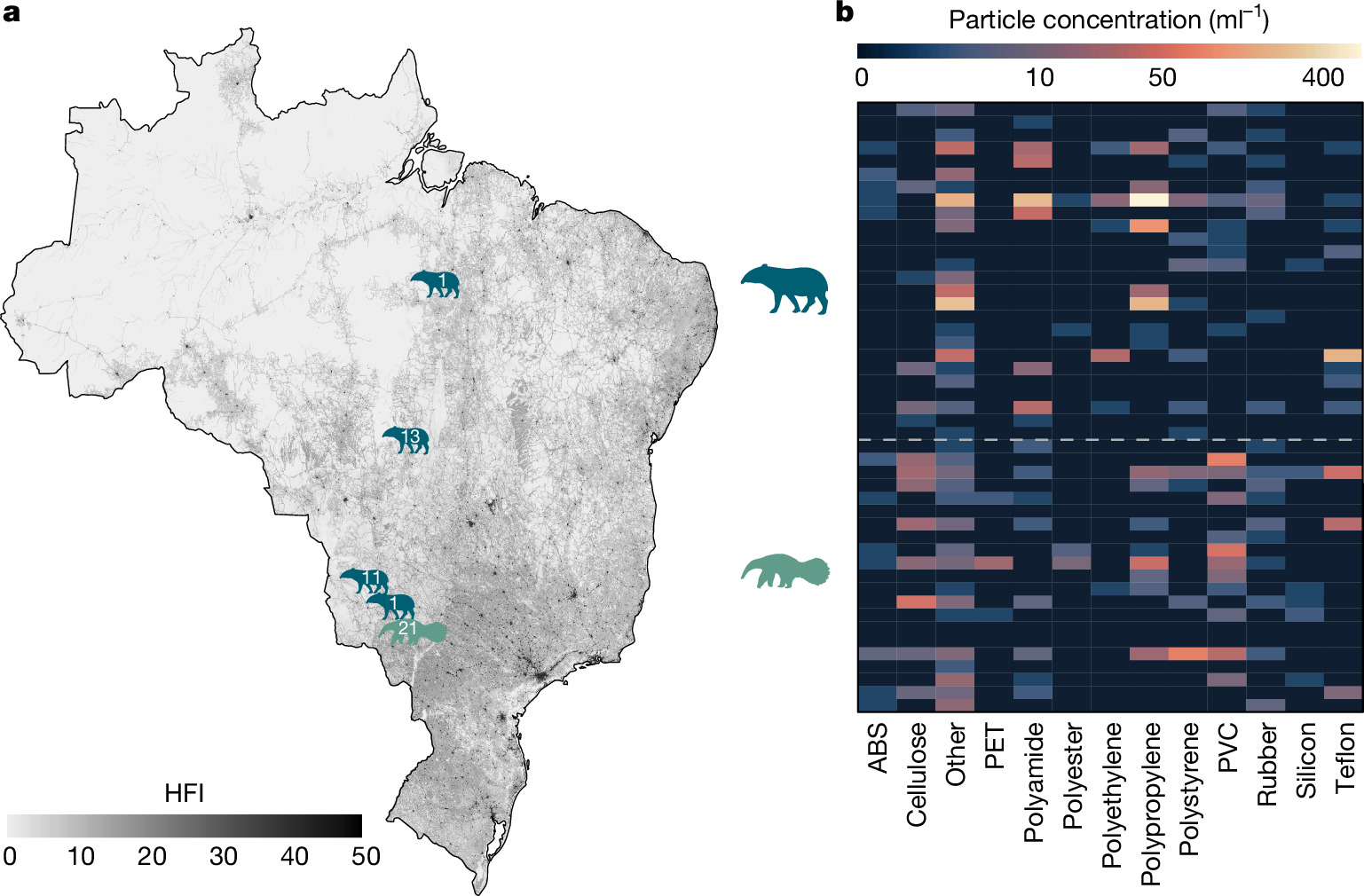
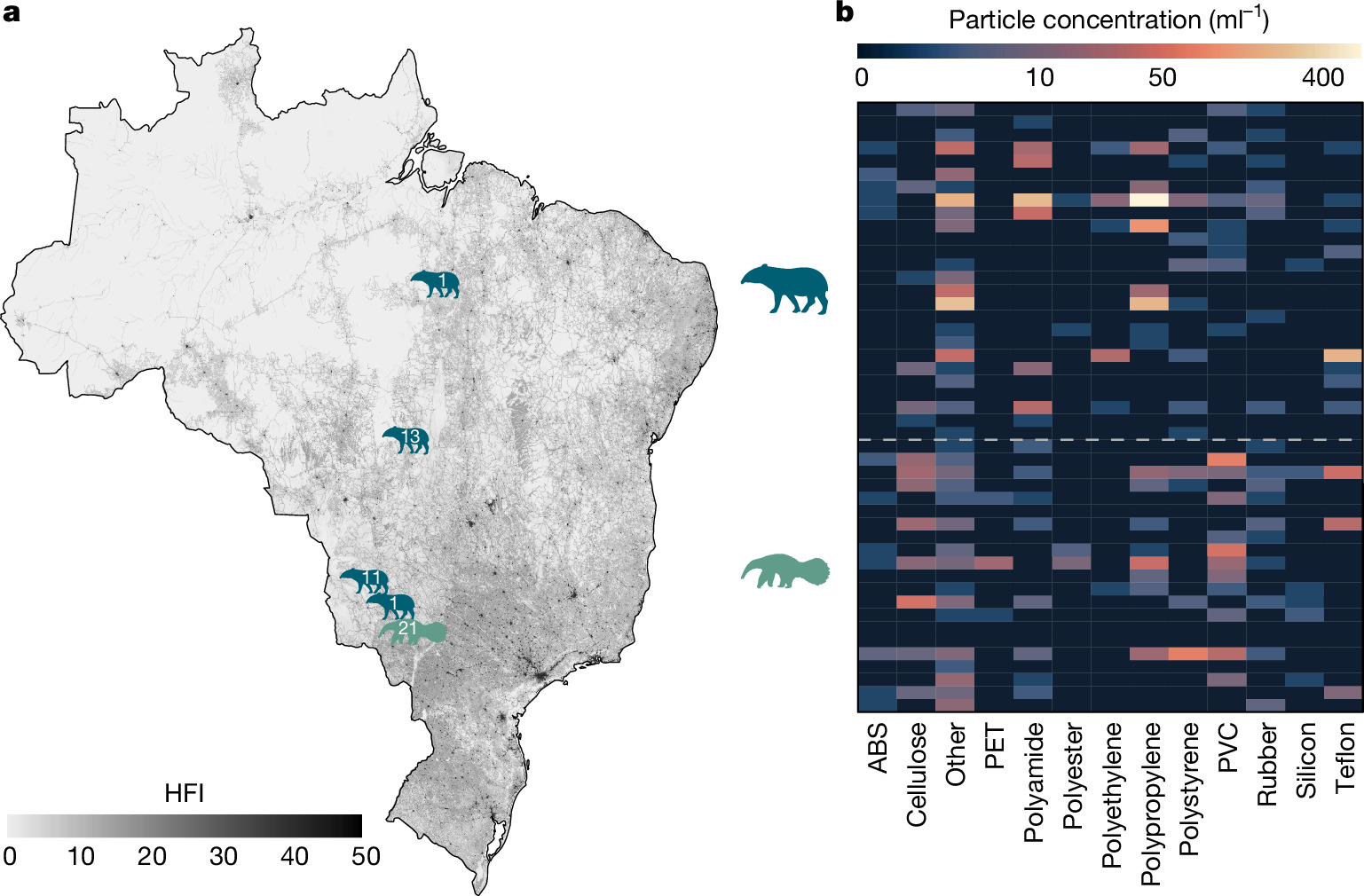
Fig. 1: Overview of the dataset with microplastic characterization across species.
Ferraz et al., “Human land use drives microplastic abundance in terrestrial wildlife,” Nature (2026), https://doi.org/10.1038/s41586-026-11285-x, licensed under CC BY 4.0.
Plastic pollution is increasingly recognized as a threat to terrestrial ecosystems, but the relationship between microplastic accumulation in wildlife and human-driven land-use change remains poorly understood. In this study, researchers investigated 26 lowland tapirs and 21 giant anteaters in Brazil by measuring microplastic concentrations in blood using confocal Raman spectroscopy and integrating these measurements with GPS tracking data and land-use information. Microplastics were detected in 43 of the 47 animals, with a mean concentration of 73.8 particles per millilitre. The results showed that animals exposed to greater human disturbance and those living closer to human development and waste management facilities tended to carry higher microplastic burdens. Microplastics were also detected in animals inhabiting the Pantanal, including individuals located more than 65 km from the nearest development and more than 112 km from waste management facilities, suggesting that atmospheric and aquatic transport may contribute to widespread environmental contamination. This study establishes a quantitative framework for assessing microplastic exposure in terrestrial wildlife by integrating animal movement ecology with landscape-level land-use information. The findings suggest that improved land-use management and waste management infrastructure could help reduce microplastic exposure in wildlife.
