2026-10-22 バーミンガム大学
世界の氷河のうち、湖・海洋・氷棚に流れ込む氷河は全体の約3.2%にすぎないが、2000~2019年には年間約1,340億トンの氷を失い、世界の氷河の氷の損失量の半分以上を占めていたことが明らかになった。バーミンガム大学とリーズ大学などの研究チームは、グリーンランドと南極の氷床を除く世界の216,502個の氷河を分析し、氷河の末端環境による流動速度と氷の損失量の違いを比較した。
特に、湖に流れ込む氷河は、陸上で終わる氷河と比べて、氷河の規模を考慮した氷の損失速度が約57%速かった。湖への氷の崩落や水中での融解が、その一因と考えられるが、詳しいメカニズムは今後の研究課題である。本研究は、氷河の分類と特性を考慮した将来予測モデルの改善につながり、海面上昇、水資源の変化、氷河湖に関連する自然災害の予測精度向上に役立つと期待される。
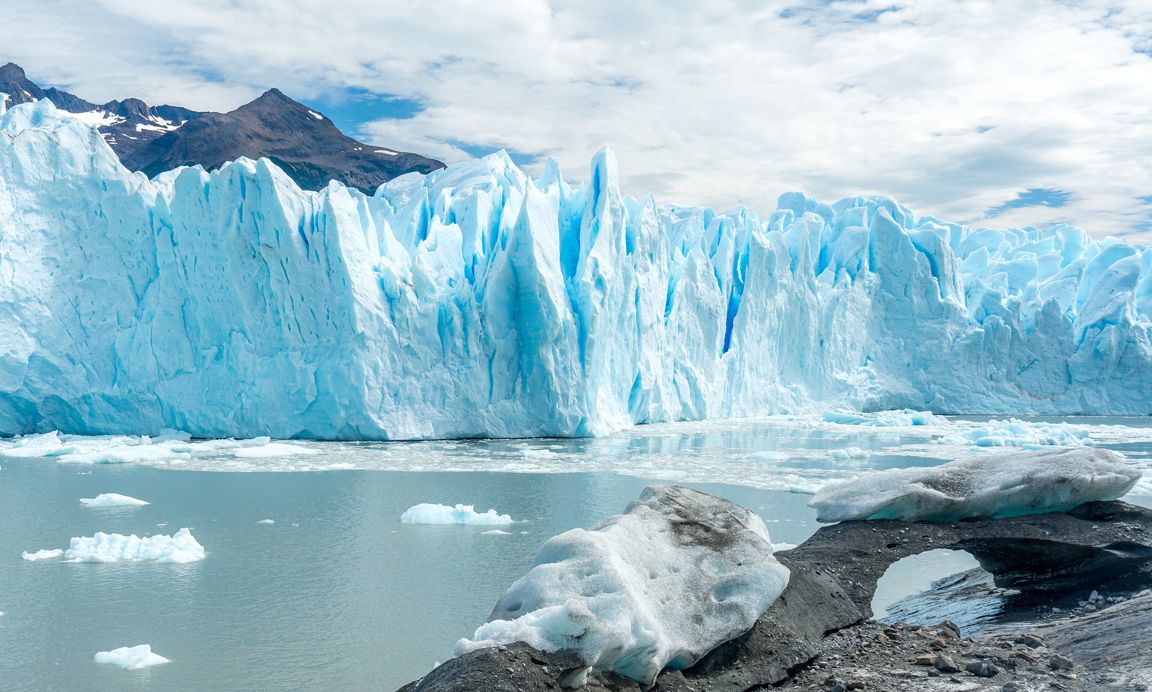
Glaciers like Perito Moreno Glacier in Argentina are losing significant mass each year, and much faster than other types of glaciers. Picture credit: Fernando
<関連情報>
- https://www.birmingham.ac.uk/news/2026/just-3-of-the-worlds-glaciers-account-for-over-half-of-glacier-ice-loss
- https://www.nature.com/articles/s41467-026-78654-y
末端環境における氷河の速度と質量損失の地球規模での変動 Global-scale variability of glacier velocity and mass loss across terminus environments
Joseph Mallalieu, Jonathan L. Carrivick, Matthias Huss, Iestyn D. Barr, Nicholas E. Barrand & Cassandra L. Raby
Nature Communications Published:23 October 2026
DOI:https://doi.org/10.1038/s41467-026-78654-y
Abstract
The environment in which a glacier terminates can strongly influence its behaviour, stability and future evolution, yet the relationship between terminus type and glacier dynamics at the global scale remains poorly constrained. Here we present a globally-complete classification of glacier termini distinguishing between land, lake, marine and shelf environments, and integrate it with datasets of glacier geometry, dynamics and climate. We show that although lake-, marine- and shelf-terminating glaciers comprise only 3.2% of glaciers globally, they account for over half of global glacier area and mass loss. We also show that lake- and marine-terminating glaciers flow, on average, 10% and 44% faster than land-terminating glaciers, respectively. Furthermore, specific (area-normalised) mass loss rates at lake-terminating glaciers are 57% greater than those at land- and marine-terminating glaciers. Our findings underscore the need for improved representation of non-land glacier termini in models of glacier evolution and sea-level rise, and suggest that distinguishing the environmental and geometric controls of termini on glacier dynamics remains an important challenge for future research.