2026-09-04 パシフィック・ノースウェスト国立研究所(PNNL)

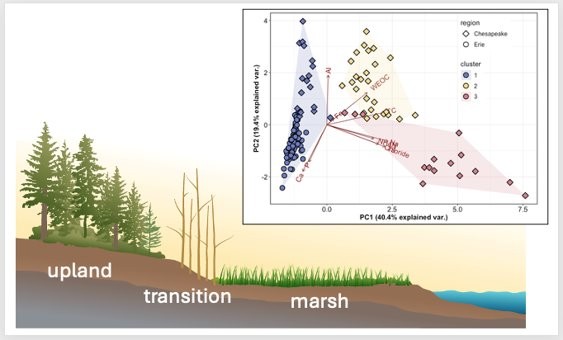
Image by Nathan Johnson | Pacific Northwest National Laboratory
<関連情報>
- https://www.pnnl.gov/publications/accelerating-coastal-research-high-performance-data-processing-pipeline
- https://agupubs.onlinelibrary.wiley.com/doi/10.1029/2025JG008807
高品質かつFAIRな環境センサーデータのための、高性能で拡張性の高い処理パイプライン A Performant, Scalable Processing Pipeline for High-Quality and FAIR Environmental Sensor Data
Stephanie C. Pennington, Ben Bond-Lamberty, Roberta Bittencourt Peixoto, Xingyuan Chen, Selina L. Cheng, Fausto Machado-Silva, Kurt Maier, Evan Phillips, Peter Regier …
Journal of Geophysical Research: Biogeosciences Published:08 November 2025
DOI:https://doi.org/10.1029/2025JG008807
Abstract
High-resolution environmental monitoring is necessary to record, understand, and predict biogeochemical and ecological changes particularly in coastal systems but brings significant challenges in processing and making rapidly available the resulting data. The COMPASS-FME project established a network of coastal observational sites across the Chesapeake Bay and western Lake Erie regions extensively instrumented with soil, vegetation, and weather sensors logging data every 15 min. Our data processing framework, written in R and completely open source, prioritizes rapid model-experiment iteration and makes biogeochemical data rapidly available for quality assurance/quality control, analysis, and model ingestion. This pipeline is distinguished by a standardized and modular approach to data curation, extensive metadata and documentation, and its high performance. These attributes combine to make biogeochemical data rapidly accessible across COMPASS-FME and the broader community. Flexible, powerful, and reproducible approaches to handling high-volume environmental data are crucial for accelerating biogeosciences research.