2026-07-23 ロイヤルメルボルン工科大学(RMIT)
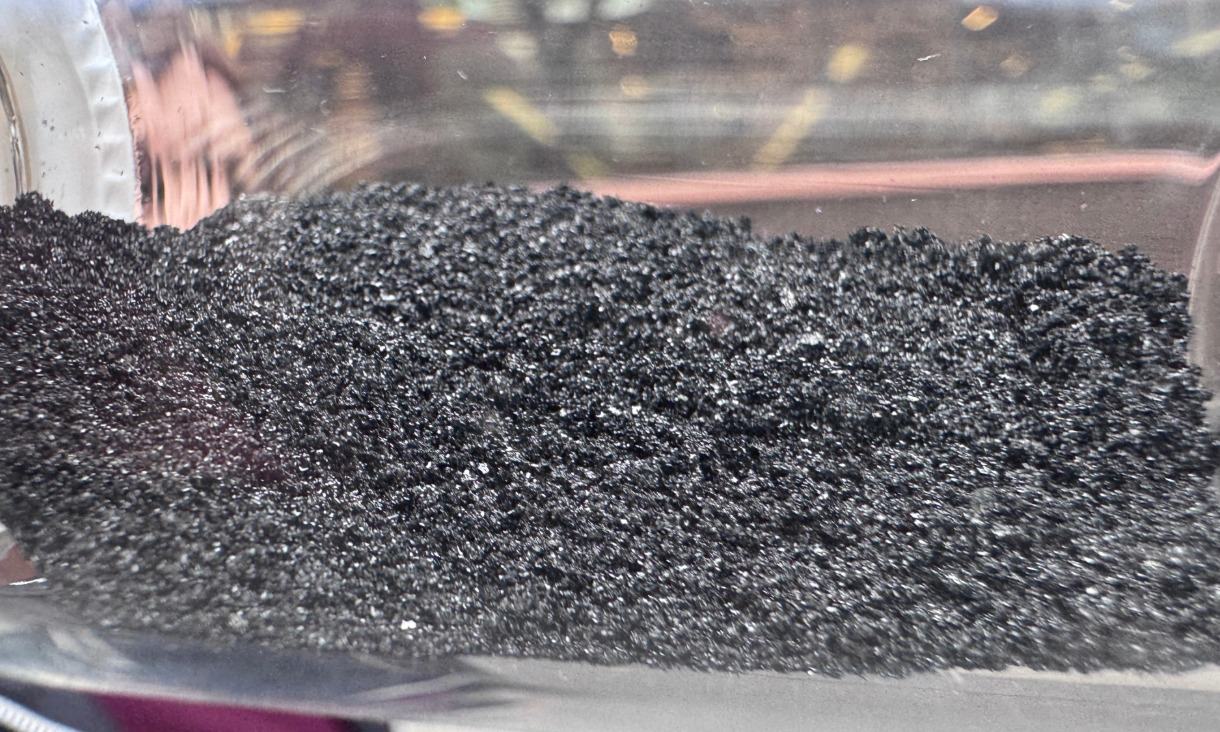
Close-up of the magnetic adsorbent material developed by Professor Nicky Eshtiaghi, Dr Muhammad Haris, Associate Professor Nasir Mahmood and colleagues for wastewater treatment applications. Credit: Will Wright, RMIT University
<関連情報>
- https://www.rmit.edu.au/news/all-news/2026/jul/microplastics-pfas-removal
- https://www.sciencedirect.com/science/article/pii/S1385894726056020
PFASとマイクロ・ナノプラスチックの迅速な同時除去のためのMOFベースの磁性吸着剤のスケーラブルな室温合成 Scalable room-temperature synthesis of a MOF-based magnetic adsorbent for rapid simultaneous removal of PFAS and micro-nanoplastics
Muhammad Haris, Fozia Bibi, Suraj Loomba, Karishma Jain, Nasir Mahmood, Nicky Eshtiaghi
Chemical Engineering Journal Available online 6 June 2026
DOI:https://doi.org/10.1016/j.cej.2026.178141
Highlights
- Scalable room-temperature growth of Fe-imidazolate on magnetic carbon
- 95% removal of 30 nm–8 μm micro/nanoplastics in 60 min
- 90% simultaneous removal of PFDA and microplastics
- 88% removal of polyester fibres and dyes in laundry wastewater
- Demonstrated in 4 L magnetic separation prototype
Abstract
The growing presence of micro- and nanoplastics (MNPs), per– and polyfluoroalkyl substances (PFAS), and co-pollutants in water poses a major challenge for treatment technologies. MNPs act as vectors that transport PFAS, and metals associated with cancer and systemic health risks, amplifying ecological and human impacts. Most reported sorbents are restricted to micron-scale plastics, rarely achieve submicron capture, and require residence times exceeding 200 min, far longer than the 10–60 min windows typical of industrial treatment. Long-chain PFAS remain particularly resistant to capture. We report a magnetically recoverable adsorbent, GDC@FeO@MOF, in which Fe-imidazolate domains are grown directly on carbon-FeO particles at room temperature. This stabilises normally unstable Fe-imidazolates, yielding a nanopillared 2D structure that maximises accessibility and introduces Fe-C/N sites for binding fluorinated surfactants and charged pollutants, while magnetic particles enable rapid recovery. The adsorbent removes >95% of MNPs across 30 nm-8 μm and >85% of PFDA within 60 min. It performs broadly across pollutant classes, with >88% removal of polyester microfibres and dyes from industrial laundry wastewater, which was validated in a 4 L prototype using a commercial magnetic separator. Reusability over five cycles and thermal regeneration into a functional magnetic composite confirm durability and circular recovery.