2026-07-06 アルゴンヌ国立研究所(ANL)

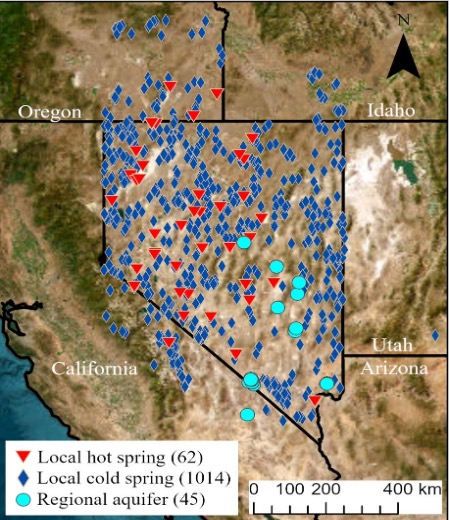
A cutout of SPT-3G data (left) showing microwave signals, alongside a map (right) with colorful boxes marking confirmed galaxy clusters detected in the same region. These maps represent approximately 0.5% of the main field survey area. (Image by SPT-3G Collaboration/Argonne National Laboratory.)
<関連情報>
- https://www.anl.gov/article/south-pole-telescope-analysis-yields-catalog-of-more-than-7000-galaxy-clusters
- https://arxiv.org/abs/2607.01175
- https://iopscience.iop.org/article/10.3847/1538-4357/ae5f7b
SPT-3Gメインサーベイの5年間のデータから、スニャエフ・ゼルドビッチ効果によって選択された銀河団 Galaxy Clusters Selected via the Sunyaev-Zel’dovich Effect in 5 year data from the SPT-3G Main Survey
L. E. Bleem, M. Klein, K. Kornoelje, S. Bocquet, J. A. Sobrin, M. Aguena, E. Anderes, A. J. Anderson, F. Andrade-Oliveira, B. Ansarinejad, M. Archipley, L. Balkenhol, D. R. Barron, P. S. Barry, M. Bayliss, K. Benabed, A. N. Bender, B. A. Benson, F. Bianchini, F. R. Bouchet, D. Brooks, D. L. Burke, M. Calzadilla, R. Camilleri, E. Camphuis, M. G. Campitiello, J. E. Carlstrom, A. Carnero Rosell, J. Carretero, J. Carron, C. L. Chang, P. M. Chichura, A. Chokshi, T.-L. Chou, A. Coerver, M. Costanzi, T. M. Crawford, L. N. da Costa, C. Daley, T. M. Davis, T. de Haan, J. De Vicente, S. Desai, K. R. Dibert, H. T. Diehl, M. A. Dobbs, M. Doohan, D. Dutcher, S. Everett, G. Evrard, C. Feng, K. R. Ferguson, N. C. Ferree, K. Fichman, B. Flaugher, B. Floyd, K. Fosdick, A. Foster, S. Galli, A. E. Gambrel, A. K. Gao, J. García-Bellido, F. Ge, M. D. Gladders, S. Grandis, F. Guidi, S. Guns, G. Gutierrez, N. W. Halverson, S. R. Hinton, E. Hivon, G. P. Holder, D. L. Hollowood, W. L. Holzapfel, J. C. Hood, A. Hryciuk, N. Huang, T. Jhaveri, S. Kent, F. Kéruzoré, A. R. Khalife, G. Khullar, L. Knox, K. Kuehn, C.-L. Kuo, O. Lahav, K. Levy, Y. Li, A. E. Lowitz, C. Lu, G. P. Lynch, T. J. Maccarone, G. Mahler, A. S. Maniyar, J. L. Marshall, E. S. Martsen, M. McDonald, J. Mena-Fernández, F. Menanteau, M. Millea et al. (51 additional authors not shown)
arXiv Submitted on 1 Jul 2026
DOI:https://doi.org/10.48550/arXiv.2607.01175
Abstract
We report a new galaxy cluster catalog, selected using the thermal Sunyaev-Zel’dovich (SZ) effect, from 5 years of observations of the SPT-3G Main field. Drawn from arcminute-resolution data with white noise levels of 3.2, 2.5, and 8.9 μK-arcmin at 95, 150, and 220 GHz, respectively, the sample consists of 8,892 cluster candidates detected above significance ξ=4, with an expected purity of >82% (4,480 at ξ≥5 with purity >99%). Using optical and infrared data we have confirmed 7,190 candidates as clusters. The sample spans a mass range 7.9×10¹³ M⊙/h70 \ <M500c< 1.6×10¹⁵ M⊙/h70 with a median mass of 1.65×10¹⁴ M⊙/h70, and a redshift range of 0.037<z≲2 with a median redshift of zmed = 0.73; 1,780 clusters are at z>1 and 271 at z>1.5. Compared to previous SZ cluster samples from South Pole Telescope and Atacama Cosmology Telescope data, the SPT-3G sample is highly consistent in mass and redshift but is significantly deeper, with per-cluster detection signal-to-noise 2-4 times higher and a cluster density of 4.5 confirmed clusters/deg2. We cross match with eRASS1 cluster and point source catalogs, finding 1,279 and 1,319 matches, respectively. The SPT and eROSITA cluster mass estimates are in relatively good agreement. We perform a series of validation checks using both internal data splits and comparisons to external samples. These tests show increasing correlated (dusty) emission with redshift, with a ∼17× larger 220 GHz temperature increment for clusters at z∼1.5 than z∼0.25, but only weak evidence for correlated synchrotron emission. Finally, a number of clusters are flagged as candidate strong gravitational lenses.
SPT-deepクラスターカタログ:100平方度にわたるSPT-3GとSPTpolの複合測定から選ばれたスニャエフ・ゼルドビッチクラスター The SPT-deep Cluster Catalog: Sunyaev–Zel’dovich Selected Clusters from Combined SPT-3G and SPTpol Measurements over 100 Square Degrees
K. Kornoelje, L. E. Bleem, E. S. Rykoff, T. M. C. Abbott, P. A. R. Ade, M. Aguena, O. Alves, A. J. Anderson, F. Andrade-Oliveira, B. Ansarinejad,…
The Astrophysical Journal Published: 2026 June 4
DOI:10.3847/1538-4357/ae5f7b
Abstract
We present a catalog of 500 galaxy cluster candidates in the SPT-Deep field: a 100 deg2 field that combines data from the SPT-3G and SPTpol surveys to reach noise levels of 3.0, 2.2, and 9.0 μK-arcmin at 95, 150, and 220 GHz, respectively. Candidates are selected via the thermal Sunyaev–Zel’dovich (SZ) effect with a minimum significance of ξ = 4.0, resulting in a catalog of purity ∼89%. Optical data from the Dark Energy Survey and infrared data from the Spitzer Space Telescope are used to confirm 442 cluster candidates. The clusters span 0.12 < z ≲ 1.8 and 1.0 × 10¹⁴M⊙/h70 < M500c < 8.7 × 10¹⁴M⊙/h70. The sample’s median redshift is 0.74, and the median mass is 1.7 × 10¹⁴M⊙/h70; these are the lowest median mass and highest median redshift of any SZ-selected sample to date. We assess the effect of infrared emission from cluster member galaxies on cluster selection by performing a joint fit to the infrared dust and tSZ signals by combining measurements from SPT and overlapping submillimeter data from Herschel/SPIRE. We find that at high redshift (z > 1), the tSZ signal is reduced by 17.9+3.8-3.2% (3.8+0.9-0.7%) at 150 GHz (95 GHz) due to dust contamination. We repeat our cluster finding method on dust-nulled SPT maps and find the resulting catalog is consistent with the nominal SPT-Deep catalog, suggesting dust contamination does not significantly impact the SPT-Deep selection function; we attribute this lack of bias to the inclusion of the SPT 220 GHz band.