2024-12-11 アルゴンヌ国立研究所(ANL)
<関連情報>
- https://www.anl.gov/article/unveiling-the-structure-of-a-photosynthetic-catalyst-that-turns-light-into-hydrogen-fuel
- https://www.nature.com/articles/s41467-024-53476-y
バイオハイブリッド光化学系I-白金ナノ粒子太陽燃料触媒の構造 Structure of a biohybrid photosystem I-platinum nanoparticle solar fuel catalyst
Christopher J. Gisriel,Tirupathi Malavath,Tianyin Qiu,Jan Paul Menzel,Victor S. Batista,Gary W. Brudvig &Lisa M. Utschig
Nature Communications Published:04 November 2024
DOI:https://doi.org/10.1038/s41467-024-53476-y
Abstract
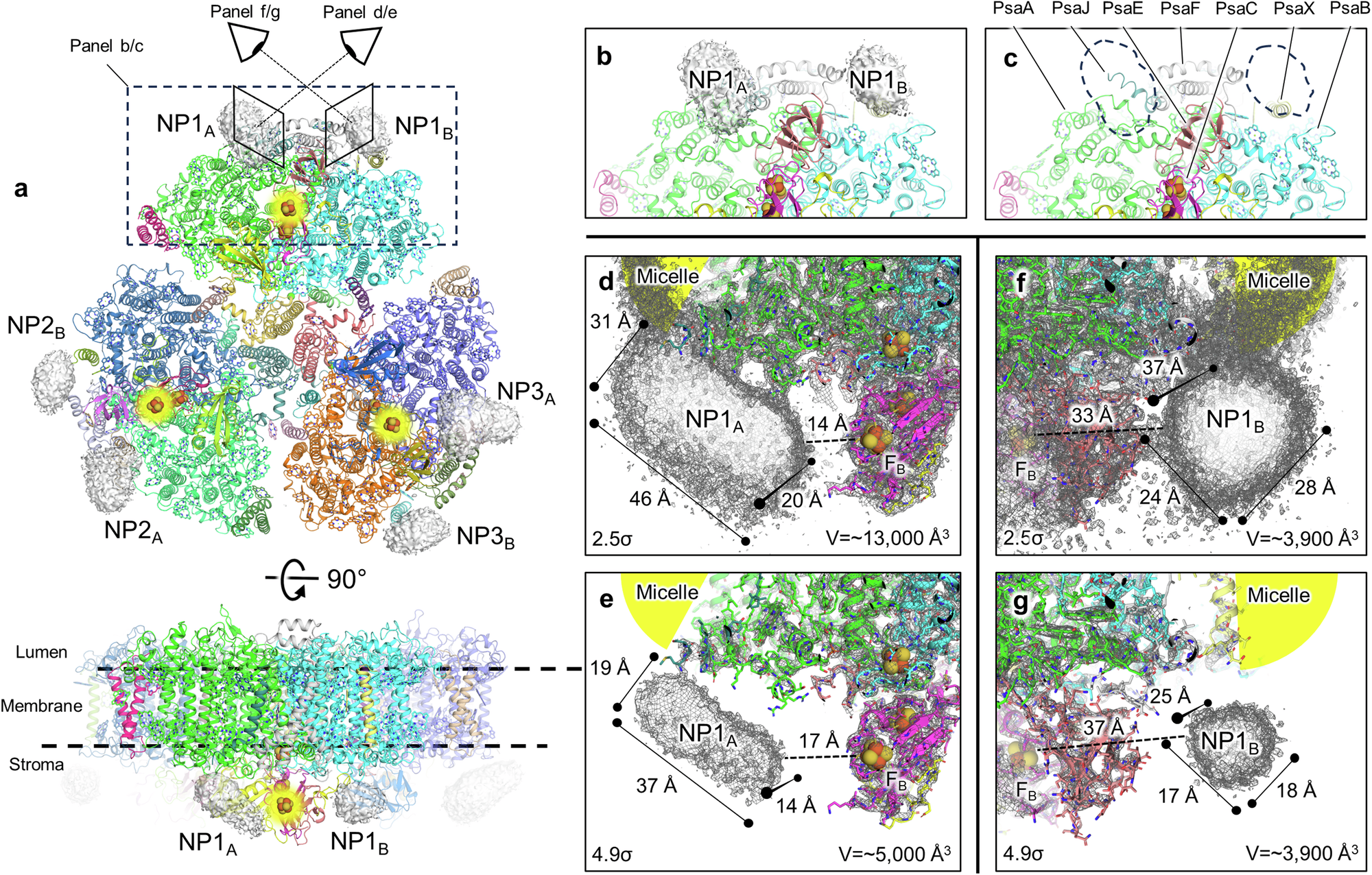
Biohybrid solar fuel catalysts leverage natural light-driven enzymes to produce valuable fuel products. One useful biological platform for such a system is photosystem I, a pigment-protein complex that captures sunlight and converts it into chemical energy with near unity quantum efficiency, which generates low potential reducing equivalents for metabolism. Realizing and understanding the molecular basis for an approach that utilizes those electrons and stores solar energy as a fuel is therefore appealing. Here, we report the 2.27-Å global resolution cryo-EM structure of a photosystem I complex with bound platinum nanoparticles that catalyzes light-driven H2 production. The platinum nanoparticle binding sites and possible stabilizing interactions are described. Overall, the investigation reveals a direct structural look at a photon-to-fuels photosynthetic biohybrid system.