2026-10-19 スタンフォード大学
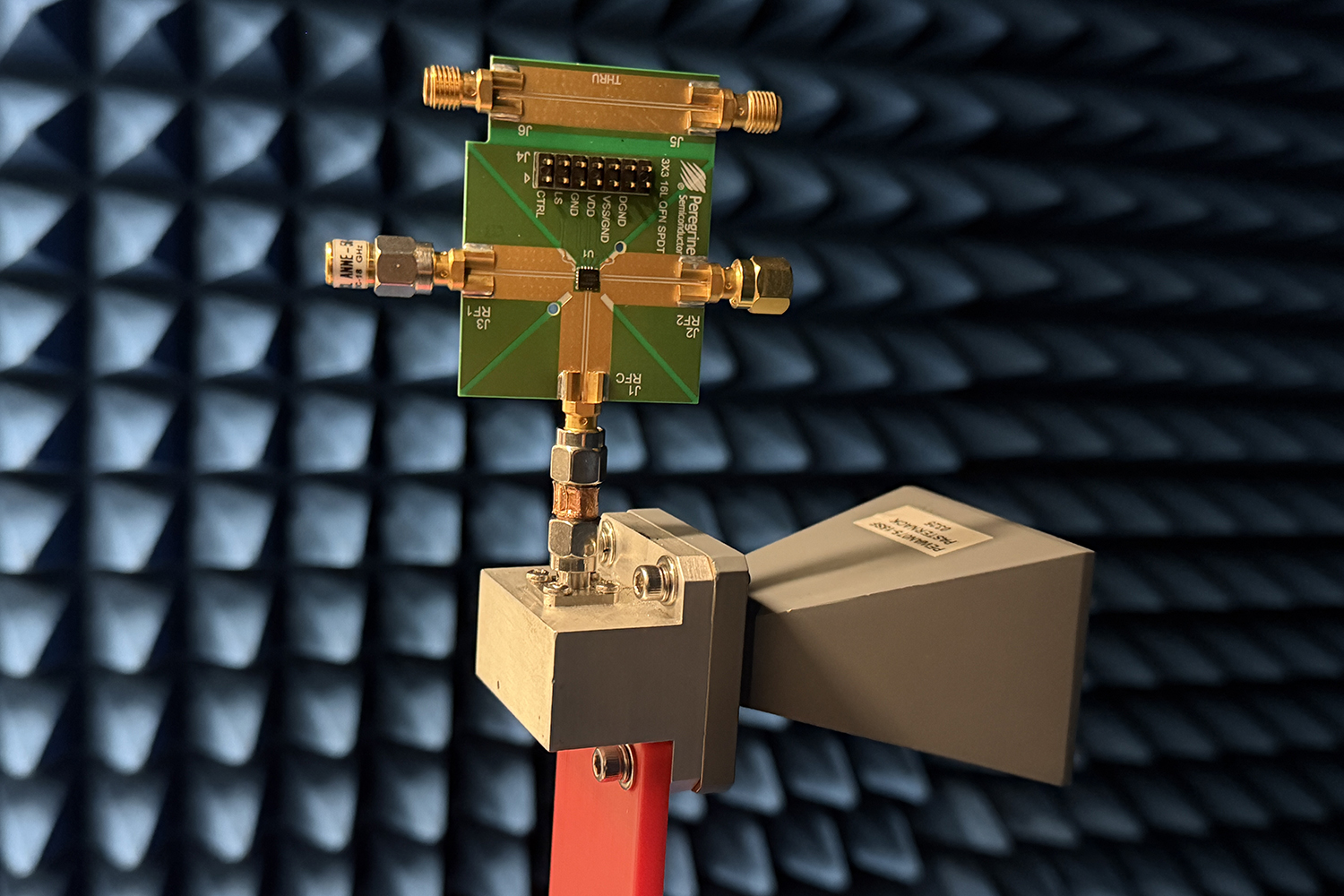
The experimental setup used to test thermal noise communication. Jida Zhang
<関連情報>
- https://news.stanford.edu/stories/2026/10/thermal-noise-data-no-active-signal
- https://www.pnas.org/doi/10.1073/pnas.2606732123
熱雑音後方散乱リンクにおける第一原理に基づくチャネルモデルと容量達成伝送方式 First-principles channel model and capacity-achieving transmission scheme in thermal noise backscatter links
Geneva Ecola, Jida Zhang, Joseph M. Kahn, and Zerina Kapetanovic
Proceedings of the National Academy of Sciences Published:October 20, 2026
DOI:https://doi.org/10.1073/pnas.2606732123
Abstract
Thermal noise communication systems transmit information by modulating thermal radiation, eliminating the need for a dedicated signal power source and making them attractive solutions for low-power sensor networks. Their efficiency enables long-lived, unobtrusive operation, which is valuable in the Internet of Things, electromagnetic interference-sensitive environments, and radio frequency identification tag systems. However, a limited understanding of the wireless channel model and efficient transmission schemes has hindered their practical deployment. Here, we present a wireless channel model that elucidates how systems operating at ambient temperature can modulate thermal noise to convey information. Our results reveal a thermal noise backscatter mechanism that enables significantly higher data rates than previously achieved. We designed and built a thermal noise communication system leveraging this mechanism to achieve data rates in the kilobits-per-second range—over two orders of magnitude higher than prior demonstrations. We also derive the system capacity and show that using polar codes, we are able to achieve this expected capacity. Our channel model and transmission scheme pave the way for strategies in thermal noise sensing and communication, advancing practical low-power networking for next-generation wireless applications.