2026-07-23 コペンハーゲン大学(UCPH)
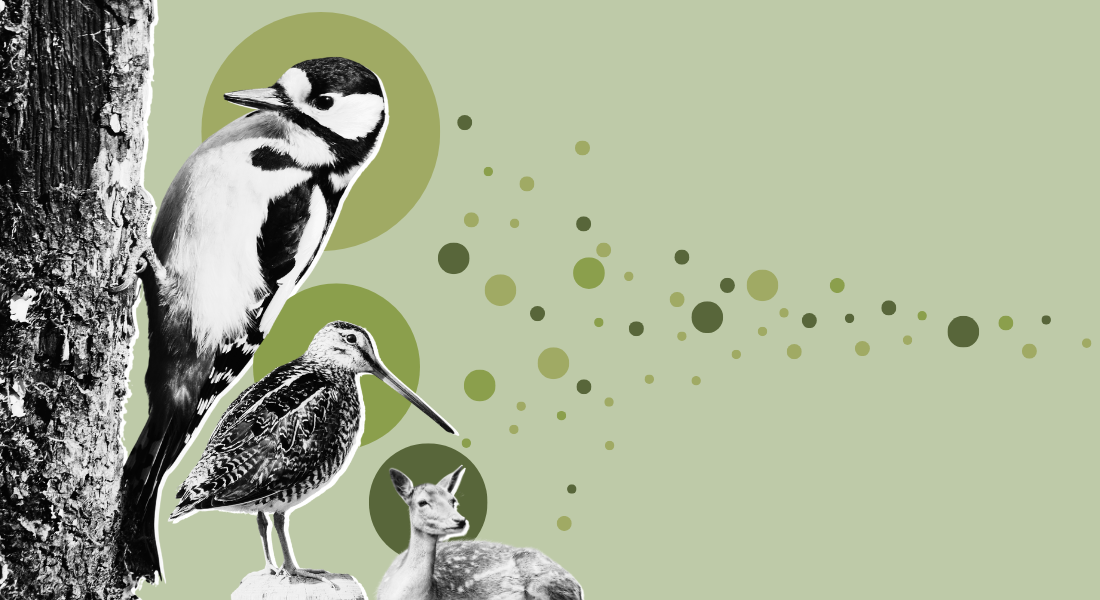
“We hope that DNA vacuuming can become a method that functions as an additional tool in the toolbox for mapping species presence,” says researcher behind new paper. Illustration: University of Copenhagen
<関連情報>
- https://news.ku.dk/all_news/2026/07/dna-vacuum-reveals-local-wildlife-in-danish-nature/
- https://www.nature.com/articles/s42003-026-09950-y
- https://besjournals.onlinelibrary.wiley.com/doi/10.1111/2041-210x.70323
Advancing airborne eDNA sampling methods for monitoring diverse terrestrial vertebrate communities 多様な陸生脊椎動物群集をモニタリングするための空中eDNAサンプリング手法の進歩
Kasun H. Bodawatta,Agnete le Maire Madsen,Luke E. Holman,Jacob Agerbo Rasmussen,Matthew S. Johnson,Tobias Guldberg Frøslev,Christina Lynggaard & Kristine Bohmann
Communications Biology Published:02 April 2026
DOI:https://doi.org/10.1038/s42003-026-09950-y
Abstract
Effective biodiversity survey methods are crucial to monitor ecosystems threatened by climatic fluctuations and anthropogenic pressures. Here we advance methods for collecting a novel source of biodiversity data – airborne environmental DNA (eDNA), and investigate whether it yields habitat- and season-specific signatures of terrestrial vertebrate communities. Using custom-made, portable, and low-budget samplers, we sampled airborne eDNA in three protected nature areas across Denmark spanning different nature types and seasons. We show that coarse grade air filters, larger filter area, increased airflow rate, and dry storage of filters at -20 °C yield detections of higher numbers of vertebrate taxa with more consistent detections of communities across samples. Further, we find that detected vertebrate communities are characteristic of the sampled nature types and seasons. Collectively, these refinements enable effective monitoring of terrestrial vertebrate biodiversity using portable and low-budget air samplers.
温帯混交林における陸生脊椎動物の検出において、空気中のeDNAのろ過は葉の綿棒よりも優れた性能を示し、ろ過時間が長いほど最良の結果が得られる Filtration of airborne eDNA outperforms leaf swabs for terrestrial vertebrate detection in a temperate mixed forest with longer filtration times performing the best
Kasun H. Bodawatta, Agnete l. M. Madsen, Christina Lynggaard, Kristine Bohmann
Methods in Ecology and Evolution Published: 04 June 2026
DOI:https://doi.org/10.1111/2041-210x.70323
Abstract
- Advances in collection of environmental DNA (eDNA) through active air filtration and sampling from vegetation (leaf swabs) have demonstrated the promise of using airborne eDNA for terrestrial vertebrate surveys. However, methods are at an early stage, and we lack insights into the effect of air filtration time and the complementarity between the two sampling methods for characterising vertebrate communities.
- Here we filtered airborne eDNA for 24, 48, and 96 h in a temperate forest in Denmark and used DNA metabarcoding of a 12S bird and a 16S mammal marker to assess how the duration of active airborne eDNA filtration affects vertebrate detections. Further, we assessed the complementarity between 24-h active airborne eDNA filtration and leaf swabs.
- We found a strong positive correlation between air filtration time and taxa richness. On average, we detected 24 wild vertebrate taxa per sample with 96-h sampling, while 24-h sampling yielded an average of 15 wild taxa per sample. Increased sampling time also led to characterisation of more homogeneous communities across samples. However, 24-h sampling yielded the highest total number of wild taxa (66 taxa), with 48- and 96-h sampling capturing 60 and 55 taxa, respectively. As we collected forty 24-h samples, twenty 48-h samples, and ten 96-h samples, this may reflect the number of analysed samples. Compared with filtered air samples, leaf swabs yielded fewer vertebrate taxa per sample (average 1.5).
- In summary, air filtration outperformed leaf swabbing and longer air filtration time yielded a more diverse and consistent vertebrate community in a temperate forest. This provides insights for the use of active filtration of airborne eDNA and leaf swabbing for biodiversity surveys, ecological studies, conservation, nature management programmes, and beyond.