2026-06-13 スウォンジー大学
<関連情報>
- https://www.swansea.ac.uk/press-office/news-events/news/2026/05/300-years-of-industrialisation-have-left-wales-with-a-blank-ecological-canvas-in-its-coastal-waters.php
- https://onlinelibrary.wiley.com/doi/10.1111/1477-8947.70063
ウェールズの河口と海岸における300年にわたる環境悪化 300 Years of Degradation in Wales Estuaries and Coasts
Richard K. F. Unsworth, Blaise Bullimore, Leanne C. Cullen-Unsworth, Benjamin L. H. Jones
Natural Resources Forum Published: 28 April 2026
DOI:https://doi.org/10.1111/1477-8947.70063

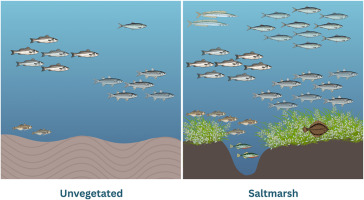
ABSTRACT
The world’s oceans are in a severe state of degradation, yet our understanding of that degradation is often based on changes observed only in the past 20–50 years. This narrow view leads to marine conservation efforts that aim to preserve already degraded ecosystems, shaped by shifted ecological baselines. Historical ecology offers a broader perspective by examining past environments and biodiversity. In this study, we analyse historical records including maps, reports, and written accounts to explore the transformation of estuarine and coastal environments in Wales, a key centre of the Industrial Revolution. Our findings reveal widespread historical modification: 33 of the 42 Welsh estuaries studied show major alterations, including land reclamation, embankment construction, and channel rerouting. Some estuaries were completely erased, and islands no longer separate from the mainland. The resulting disruption of sediment dynamics, water quality, and habitat complexity has had long-term impacts on biodiversity and ecosystem services. We hypothesise these changes led to the widespread loss of critical habitats such as salt marshes, oyster beds and seagrass meadows, which support marine biodiversity and ecosystem health. Wales is only at the start of a habitat restoration journey, and the nation can learn from other regions of the world where restoration has successfully improved ecosystem function. But Wales faces a legacy of degradation with few, if any, ‘low-impact’ baselines remaining. We argue that current restoration efforts in Wales should not aim to return ecosystems to an imagined baseline or historical state. Instead, restoration should be reimagined with modern goals focusing on enhancing biodiversity, ecosystem resilience, and human well-being through the lens of a changing climate. Wales’ estuarine environments, though heavily modified, present unique opportunities. By recognising the true extent of historical change, we can move beyond outdated notions of conservation and embrace degraded ecosystems as foundations for future recovery.