2026-03-17 インペリアル・カレッジ・ロンドン(ICL)
<関連情報>
- https://www.imperial.ac.uk/news/articles/natural-sciences/physics/2026/powerful-solar-superstorm-gives-rare-glimpse-into-marss-atmosphere/
- https://www.nature.com/articles/s41467-026-69468-z
2024年5月の太陽嵐発生時の火星電離層の反応 Martian ionospheric response during the may 2024 solar superstorm
Jacob Parrott,Beatriz Sánchez-Cano,Håkan Svedhem,Olivier Witasse,Dikshita Meggi,Colin Wilson,Alejandro Cardesín-Moinelo & Ingo Müller-Wodarg
Nature Communications Published:05 March 2026
DOI:https://doi.org/10.1038/s41467-026-69468-z
Abstract
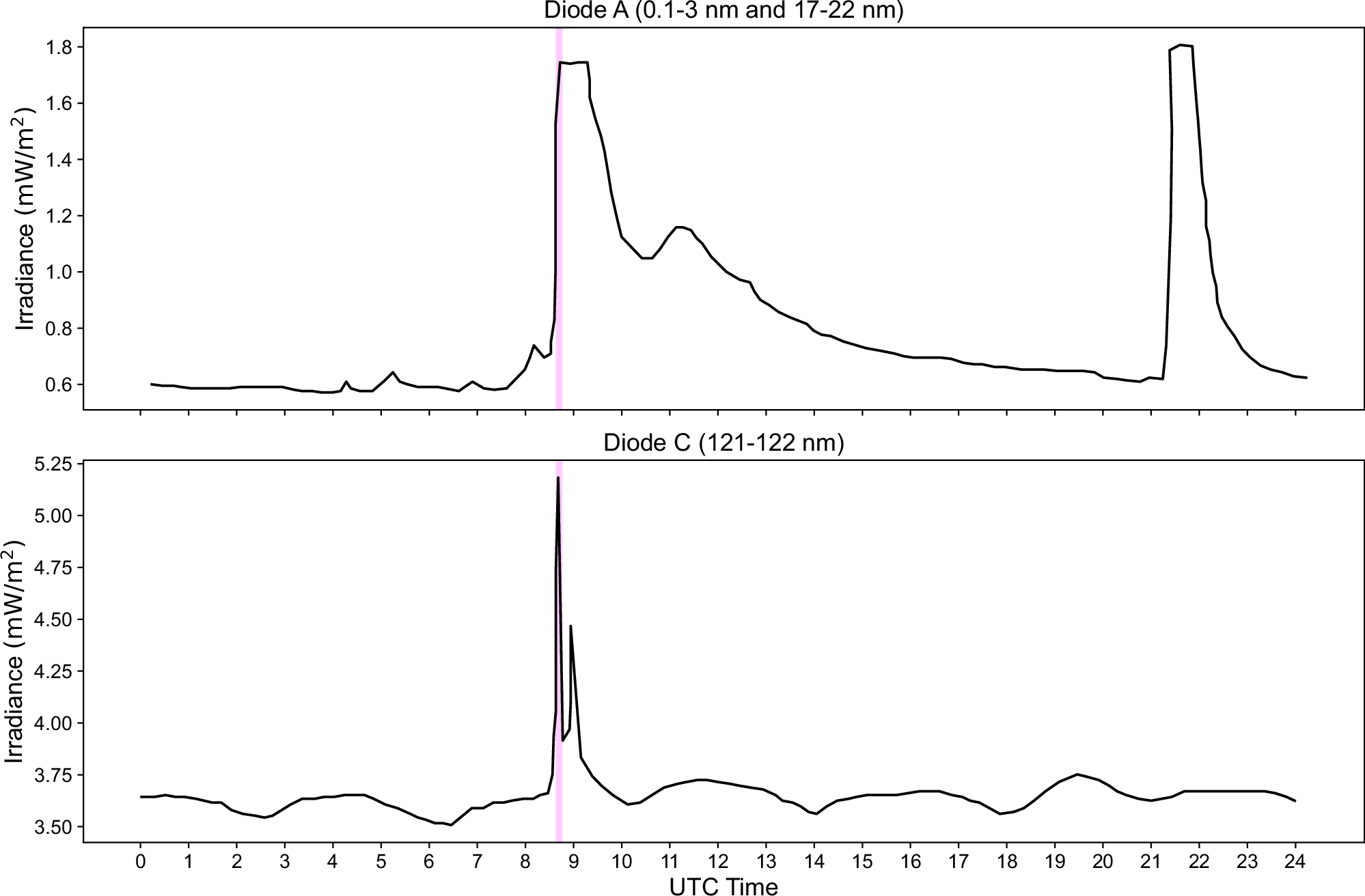
Solar energetic events can have considerable effects on planetary ionospheres. However, the erratic nature of these solar energetic events make observations difficult. Here we show a mutual radio occultation observation, which serendipitously occurred just 10 minutes after a large solar flare impacted Mars. This resulted in the largest lower ionospheric layer ever recorded, where it was 278% its typical size. We used in-situ soft x-ray irradiance measurements to show a threefold increase in flux. This infers a different relation of soft X-ray to this layer’s density than previously thought, with variations depending on the amount of spectrum ‘hardening’ leading to the increase of ionisation from secondaries.