2025-10-09 ジョンズ・ホプキンス大学 (JHU)
<関連情報>
- https://hub.jhu.edu/2025/10/09/us-energy-supply-falling-short/
- https://www.nature.com/articles/s44406-025-00009-1
米国のクリーンエネルギー移行におけるサプライチェーンの制約を理解する Understanding supply chain constraints for the US clean energy transition
Boyu Yao,Hannah Jeong,Mahdi Mehrtash,Bentley Allan,Daniel Ockerman & Yury Dvorkin
npj Clean Energy Published:30 September 2025
DOI:https://doi.org/10.1038/s44406-025-00009-1
Abstract
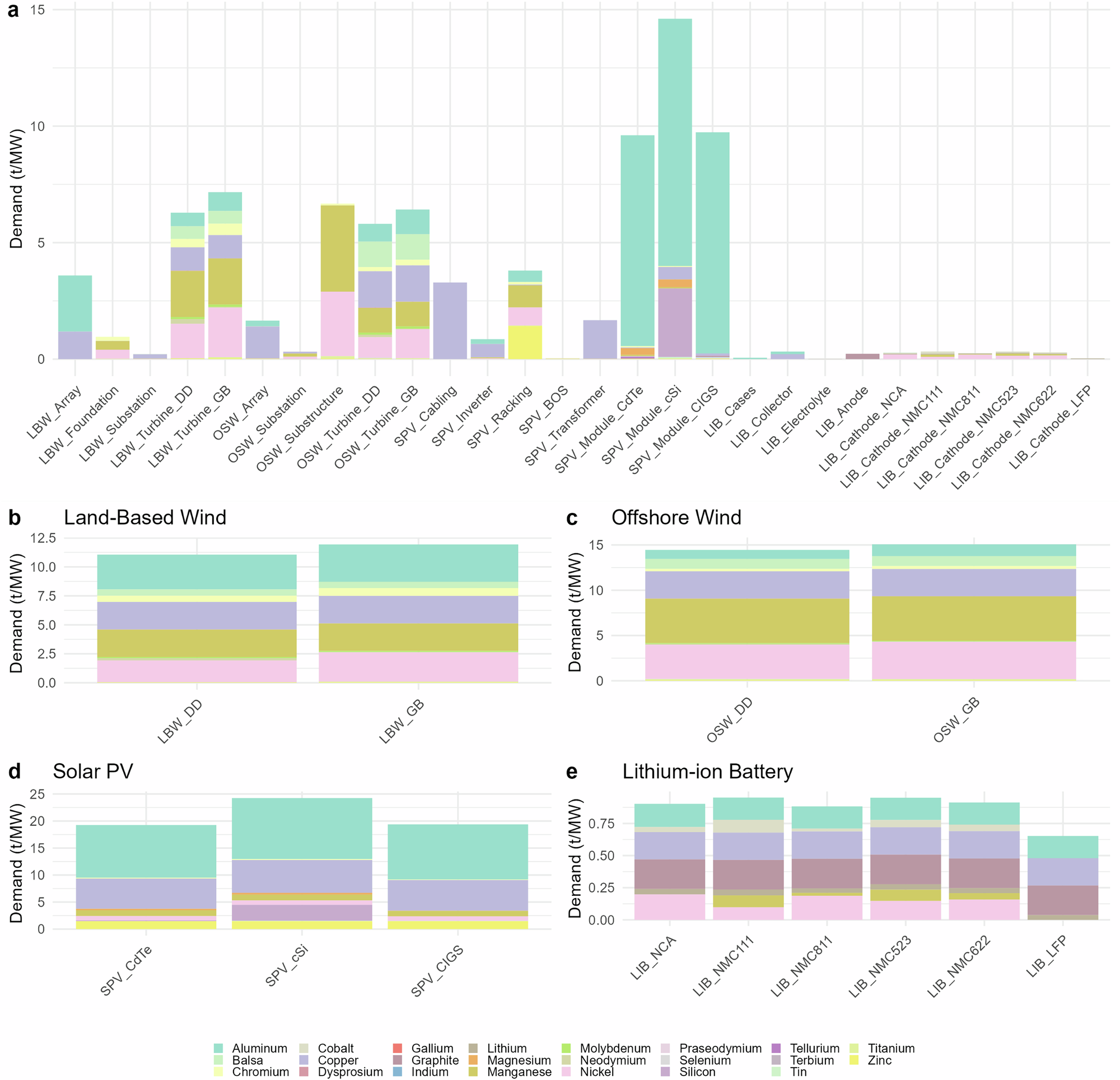
A successful clean energy transition hinges on overcoming supply chain challenges for critical raw materials, as continued availability is essential for deploying key technologies like wind, solar photovoltaic, and lithium-ion battery. This paper presents a multi-year, optimization-based framework to assess how material supply limitations impact clean energy deployment. Unlike conventional projections ignoring material allocation constraints or estimating demand without resource competition, our framework enables goal-oriented planning and trade-off analysis under varied supply chain scenarios. Applied to the US, it integrates trade data, historical production trends (1985–2020), and geopolitical factors. Results show that, due to bottlenecks in nickel, silicon, and rare-earth elements, the US could fall short by over 730 GW—34% of its cumulative 2050 clean energy capacity goals. While permitting and environmental regulations remain important, findings highlight material scarcity as an immediate physical constraint. Addressing it requires expanding domestic production, diversifying imports, and advancing substitution and recycling.