2025-09-04 カリフォルニア大学サンタバーバラ校(UCSB)
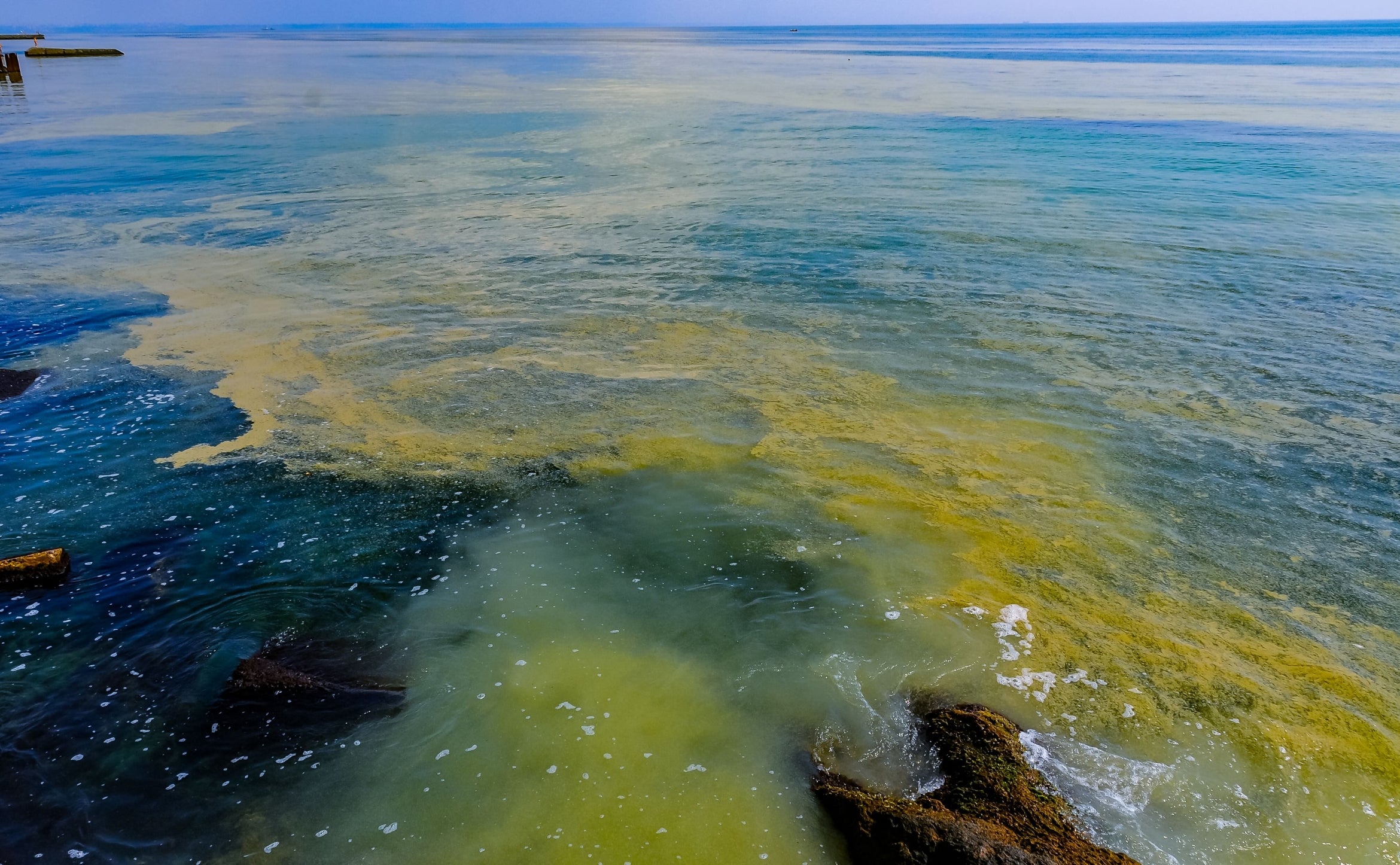
Eutrophication — caused by excessive nutrients, such as fertilizer runoff — causes a bloom of algae that depletes the water of oxygen and causes ‘dead zones’ that kill fish and other marine organisms
<関連情報>
- https://news.ucsb.edu/2025/022012/human-impact-ocean-will-double-2050-ucsb-scientists-warn
- https://www.science.org/doi/10.1126/science.adv2906
- https://www.science.org/doi/10.1126/science.1149345
世界の海洋生態系への累積的影響は、2050年までに2倍以上に増加すると予測されている Cumulative impacts to global marine ecosystems projected to more than double by midcentury
Benjamin S. Halpern, Melanie Frazier, Casey C. O’Hara, O. Alejandra Vargas-Fonseca, and Amanda T. Lombard
Science Published:4 Sep 2025
DOI:https://doi.org/10.1126/science.adv2906
Abstract
Pressures from human activities are expected to increase significantly, impacting marine ecosystems globally. To plan for a sustainable future, we need to forecast distributions of cumulative impacts from multiple pressures. Here we mapped (10km resolution) future cumulative impacts of ten climate, land-based, fishing and other pressures on twenty marine habitats under two climate scenarios at midcentury (~2050). We found cumulative impacts are projected to increase 2.2 to 2.6 times globally, with coastal habitats facing higher impacts but offshore regions facing faster increases, especially in equatorial regions. Furthermore, many countries dependent on marine resources will have large increases in impacts. Incorporating these results into strategic policy and management will support more sustainable use and protection of marine ecosystems and the services provided to people.
海洋生態系に対する人間の影響のグローバルマップ A Global Map of Human Impact on Marine Ecosystems
Benjamin S. Halpern, Shaun Walbridge, Kimberly A. Selkoe, Carrie V. Kappel, […] , and Reg Watson
Science Published:15 Feb 2008
DOI:https://doi.org/10.1126/science.1149345
Abstract
The management and conservation of the world’s oceans require synthesis of spatial data on the distribution and intensity of human activities and the overlap of their impacts on marine ecosystems. We developed an ecosystem-specific, multiscale spatial model to synthesize 17 global data sets of anthropogenic drivers of ecological change for 20 marine ecosystems. Our analysis indicates that no area is unaffected by human influence and that a large fraction (41%) is strongly affected by multiple drivers. However, large areas of relatively little human impact remain, particularly near the poles. The analytical process and resulting maps provide flexible tools for regional and global efforts to allocate conservation resources; to implement ecosystem-based management; and to inform marine spatial planning, education, and basic research.