2026-08-18 パシフィック・ノースウェスト国立研究所(PNNL)
<関連情報>
- https://www.pnnl.gov/publications/mobility-phosphorus-following-wildfire-depends-vegetation-and-burn-severity
- https://bg.copernicus.org/articles/22/4491/2025/
燃焼の深刻度と植生の種類がリンの濃度、分子組成、および移動を制御する Burn severity and vegetation type control phosphorus concentration, molecular composition, and mobilization
Morgan E. Barnes, J. Alan Roebuck Jr., Samantha Grieger, Paul J. Aronstein, Vanessa A. Garayburu-Caruso, Kathleen Munson, Robert P. Young, Kevin D. Bladon, John D. Bailey, Emily B. Graham, Lupita Renteria, Peggy A. O’Day, Timothy D. Scheibe, and Allison N. Myers-Pigg
Biogeosciences Published:10 Sep 2025
DOI:https://doi.org/10.5194/bg-22-4491-2025
Abstract
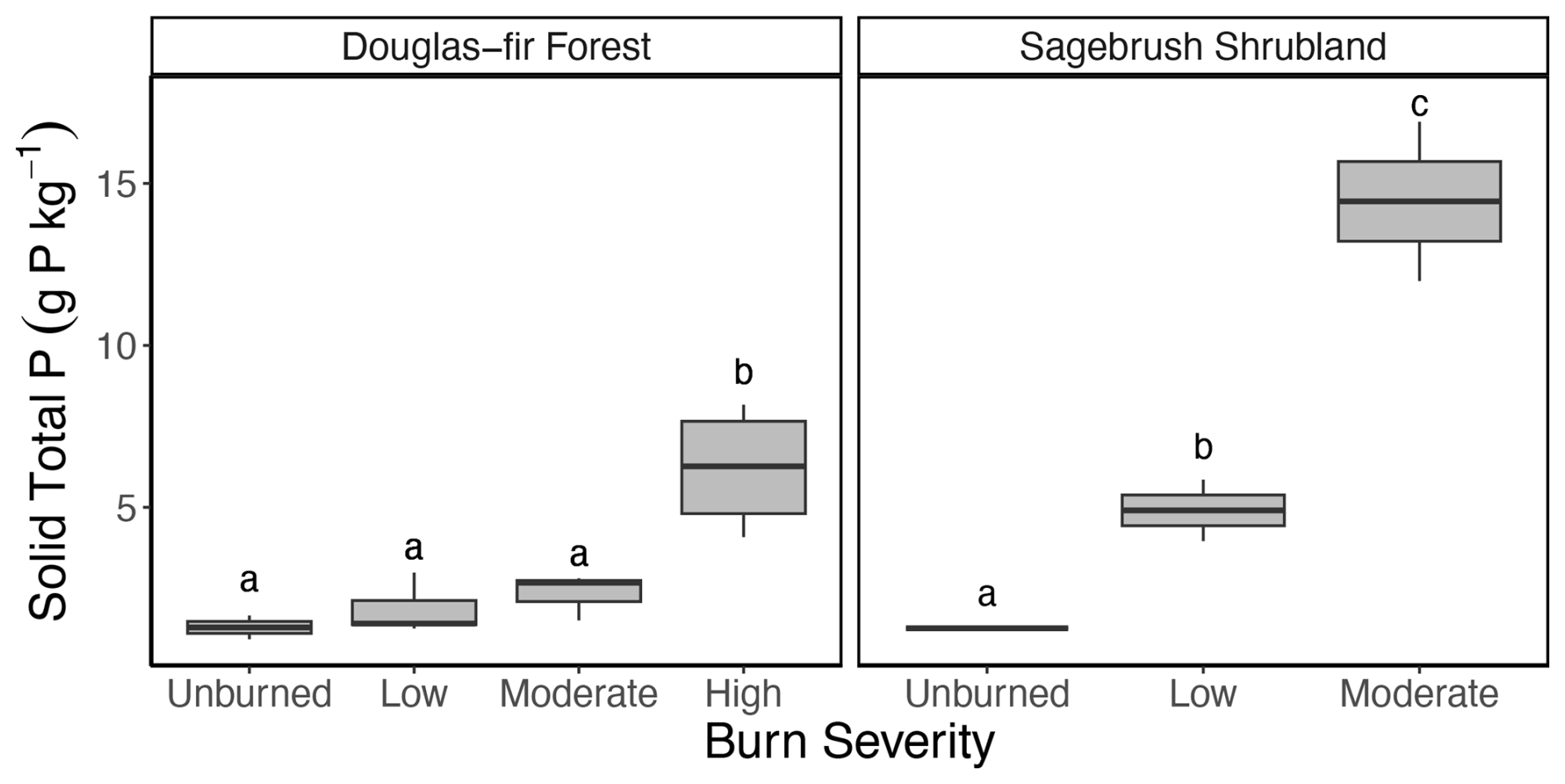
Shifting phosphorus (P) dynamics after wildfires can have cascading impacts from terrestrial to aquatic environments. However, it is unclear whether shifts in P composition or P concentration are responsible for changes in P dynamics post-fire. We used laboratory leaching experiments of Douglas fir forest and sagebrush shrubland chars to examine how the potential mobility of P compounds is influenced by different burn severities. Burning produced a 6.9- and 29-fold increase in particulate P mobilization but a 3.8- and 30.5-fold decrease in aqueous P released for Douglas fir forest and sagebrush shrubland, respectively. The mechanisms driving particulate- and dissolved-phase P compound mobilization were contrasting. Phosphorus compound mobilization in the particulate phase was controlled by solid char total P concentrations, while the aqueous phase was driven by solubility changes of molecular species. Nuclear magnetic resonance (NMR) and X-ray absorption near-edge structure (XANES) on the solid chars indicated that organic orthophosphate monoester and diester species were thermally mineralized to inorganic P moieties with burning in both vegetation types, which decreases P solubility. This coincided with the production of calcium- and magnesium-bound inorganic P compounds. With increasing burn severity there were systematic shifts in P concentration and composition – higher-severity chars mobilized P compounds in the particulate phase, although the magnitude of change was vegetation-specific. Our results indicate a post-fire transformation to both the composition of the solid charred material and how P compounds are mobilized, which may influence its environmental cycling and fate.