
2026-07-29 ローレンス・バークレー国立研究所(LBNL)
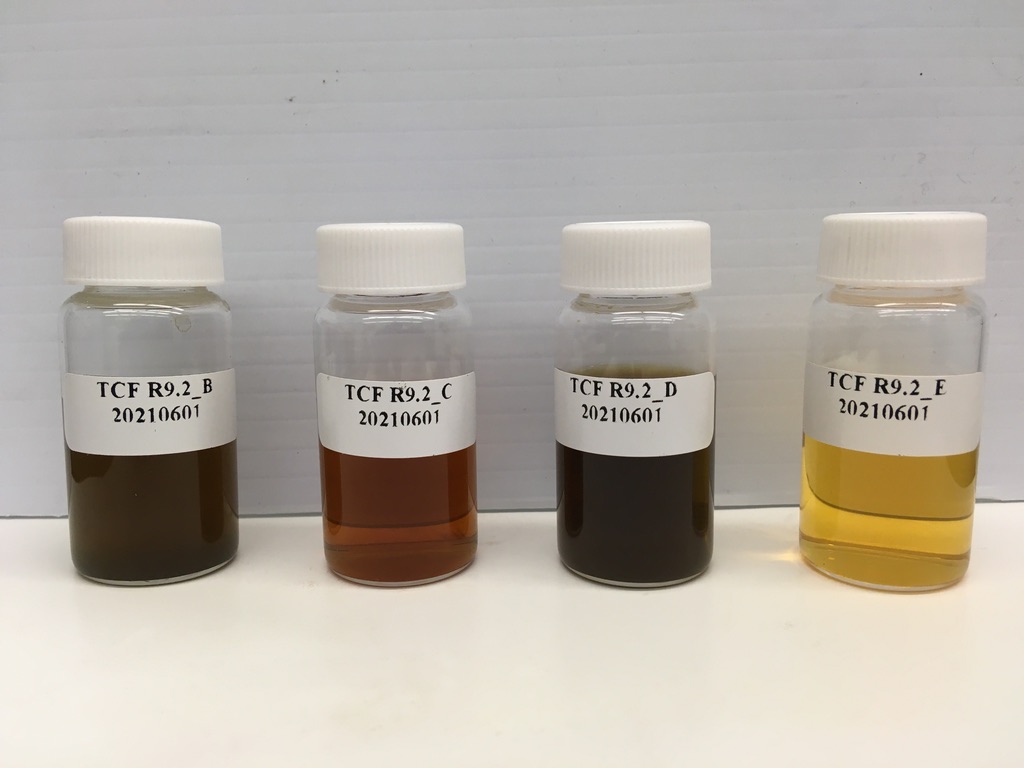
Lignin-derived products resulting from the methanol solvent-based process using different catalytic reagents. The different colors indicate different reaction levels. These substrates serve as intermediates for benzylamines.
<関連情報>
- https://newscenter.lbl.gov/2026/07/29/a-new-application-for-industrys-toughest-lignin/
- https://www.sciencedirect.com/science/article/pii/S1385894726017468
市販のクラフトリグニン由来の官能基化ベンジルアミン Functionalized benzylamines from commercial kraft lignin
Chang Dou, Minliang Yang, Nikhil Kumar, Rolin A. Aguilar, Addison J. Hitt, Griffen Gonzalez, Corinne D. Scown, Kenneth L. Sale, Hemant Choudhary, Aaron M. Socha, Ning Sun
Chemical Engineering Journal Available online: 23 February 2026
DOI:https://doi.org/10.1016/j.cej.2026.174287
Highlights
- Different alcohol solvent affects guaiacol product yield, not distribution.
- Formic acid and Ru/C catalyst drives guaiacol products with longer alkyl chain length.
- Over 90% benzylamine was achieved from lignin derived guaiacols.
- Methanol-only scenario has lowest benzylamine costs and carbon footprints.
Abstract
Benzylamines are key intermediates in pharmaceuticals, agrochemicals, and polymers, but their conventional production relies on benzyl chloride – a petroleum-derived compound with high toxicity and energy demands. Lignin, accounting for up to 30% of plant biomass, is the largest renewable source of aromatic carbon on Earth. However, its highly complex and recalcitrant structure poses a major barrier to efficient conversion into high-value chemicals. Here, we developed a catalytic approach to convert commercial kraft lignin into phenolic benzylamines through selective depolymerization and subsequent functionalization. We systematically evaluated the effects of three alcohol solvents, formic acid (FA), and a ruthenium-on‑carbon (Ru/C) catalyst on monophenol yield and selectivity. Up to 6.5 wt% monophenol yield was achieved using methanol (MeOH), FA, and Ru/C at 300 °C for 2 h. Quantum thermodynamic simulations based on the COSMO-RS model confirmed the superior solvation and reactivity of the MeOH + FA system, rationalizing observed product yield. The purified monophenolic products, primarily guaiacol and alkyl guaiacols, were then converted into functionalized benzylamines with >90% yield via a multicomponent Mannich reaction under mild conditions. Techno economic analysis (TEA) and life cycle assessment (LCA) underscore the importance of improving lignin depolymerization yields and expanding biorefinery scale. Solvent-only configurations outperform other options in both cost and emissions, with the methanol-only case performing the best ($105 /kg and 26 kg CO2e/kg) at a large-scale facility. This study establishes a scalable, bio-based pathway for producing benzylamines from commercial kraft lignin, advancing lignin valorization and offering a sustainable alternative to produce petrochemical-based benzylamines.

