2026-07-06マックス・プランク研究所
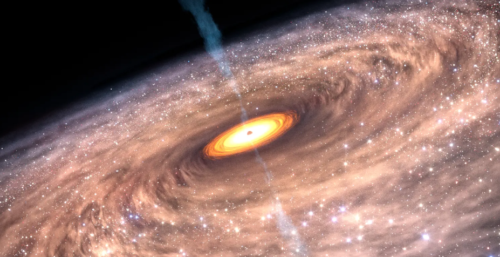
Artist’s impression of the early quasar with its starforming host galaxy.© T. Müller, HdA/MPIA
<関連情報>
- https://www.mpg.de/26858716/euclid-quasars
- https://www.aanda.org/component/article?access=doi&doi=10.1051/0004-6361/202659319
- https://www.aanda.org/articles/aa/pdf/forth/aa59319-26.pdf
- https://www.aanda.org/articles/aa/full_html/2026/07/aa58883-26/aa58883-26.html
ユークリッド:z ≈ 7.7の高光度星形成銀河に存在する、紫外線が弱いクエーサー Euclid: A UV-faint quasar in a highly luminous star-forming host galaxy at z ≈ 7.7
S. Belladitta, R. Decarli, E. Bañados, F. Walter, D. Yang, F. Guarneri, K. Jahnke, S. Bisogni, S. E. I. Bosman, X. Fan, Y. Fu, J. F. Hennawi, Y. Matsuoka, D. J. Mortlock, M. Onoue, J.-T. Schindler, L. Spinoglio, D. Stern, F. Wang, G. Vietri, C. J. Willott, J. Wolf, J. Yang, R. A. A. Bowler, K. I. Caputi, D. L. Clements, C. M. Gutierrez, H. J. A. Rottgering, D. Scott, F. Shankar, G. Zamorani, A.-C. Eilers, B. Altieri, S. Andreon, N. Auricchio, C. Baccigalupi, M. Baldi, A. Balestra, S. Bardelli, P. Battaglia, A. Biviano, M. Brescia, S. Camera, V. Capobianco, C. Carbone, J. Carretero, S. Casas, M. Castellano, G. Castignani, S. Cavuoti, K. C. Chambers, A. Cimatti, C. Colodro-Conde, G. Congedo, C. J. Conselice, L. Conversi, Y. Copin, A. Costille, F. Courbin, H. M. Courtois, J.-G. Cuby, A. Da Silva, H. Degaudenzi, G. De Lucia, H. Dole, M. Douspis, F. Dubath, X. Dupac, S. Dusini, S. Escoffier, M. Farina, R. Farinelli, F. Faustini, S. Ferriol, F. Finelli, P. Fosalba, S. Fotopoulou, M. Frailis, E. Franceschi, M. Fumana, S. Galeotta, K. George, B. Gillis, C. Giocoli, J. Gracia-Carpio, A. Grazian, F. Grupp, L. Guzzo, S. V. H. Haugan, H. Hoekstra, W. Holmes, I. M. Hook, F. Hormuth, A. Hornstrup, M. Jhabvala, B. Joachimi, S. Kermiche, A. Kiessling, B. Kubik, M. Kümmel, M. Kunz, H. Kurki-Suonio, R. Laureijs, A. M. C. Le Brun, S. Ligori, P. B. Lilje, V. Lindholm, I. Lloro, G. Mainetti, D. Maino, E. Maiorano, O. Mansutti, S. Marcin, O. Marggraf, M. Martinelli, N. Martinet, F. Marulli, R. J. Massey, E. Medinaceli, S. Mei, M. Melchior, M. Meneghetti, E. Merlin, G. Meylan, A. Mora, M. Moresco, L. Moscardini, C. Neissner, R. C. Nichol, S.-M. Niemi, C. Padilla, S. Paltani, F. Pasian, K. Pedersen, W. J. Percival, V. Pettorino, S. Pires, G. Polenta, M. Poncet, L. A. Popa, L. Pozzetti, F. Raison, A. Renzi, J. Rhodes, G. Riccio, H.-W. Rix, E. Romelli, M. Roncarelli, B. Rusholme, R. Saglia, Z. Sakr, D. Sapone, B. Sartoris, M. Schirmer, P. Schneider, T. Schrabback, A. Secroun, G. Seidel, E. Sihvola, P. Simon, C. Sirignano, G. Sirri, L. Stanco, P. Tallada-Crespí, A. N. Taylor, I. Tereno, N. Tessore, S. Toft, R. Toledo-Moreo, F. Torradeflot, I. Tutusaus, L. Valenziano, J. Valiviita, T. Vassallo, Y. Wang, J. Weller, F. M. Zerbi, E. Zucca, J. García-Bellido, J. Martín-Fleitas, P. Monaco, V. Scottez, M. Viel
Astronomy & Astrophysics Accepted: 15 May 2026
DOI:https://doi.org/10.1051/0004-6361/202659319
ABSTRACT
Constraining the co-evolution of supermassive black holes and their host galaxies in the first billion years after the Big Bang is essential for understanding the formation of the earliest cosmic structures. Here, we present IRAM/NOrthern Extended Millimeter Array (NOEMA) observations of the z ≈ 7.7 quasar EUCLJ125308.55+705432.3, recently discovered in the first data release of the Euclid Wide Survey. We report the most distant detections of [Cii] 158µm and cold dust emission in a quasar host to date. The [Cii] emission line sets the systemic redshift at z = 7.6980±0.0004. The source exhibits luminosities of LFIR = 3.6 × 10¹² L⊙ an[d LCii] = 2 × 10⁹ L⊙, respectively, a dust mass of 1.4 × 10⁸M⊙, and a dynamical mass in the range 0.33 − 1.3 × 10¹⁰M⊙. Remarkably, despite being an order of magnitude fainter in the rest-frame UV (M1450 = −24.06) than previously known z ≈ 7.5 quasars (⟨M1450⟩ ∼26.5), EUCLJ125308.55+705432.3 exhibits the brightest [Cii] emission among them. This indicates that the host galaxy is actively star-forming, with a star-formation rate > 250 M⊙ yr−1, consistent with recent findings that UV-faint quasars at z > 6 preferentially reside in [Cii]-luminous galaxies. The UV-faintness likely reflects dust obscuration or sub-Eddington accretion, rather than lower host mass, suggesting these systems are at a different stage in their evolution compared to UV-bright quasars. These IRAM/NOEMA observations highlight the power of combining Euclid’s wide-area quasar discovery potential with submillimetre follow-up observations to characterise the host galaxies of early supermassive black holes across a broader redshift and luminosity range than previously accessible.
Euclid:6.6 < z < 7.8の範囲で31個の新しいクエーサーを発見 Euclid: Discovery of 31 new quasars at 6.6 < z < 7.8
D. Yang, J. F. Hennawi,, F. Guarneri,, J. Wolf, S. Belladitta,, J.-T. Schindler, A. C. N. Hughes, E. Bañados, D. J. Mortlock,, J. Yang, F. Wang, X. Fan, K. Jahnke, D. Stern, C. J. Willott, A. J. Barth, H. J. A. Rottgering, R. G. Varadaraj, R. Decarli, A.-C. Eilers,, M. Ezziati, Y. Fu,, J. Huang, X. Jin,, Y. Kang, L. N. Martinez-Ramirez,,, Y. Matsuoka, M. Onoue,, R. Pello, R. P. Remigio, W. L. Tee, B. Venemans, G. Vietri, B. Wang,, L. J. Abbo, H. Atek, S. Bisogni, S. E. I. Bosman,, R. A. A. Bowler, C. J. Conselice, F. B. Davies, C. M. Gutierrez,, Y. Harikane, K. Rubinur, C. C. Lovell,, M. Magliocchetti, J. Matthee, F. Ricci,, M. Scialpi,,, D. Scott, L. Spinoglio, F. Tarsitano,, Y. Toba,, F. Walter, J. R. Weaver, G. Zamorani, B. Altieri, A. Amara, S. Andreon, H. Aussel, C. Baccigalupi,,,, M. Baldi,,, A. Balestra, S. Bardelli, P. Battaglia, A. Biviano,, E. Branchini,,, M. Brescia,, S. Camera,,, G. Cañas-Herrera,, V. Capobianco, C. Carbone, J. Carretero,, M. Castellano, G. Castignani, S. Cavuoti,, K. C. Chambers, A. Cimatti, C. Colodro-Conde, G. Congedo, L. Conversi,, Y. Copin, F. Courbin,,, H. M. Courtois, M. Cropper, J.-C. Cuillandre, H. Degaudenzi, G. De Lucia, C. Dolding, H. Dole, M. Douspis, F. Dubath, X. Dupac, S. Dusini, S. Escoffier, M. Farina, R. Farinelli, S. Ferriol, F. Finelli,, N. Fourmanoit, M. Frailis, E. Franceschi, M. Fumana, S. Galeotta, K. George, B. Gillis, C. Giocoli,, P. Gómez-Alvarez,, J. Gracia-Carpio, A. Grazian, F. Grupp,, L. Guzzo,,, S. Gwyn, S. V. H. Haugan, H. Hoekstra, W. Holmes, I. M. Hook, F. Hormuth, A. Hornstrup,, M. Jhabvala, S. Kermiche, B. Kubik, K. Kuijken, M. Kümmel, M. Kunz, H. Kurki-Suonio,, A. M. C. Le Brun, S. Ligori, P. B. Lilje, V. Lindholm,, I. Lloro, G. Mainetti, D. Maino,,, E. Maiorano, O. Mansutti, O. Marggraf, M. Martinelli,, N. Martinet, F. Marulli,,, R. J. Massey, H. J. McCracken, E. Medinaceli, S. Mei,, Y. Mellier,, M. Meneghetti,, E. Merlin, G. Meylan, J. J. Mohr, A. Mora, M. Moresco,, L. Moscardini,,, E. Munari,, R. Nakajima, C. Neissner,, R. C. Nichol, S.-M. Niemi, C. Padilla, S. Paltani, F. Pasian, K. Pedersen, W. J. Percival,,, V. Pettorino, S. Pires, G. Polenta, M. Poncet, L. A. Popa, L. Pozzetti, G. D. Racca,, F. Raison, R. Rebolo,,, A. Renzi,, J. Rhodes, G. Riccio, H.-W. Rix, E. Romelli, M. Roncarelli, C. Rosset, B. Rusholme, R. Saglia,, Z. Sakr,,, D. Sapone, M. Sauvage, M. Schirmer, P. Schneider, T. Schrabback, A. Secroun, G. Seidel, S. Serrano,,, E. Sihvola, P. Simon, C. Sirignano,, G. Sirri, L. Stanco, J. Steinwagner, P. Tallada-Crespí,, I. Tereno,, N. Tessore, S. Toft,, R. Toledo-Moreo, F. Torradeflot,, I. Tutusaus,,, L. Valenziano,, J. Valiviita,, T. Vassallo, Y. Wang, J. Weller,, F. M. Zerbi, E. Zucca, G. Fabbian, M. Huertas-Company,,, J. Martín-Fleitas, P. Monaco,,,, V. Scottez, and M. Viel
Astronomy & Astrophysics Published:06 July 2026
DOI:https://doi.org/10.1051/0004-6361/202658883
Abstract
We report the discovery of 31 new high-z quasars in the redshift range 6.6 < z < 7.8. These quasars were selected from approximately 3000 deg2 of sky covered during the first 1.5 years of the Euclid Wide Survey, representing the initial results of the Euclid high-z quasar search. Our candidate selection employed multiple machine-learning and probabilistic techniques applied to the EuclidIE, YE, JE, and HE images, supplemented by ancillary z-band data when available. Spectroscopic follow-up observations were carried out with Keck, Magellan, and the Large Binocular Telescope (LBT). Among the new discoveries, there are 12 quasars at z ≥ 7, more than doubling the number of previously known quasars at z ≥ 7. The newly discovered quasars exhibit 21.2 < JE < 23.2 (−25.5 < M1450 < −23.6), extending quasar studies to the faint end of the quasar luminosity function (QLF) at z ≳ 7. The quasar with the highest-z, EUCL J172902.75+641018.1 at z ≈ 7.77, sets the new redshift record for the most distant quasar ever reported. These discoveries demonstrate Euclid’s transformative role in high-z quasar discovery and set the stage for future follow-up studies of the early galaxies hosting quasars, supermassive black hole growth, and the intergalactic medium in the epoch of reionisation.