2026-04-09 ペンシルベニア州立大学(Penn State)
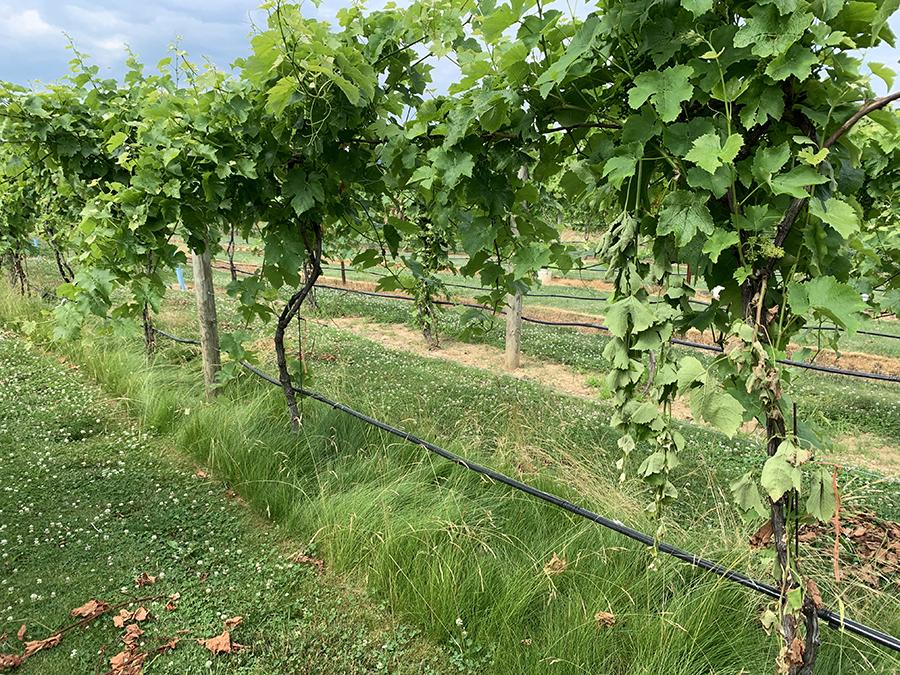
Growing cover crops under vines — with no bare soil present in the vineyard — may be regarded as a radical concept by some traditional growers, but the practice can yield significant benefits. Credit: Penn State. Creative Commons
<関連情報>
- https://www.psu.edu/news/agricultural-sciences/story/simple-vineyard-growing-practice-impacts-soil-microbiome-deep-below
- https://apsjournals.apsnet.org/doi/10.1094/PBIOMES-11-25-0087-SC
地被植物は、根圏内外のブドウ畑の土壌微生物叢を変化させる Groundcovers Alter Vineyard Soil Microbiomes Within and Beyond Their Rooting Zones
Dr. Hayden W. Bock, Dr. Michela Centinari, Dr. Terrence H. Bell, Dr. David M. Eissenstat, Dr. William L. King, and Dr. Suzanne M. Fleishman
Phytobiomes Journal Published:26 Jan 2026
DOI:https://doi.org/10.1094/PBIOMES-11-25-0087-SC
Abstract
Groundcovers are increasingly planted in perennial cropping systems to improve soil health. In vineyards, grass groundcovers can influence many edaphic properties, yet the effects of these groundcovers on bulk soil microbiomes remain unclear. Here, we examined bacterial and fungal composition in a temperate vineyard where a grass groundcover (Festuca rubra) was either included (GC) or excluded (noGC) under the vine row. Soils were sampled in July of two consecutive years, from depths of 0–33, 33-66, and 66-100 cm, and subjected to bacterial (16S rRNA gene) and fungal (ITS region) amplicon sequencing. Across the study, alpha diversity (Shannon index) varied primarily by depth and year, and showed no consistent differences attributable to groundcover. However, comparisons of microbiome composition revealed differences between plots with and without groundcover, most notably in shallow (0–33 cm) soils for fungal communities. Moreover, differential abundance analyses showed that groundcover decreased the relative abundance of taxa expected to perform saprotrophic roles (e.g., P. laurentii, S. terricola) but increased putatively beneficial root-associated taxa (e.g., P. circinata and A. scarabaeorum) in shallow soils. Given the life history of these taxa, we infer these findings may reflect the tendency for groundcovers to shift belowground resource availability and highlights the potential for shallow-rooted plants to indirectly influence microbial communities well beyond their rooting zone. Despite not increasing alpha diversity, groundcovers modulated bacterial and fungal composition in our system, indicating that vegetation management may potentially affect agroecological health in perennial agricultural systems via changes to soil microbiome composition.