

2026-09-09 レンセラー工科大学(RPI)
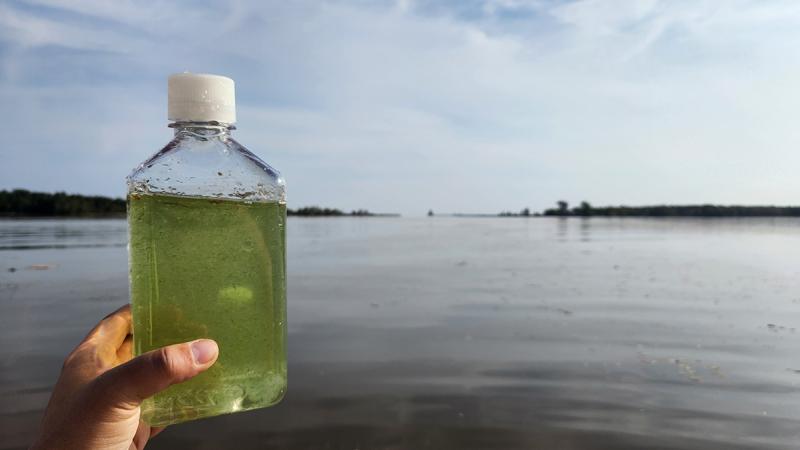
Sample from the St. Louis River Estuary taken during a cyanobacteria bloom
<関連情報>
- https://news.rpi.edu/2026/09/09/rpi-researcher-finds-estuary-water-quality-trends-have-100m-implications
- https://www.nature.com/articles/s43247-026-03934-w
現地観測により、米国河口域における大陸規模の温暖化、酸素濃度の低下、および富栄養化が明らかになった In situ observations reveal continental-scale warming, oxygen decline, and eutrophication in U.S. estuaries
Kaitlin L. Reinl,Robert P. Dunn,Kimberly A. Cressman,Theophilos Collins,Jennifer L. DeBose,Carl T. Friedrichs,Jason S. Goldstein,Alicia R. Helms,Christopher Kinkade,Julie L. Krask,David B. Parrish,Hannah N. Nicklay,Justin T. Ridge,Denise M. Sanger,Jacob A. Cianci-Gaskill,Nicole G. Dix,Thomas M. Grothues,Steven E. McMurray & Christopher Peter
Communications Earth & Environment Published:09 September 2026
DOI:https://doi.org/10.1038/s43247-026-03934-w
Abstract
Estuaries are sentinel ecosystems for understanding the impacts of climate and land-use change, but availability of in situ data for continental-scale comparative studies is rare. Here, we document the status of water quality in 29 U.S. estuaries across multiple climate zones using in situ data to detail decadal-scale trends in key environmental parameters and their drivers. Our analysis assembles more than 250 million data points from over the past two decades (2002-2022), providing direct evidence of widespread eutrophication and warming in estuaries, with significant increases in chlorophyll-a and water temperature at approximately two-thirds of sites, and oxygen declines at half of sites. Changing nutrient concentrations, not temperature, appear to be the primary driver of increases in chlorophyll-a at the continental scale, while increasing temperature and chlorophyll-a are the best predictors of declining oxygen concentrations. These analyses reinforce that changes in coastal ecosystem dynamics are widespread and complex, driven by multiple interacting factors that require large-scale, standardized data collection to disentangle.

