2026-08-27 バージニア工科大学(Virginia Tech)
<関連情報>
- https://news.vt.edu/articles/2026/08/cnre-research-shorebirds-dayer.html
- https://conbio.onlinelibrary.wiley.com/doi/10.1111/csp2.70370
地域社会を基盤としたソーシャルマーケティングは、米国大西洋沿岸の海鳥の反応と関連している Community-based social marketing is associated with shorebird responses along the U.S. Atlantic coast
Sarah P. Saunders, Sami Livingston, Nicole L. Michel, Lindsay M. Addison, Elizabeth Amendola, Abigail Burke, Shelby Casas, Allie Hayser, Vandana Menser, Erin Rogers, Abby Sterling, Ashley A. Dayer
Conservation Science and Practice Published: 04 August 2026
DOI:https://doi.org/10.1111/csp2.70370
Abstract
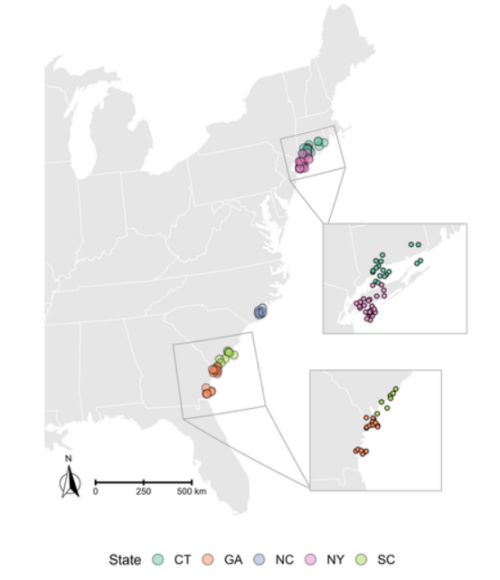
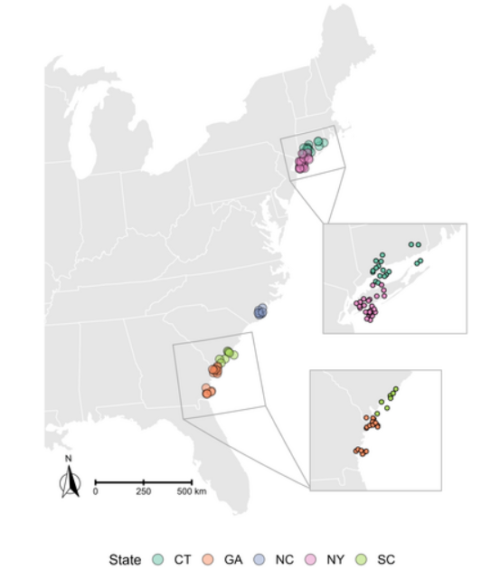
Community-based social marketing (CBSM) is increasingly used in conservation to influence human behavior, yet its biological effectiveness is rarely evaluated. We assessed relationships between CBSM campaigns and both behavioral and demographic responses of six shorebird species across five U.S. Atlantic coast states during the 2024 breeding season. Using nearly 1000 point counts, >850 behavioral observations, and nest monitoring data analyzed with generalized additive models, we evaluated patterns across three CBSM campaigns (dog-leashing, dog-free beaches, and walk-around-flocks) alongside field-based stewardship presence. Walk-around-flocks campaigns coincided with significantly lower shorebird vigilance, reduced variability in vigilance, and evidence consistent with improved fledging success for the federally listed Atlantic coast Piping Plover (Charadrius melodus). In contrast, dog-leashing campaigns showed mixed outcomes: leashed dog presence was negatively related to shorebird abundance, and apparent campaign benefits diminished at sites with high numbers of unleashed dogs. Steward presence also corresponded with reduced disturbance and lower bird vigilance. Although not all interventions produced consistent responses, our findings suggest that CBSM strategies promoting bird-friendly, conflict-avoidance behaviors, particularly when paired with stewardship, may help reduce human disturbance and support improved conditions for shorebirds during critical breeding periods.