2026-04-17 アリゾナ大学
<関連情報>
- https://news.arizona.edu/news/andes-volcanoes-missing-link-between-algae-blooms-whales-and-climate-millions-years-ago
- https://www.nature.com/articles/s43247-026-03457-4
後期中新世におけるアンデス山脈の火山活動、海洋肥沃化、海洋生態系の変遷、そして地球規模の寒冷化 Andean volcanism, ocean fertilization, marine ecosystem turnover, and global cooling in the Late Miocene
Barbara Carrapa,Mark T. Clementz,Nicolás J. Cosentino,Pedro DiNezio,Pam Vervoort,Kaustubh Thirumalai,Jordan T. Abell,Dominik Hülse,Priscilla R. Martinez & Carolina S. Gutstein
Communications Earth & Environment Published:13 April 2026
DOI:https://doi.org/10.1038/s43247-026-03457-4
Abstract
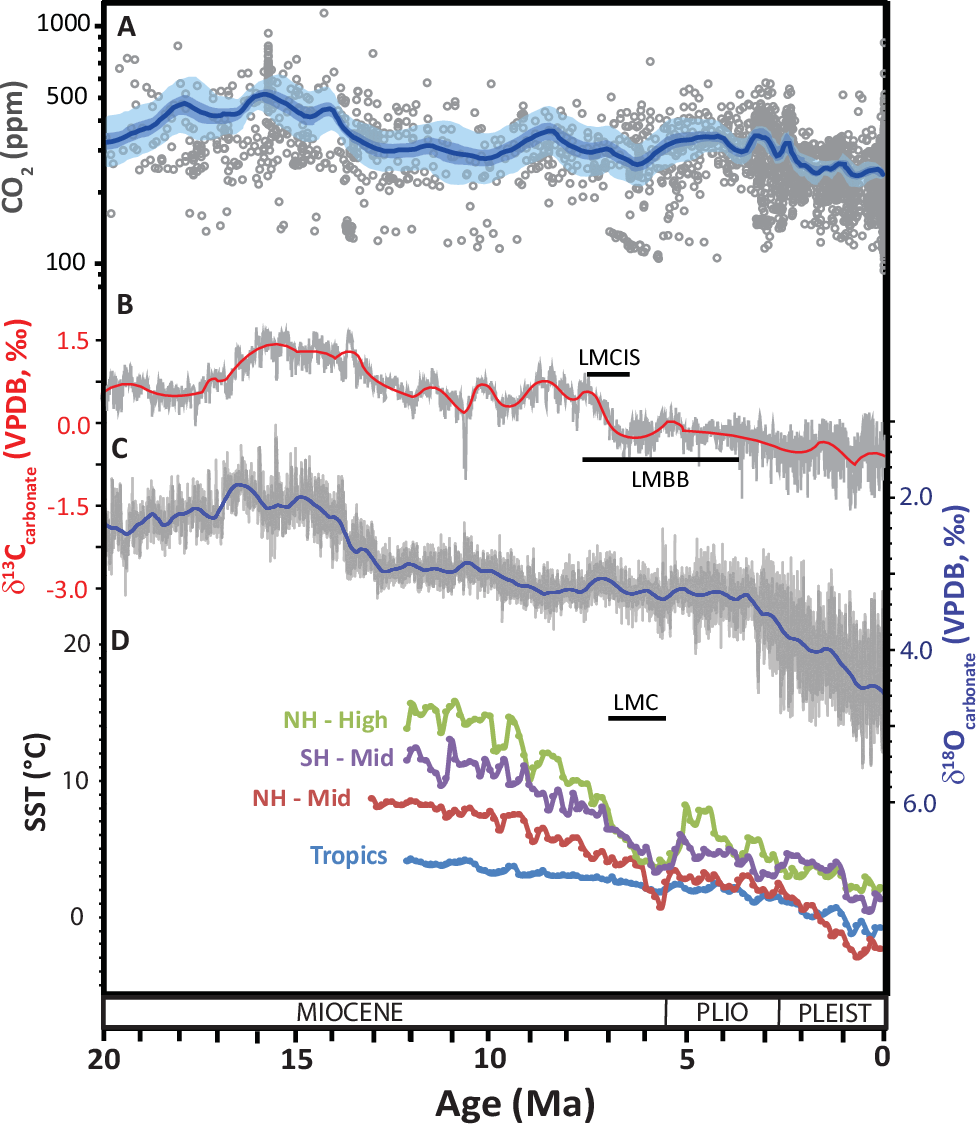
As the world’s longest active volcanic arc, the Andes deliver nutrient-rich volcanic ash directly to the ocean via atmospheric transport. This ash supplies key limiting nutrients to the Humboldt Current and the Southern Ocean, both critical for biological productivity, nutrient cycling, and atmospheric carbon dioxide drawdown. During the Late Miocene, massive explosive eruptions generated large ash fluxes that were deposited in the surrounding oceans. However, the biogeochemical and climatic consequences of this process remain unresolved. Here, we present a new compilation of paleontological and geochemical data combined with global ash dispersion modeling and Earth system simulations, to quantify the impact of Andean volcanism on seasonal to millennial time scales ocean productivity and carbon cycling, with potential impact on longer time scales. Our results indicate that enhanced nutrient supply from episodic Andean volcanic ash to the Southern Ocean enhanced primary productivity and carbon sequestration in the deep ocean. Integrated with paleo-records, these findings suggest that sustained Andean volcanism could have played a previously underappreciated role in reshaping marine ecosystems, regulating global nutrient distributions, and contributing to the Late Miocene cooling.