2026-03-27 ワシントン大学(UV)
<関連情報>
- https://www.washington.edu/news/2026/03/27/march-research-highlights-nautilus-habitat-eco-friendly-tennis-courts-more/
- https://www.nature.com/articles/s41598-026-36623-x
音響テレメトリーと安定酸素同位体分析による現生および絶滅オウムガイ類頭足類の比較習性および生息地 Comparative habits and habitat in extant and extinct nautiloid cephalopods from acoustic telemetry and stable oxygen isotope analyses
Peter D. Ward,Greg Barord,Bruce Carlson,Frederick Dooley,Andrew Dunstan,Nicho Gowep,Richard Hamilton,Whitney Heuring,Jeff Kinch,Christian Klug,Neil Landman,Andrew Schauer,Eric J. Steig & Job Veloso
Scientific Reports Published:14 February 2026
DOI:https://doi.org/10.1038/s41598-026-36623-x
Abstract
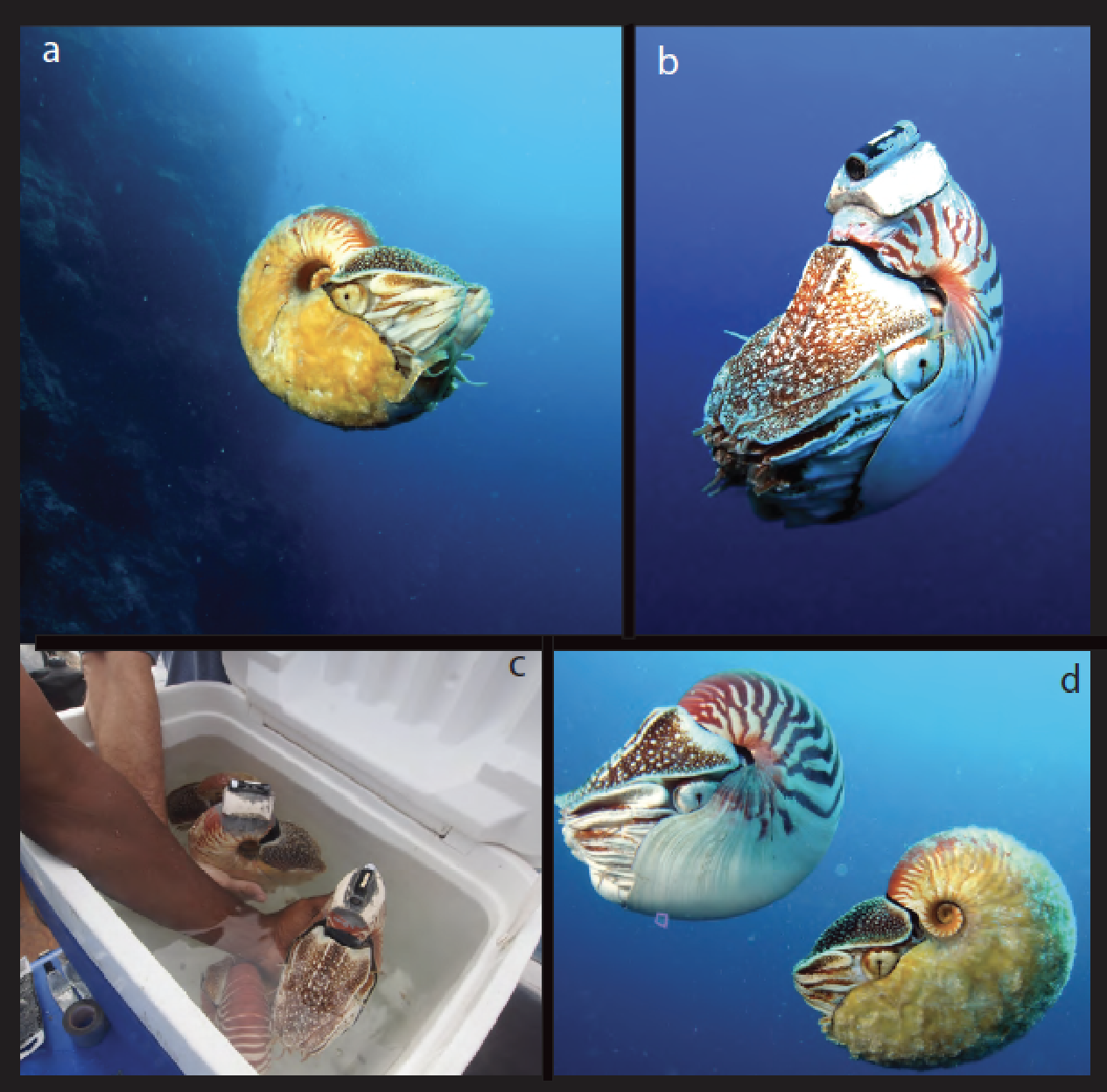
Information about behavior and habitat depths of Nautilus and Allonautilus species, the last remaining nautiloid cephalopod genera, is relevant both to paleobiologists trying to interpret the lives of extinct chambered cephalopods as well as to ecologists seeking to better understand the food webs of the Mesophotic Zone (200–800 m), fore-reef slope communities of the tropical Indopacific where these archaic animals live. One long-standing question is whether the extant nautiloid species live in deeper water than the many extinct species; a second is whether there are habitation depth differences of adult nautiloids compared to juveniles – either now or in the past. Using shell-mounted acoustic transmitters on seven different species in the two extant genera, and oxygen isotope shell thermometry on these same species as well as from fossils of 18 extinct fossil nautiloid species, we found regular, diurnal migration in only one species of each extant genus. Mature individuals in all tracked species of both genera were found to inhabit significantly shallower (and warmer) depths (~ 200 m) than the immature nautiluses and allonautiluses of the same populations (~ 350–400 m). Extinct nautiloid genera showed significantly warmer shell growth temperatures, with the single exception of Eocene through Miocene-aged species of the ammonoid-like genus Aturia, although diagenesis from not only ancient, but modern carbonates cannot be ruled out.