2026-03-03 千葉県立中央博物館
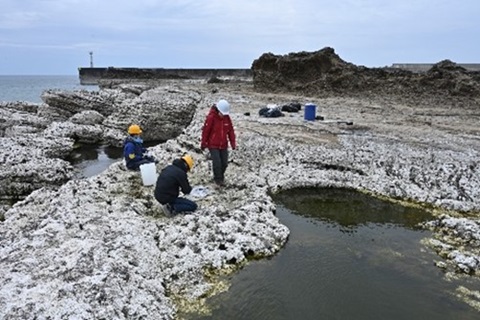
地震後干上がった鹿磯漁港周辺の様子 2024年4月21日撮影
<関連情報>
- https://www.pref.chiba.lg.jp/bunshin/press/2025/20260303benthos.html
- https://www.pref.chiba.lg.jp/bunshin/press/2025/documents/pressrelease260303.pdf
2024 年能登半島地震(M7.6)により隆起した岩礁海岸の予備的評価:潮間帯から潮下帯における底生生物大量死骸群の陸上調査 Onshore investigation of intertidal to subtidal mass benthic mortality assemblage: Preliminary assessment of the rocky reef coastline uplifted by the 2024 Noto Peninsula Earthquake (M7.6)
Kei Sato , Shinnosuke Teruya, Moe Kato, Asuka Seki, Eri Mizuno, Shunsuke Nakashima, Ryuta Sasaki, Robert G. Jenkins
Plankton and Benthos Research Published: March 02, 2026
DOI:https://doi.org/10.3800/pbr.21.25
Abstract
The sudden coastal uplift resulting from the 2024 Noto Peninsula earthquake exposed the previously subtidal and intertidal habitats, providing a unique opportunity to document the biotic community and immediate effects of geological disturbances on it. This study describes the characteristics of the benthic death assemblages around the Kaiso fishing port, which experienced approximately 3.6–3.9 m of uplift, with special attention to the vertical distribution of coastal benthos inhabiting Kaiso Reef. Our field surveys were initiated 66 days after the earthquake, integrating quadrat-based sampling with direct observation of emergent marine habitats. 92 molluscan and 5 echinoderm species were found in our quadrat investigation. The soft tissues of most molluscan individuals remained, indicating that their in situ life postures were undisturbed. Given this premise, species richness was estimated to have peaked between the pre-disaster middle to lower intertidal and uppermost subtidal zones, particularly in areas with reduced wave exposure. Additionally, the surveys identified several notable species at the Kaiso fishing port, including the Near-Threatened coral Oulastrea crispata and bivalve Pinna bicolor, both of which have their northernmost records in the Sea of Japan from the Noto area. The uplifted zone presents a rare opportunity to examine the subtidal fauna from terrestrial vantage points, yielding novel perspectives on marine biodiversity in the Sea of Japan. Also, these findings provide critical baseline data for monitoring post-uplift ecological succession against a backdrop of ongoing climate change.