
2026-02-10 NASA
米航空宇宙局(NASA)が開発中の次世代大型宇宙望遠鏡「ナンシー・グレース・ローマン宇宙望遠鏡」は、2026年秋の打ち上げ後に実施される「ハイラティチュード広域コアサーベイ」によって、宇宙の深部を広範囲に観測し、暗黒物質や暗黒エネルギーといった宇宙の「暗い側面」を解明することを目指している。該当サーベイは天空の約5,000平方度を1年半弱で撮像・分光観測し、数億に及ぶ銀河の位置や形状、スペクトルを高精度で取得する予定だ。こうした大規模データは、重力レンズ効果による暗黒物質分布の3次元的な把握や、宇宙膨張史を示す赤方偏移測定を可能にし、宇宙の構造形成や加速膨張の根源を探る決定的な手がかりを提供する。ローマン望遠鏡の広視野性能は既存宇宙望遠鏡とは一線を画し、天文学全般にわたる新発見を促す重要観測装置となる。
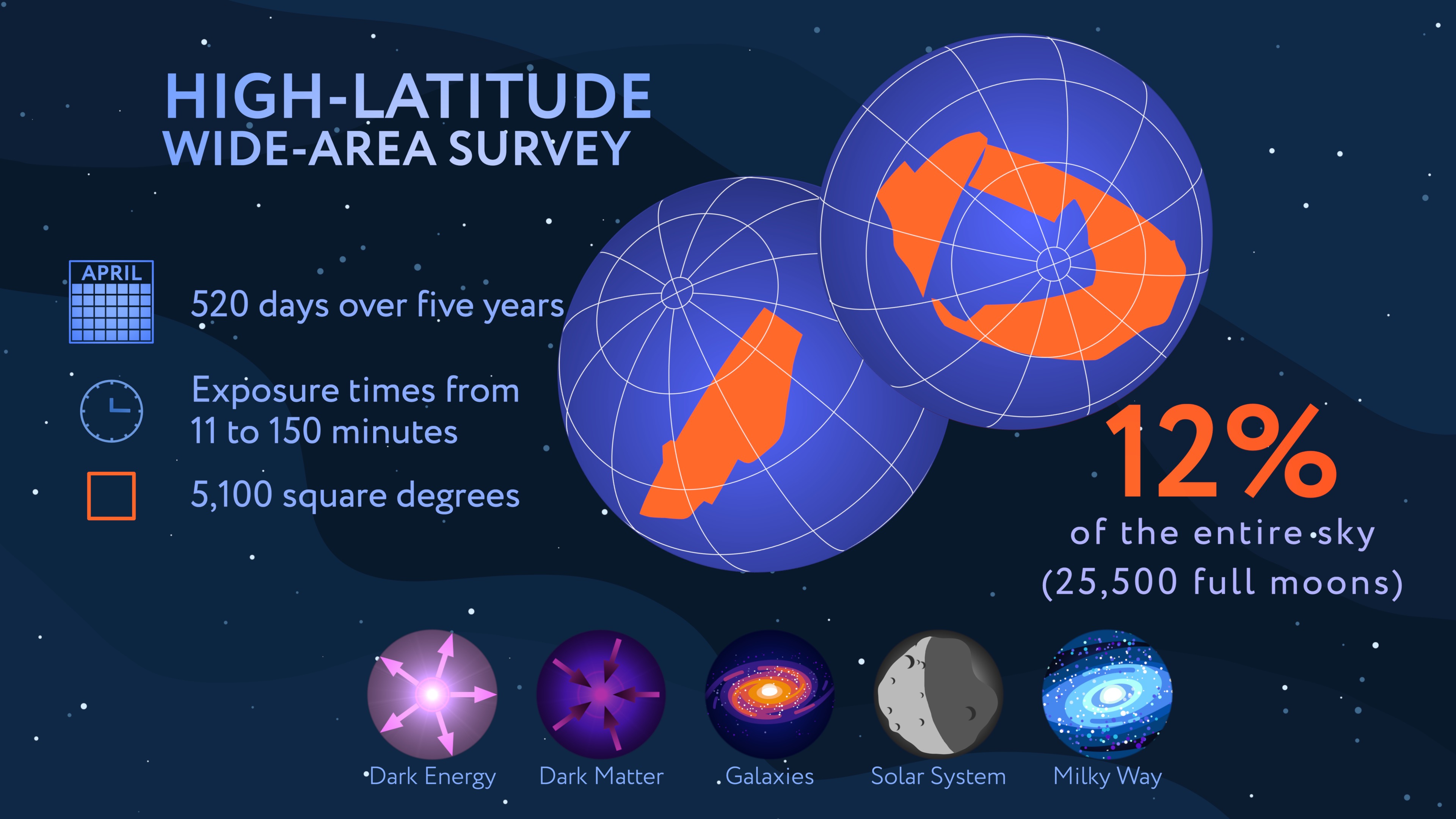
This infographic describes the High-Latitude Wide-Area Survey that will be conducted by NASA’s Nancy Grace Roman Space Telescope. This observation program will cover more than 5,000 square degrees (about 12 percent of the sky) in just under a year and a half. Scientists will use the survey to analyze hundreds of millions of galaxies scattered across the cosmos that reveal clues about the universe’s shadowy underpinnings — dark matter and dark energy — as well as a wealth of other science topics.NASA’s Goddard Space Flight Center
<関連情報>

