2025-04-03 ペンシルベニア州立大学(PennState)
<関連情報>
- https://www.psu.edu/news/engineering/story/beyond-welding-researchers-3d-print-two-metals-single-complex-structure
- https://www.nature.com/articles/s44334-025-00020-5
マルチマテリアルレーザー粉末床融合:欠陥、材料構造および機械的特性に対する造形方向の影響 Multi-material laser powder bed fusion: effects of build orientation on defects, material structure and mechanical properties
J. C. Griffis,K. Shahed,K. Meinert,B. Yilmaz,M. Lear & G. Manogharan
npj Advanced Manufacturing Published:04 March 2025
DOI:https://doi.org/10.1038/s44334-025-00020-5
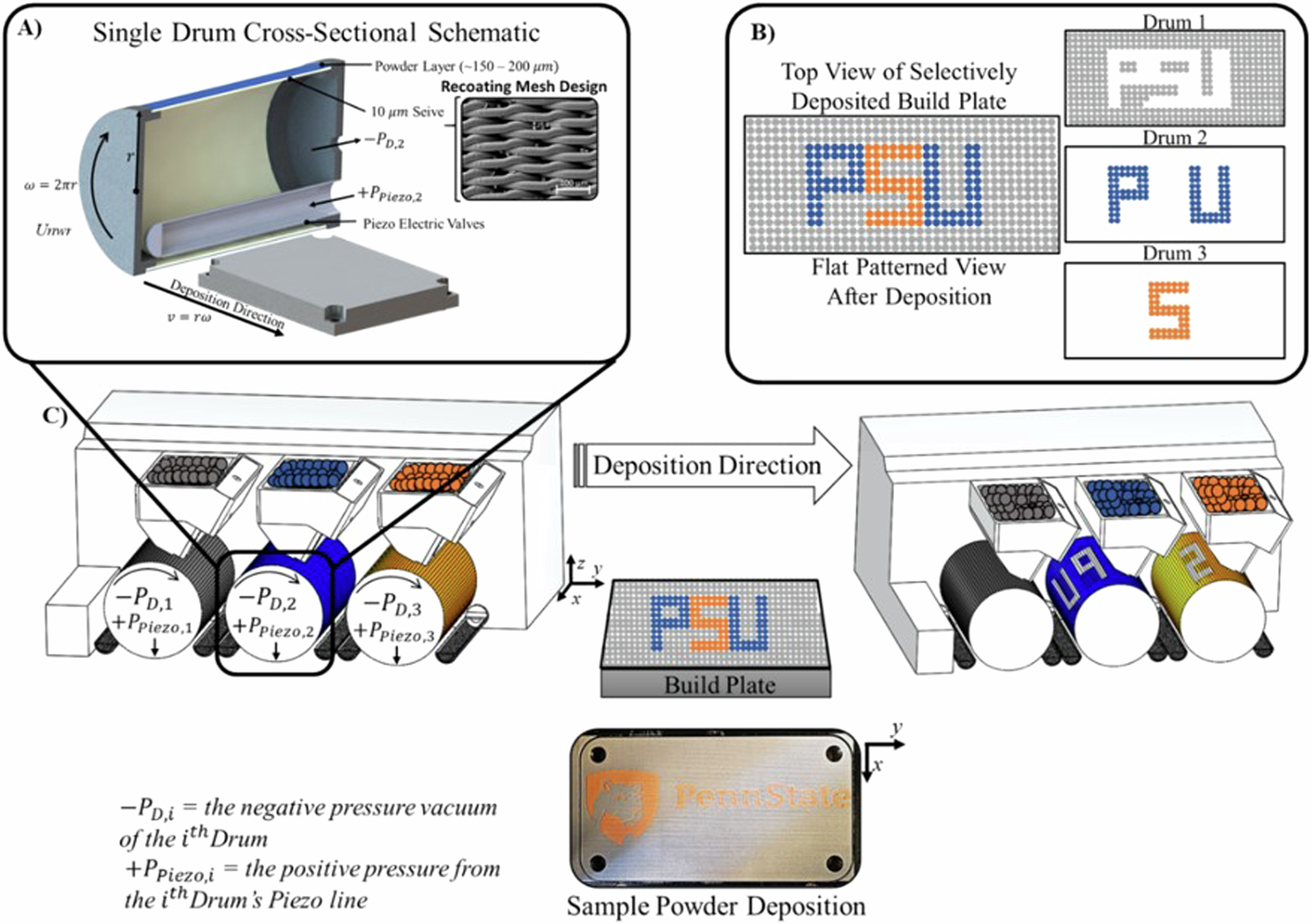
Abstract
Multi-Material Laser Powder Bed Fusion (MM-LPBF) offers a novel approach for fabricating high-resolution components with both spatially tailored material properties and design by leveraging selective powder deposition (SPD) in conventional LPBF processing. This study analyzes the effect of build orientation as a contributing factor to material compatibility, process-induced defects, and interfacial formation mechanisms to elucidate the process-structure-property framework for MM-LPBF. New MM-LPBF capabilities are demonstrated through a complex gyroid structure (904L stainless steel and bronze) for unique MM-LPBF signatures (e.g., melt pool characteristics, grain morphology, defects, and mechanical properties). Fracture mechanisms in MM-LPBF are investigated through multi-scale domain techniques, including flexural testing supported by digital image correlation (DIC), finite element analysis (FEA), and intermittent micro-CT. Findings from this study demonstrate the current technological opportunities and challenges in the adoption of MM-LPBF for a wide range of applications such as thermo-fluidic surfaces, solid-state energy storage, and biodegradable implants.